Lin Yi, Cheng Zuxin, Yang Zhijian, Zheng Jingui, Lin Tongxiang
Stem Cell Research Center, Fujian Agriculture and Forestry University, Cangshan District, Fuzhou, Fujian, PR China.
BMC Cell Biol. 2012 Mar 26;13:9. doi: 10.1186/1471-2121-13-9.
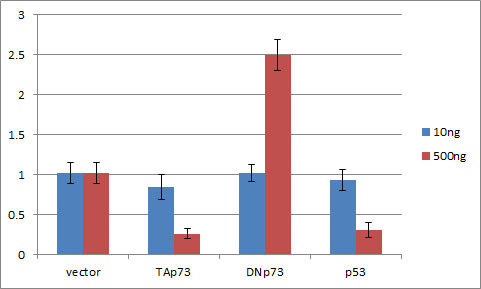
Recent studies have found that p53 and its' associated cell cycle pathways are major inhibitors of human induced pluripotent stem (iPS) cell generation. In the same family as p53 is p73, which shares sequence similarities with p53. However, p73 also has distinct properties of its own, such as two alternative promoters to express transactivation of p73 (TAp73) and N terminal deleted p73 (DNp73). Functionally, TAp73 acts similarly to p53 in tumor suppression. However, DNp73, on the other hand acts as an oncogene to suppress p53 and p73 induced apoptosis. Therefore, how can p73 have opposing roles in human iPS cell generation?
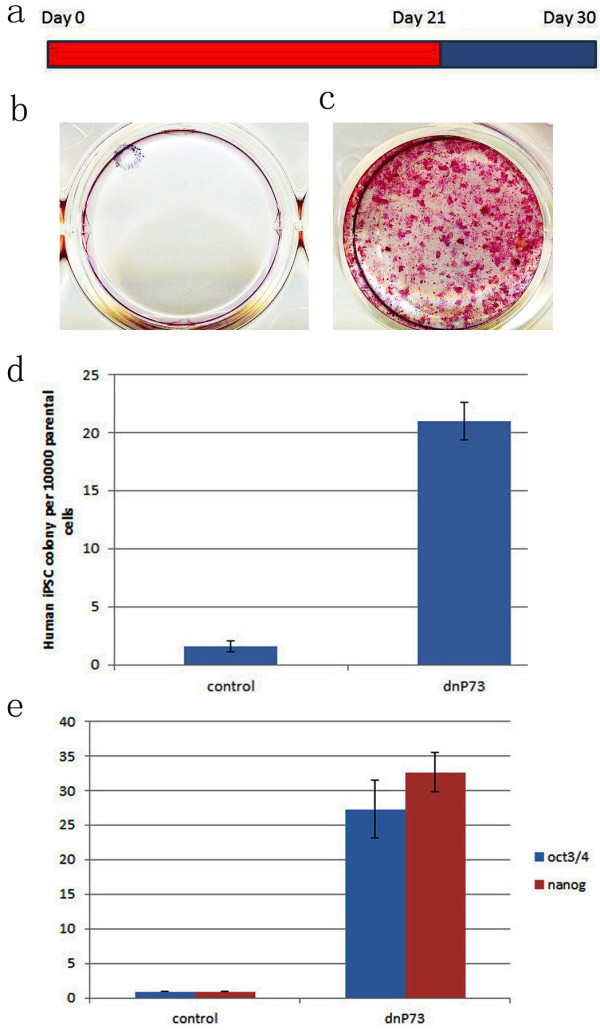
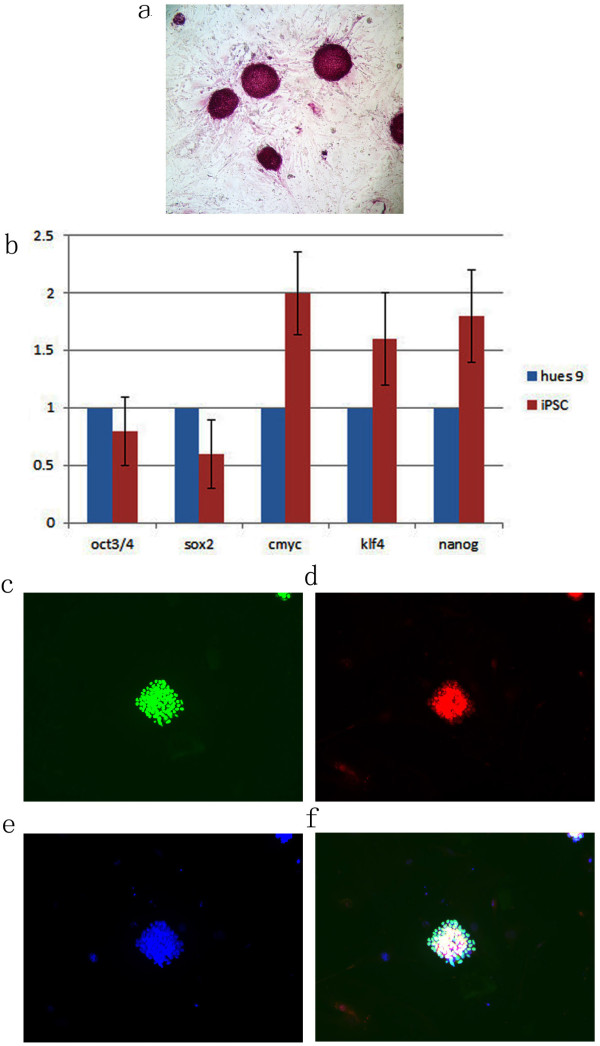
Transcription factors, Oct4, Sox2, Klf4 and cMyc (4TF, Yamanaka factors) are used as basal conditions to generate iPS cells. In addition, the factor of DNp73(actually alpha splicing DNp73, DNp73α) is used to generate iPS cells. The experiment found that the addition of DNp73 gene increases human iPS cell generation efficiency by 12.6 folds in comparison to human fibroblast cells transduced with only the basal conditions. Also, iPS cells generated with DNp73 expression are more resistant to in vitro and in vivo differentiation.
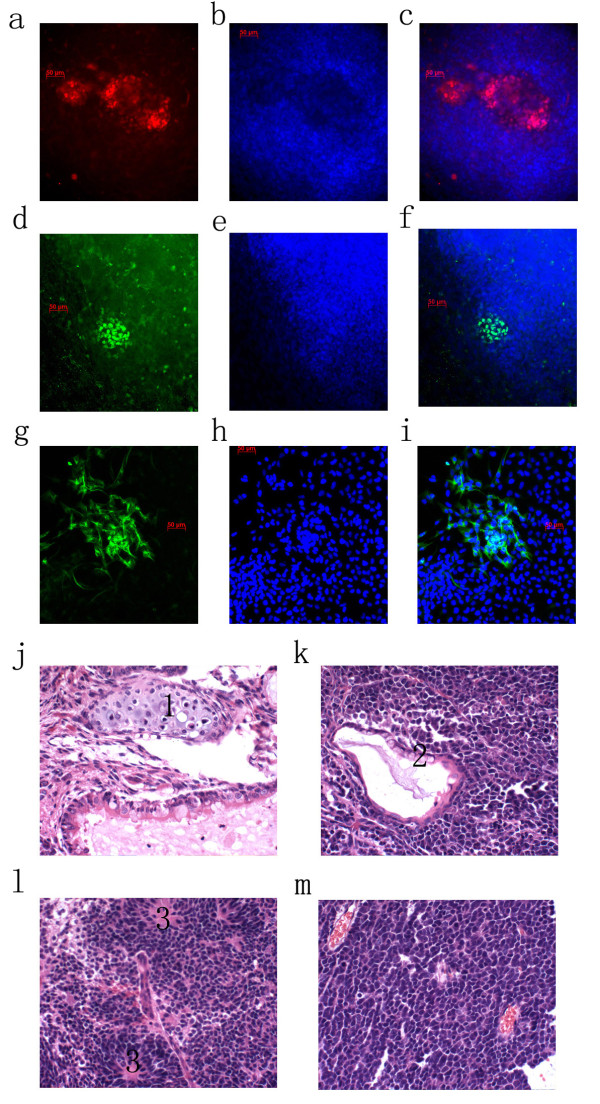
This study found DNp73, a family member of p53, is also involved in the human iPS cell generation. Specifically, that the involvement of DNp73 generates iPS cells that are more resistant to in vitro and in vivo differentiation. Therefore, this data may prove to be useful in future developmental studies and cancer researches.
最近的研究发现,p53及其相关的细胞周期途径是人类诱导多能干细胞(iPS细胞)生成的主要抑制因子。与p53同属一个家族的是p73,它与p53具有序列相似性。然而,p73也有其自身独特的特性,比如有两个可选择的启动子来表达p73的反式激活(TAp73)和N端缺失的p73(DNp73)。在功能上,TAp73在肿瘤抑制方面的作用与p53相似。然而,另一方面,DNp73却作为一种癌基因来抑制p53和p73诱导的细胞凋亡。那么,p73在人类iPS细胞生成中怎么会有相反的作用呢?
转录因子Oct4、Sox2、Klf4和cMyc(4TF,山中因子)被用作生成iPS细胞的基础条件。此外,DNp73因子(实际上是α剪接的DNp73,DNp73α)也被用于生成iPS细胞。实验发现,与仅用基础条件转导的人类成纤维细胞相比,添加DNp73基因可使人类iPS细胞生成效率提高12.6倍。而且,由DNp73表达生成的iPS细胞对体外和体内分化更具抗性。
本研究发现p53家族成员DNp73也参与人类iPS细胞的生成。具体而言,DNp73的参与生成了对体外和体内分化更具抗性的iPS细胞。因此,这些数据可能在未来的发育研究和癌症研究中有用。