Department of Biology, University of South Dakota, Vermillion, SD 57069, USA.
Physiol Behav. 2012 Dec 5;107(5):670-9. doi: 10.1016/j.physbeh.2012.03.005. Epub 2012 Mar 16.
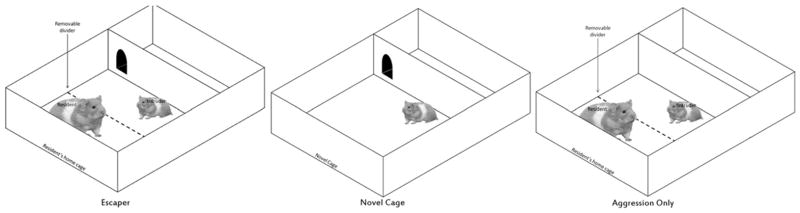
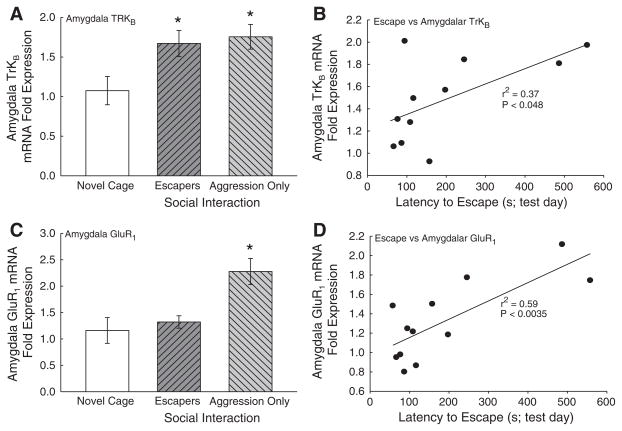
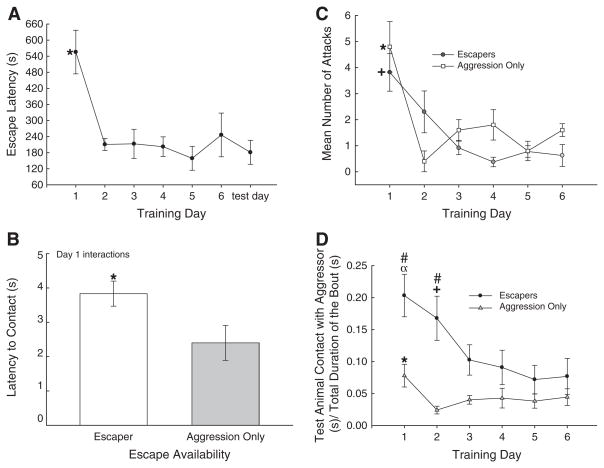
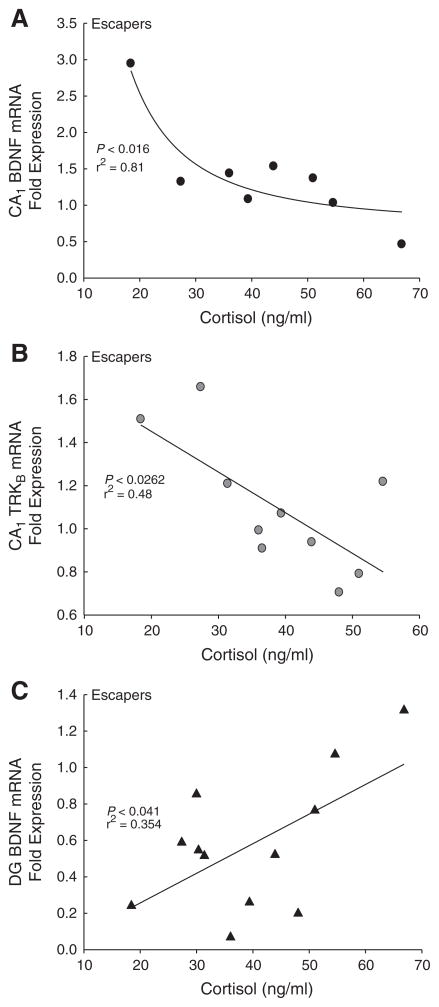
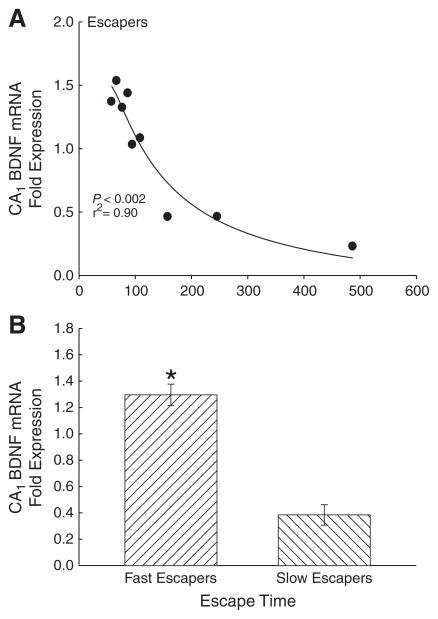
Social subjugation has widespread consequences affecting behavior and underlying neural systems. We hypothesized that individual differences in stress responsiveness were associated with differential expression of neurotrophin associated genes within the hippocampus and amygdala. To do this we examined the brains of hamsters placed in resident/intruder interactions, modified by the opportunity to escape from aggression. In the amygdala, aggressive social interaction stimulated increased BDNF receptor TrK(B) mRNA levels regardless of the ability to escape the aggressor. In contrast, the availability of escape limited the elevation of GluR(1) AMPA subunit mRNA. In the hippocampal CA(1), the glucocorticoid stress hormone, cortisol, was negatively correlated with BDNF and TrK(B) gene expression, but showed a positive correlation with BDNF expression in the DG. Latency to escape the aggressor was also negatively correlated with CA(1) BDNF expression. In contrast, the relationship between amygdalar TrK(B) and GluR(1) was positive with respect to escape latency. These results suggest that an interplay of stress and neurotrophic systems influences learned escape behavior. Animals which escape faster seem to have a more robust neurotrophic profile in the hippocampus, with the opposite of this pattern in the amygdala. We propose that changes in the equilibrium of hippocampal and amygdalar learning result in differing behavioral stress coping choices.
社会屈从对行为和潜在的神经系统有广泛的影响。我们假设应激反应的个体差异与海马体和杏仁核中神经营养因子相关基因的差异表达有关。为此,我们观察了处于居住者/入侵者相互作用中的仓鼠的大脑,这些仓鼠的行为可以通过逃避攻击来改变。在杏仁核中,无论是否有能力逃避攻击者,攻击性的社会互动都会刺激 BDNF 受体 TrK(B)mRNA 水平的升高。相比之下,逃避的可能性限制了 GluR(1)AMPA 亚基 mRNA 的升高。在海马体 CA(1)区,糖皮质激素应激激素皮质醇与 BDNF 和 TrK(B)基因表达呈负相关,但与 DG 中的 BDNF 表达呈正相关。逃避攻击者的潜伏期也与 CA(1)BDNF 表达呈负相关。相比之下,杏仁核 TrK(B)和 GluR(1)之间的关系与逃避潜伏期呈正相关。这些结果表明,应激和神经营养系统的相互作用影响了习得性逃避行为。逃避速度更快的动物在海马体中似乎具有更强大的神经营养特性,而在杏仁核中则相反。我们提出,海马体和杏仁核学习平衡的变化导致不同的行为应激应对选择。