Berger Dara S, Ladd Andrea N
Department of Cell Biology, Lerner Research Institute, Cleveland Clinic, 9500 Euclid Ave. NC10, Cleveland, OH 44195 USA.
PLoS Curr. 2012 Feb 24;4:RRN1305. doi: 10.1371/currents.RRN1305.
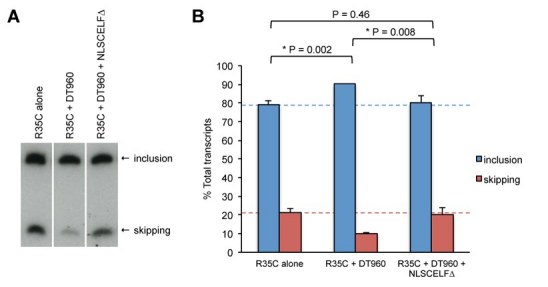
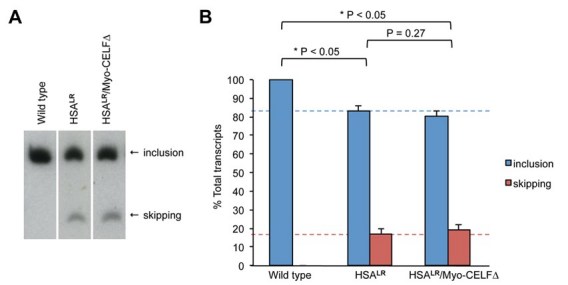
Myotonic dystrophy type 1 (DM1) is caused by the expansion of CUG repeats in the 3' UTR of DMPK transcripts. DM1 pathogenesis has been attributed in part to alternative splicing dysregulation via elevation of CUG-BP, Elav-like family member 1 (CELF1). Several therapeutic approaches have been tested in cells and mice, but no previous studies had specifically targeted CELF1. Here, we show that repressing CELF activity rescues CELF-dependent alternative splicing in cell culture and transgenic mouse models of DM1. CELF-independent splicing, however, remained dysregulated. These data highlight both the potential and limitations of targeting CELF1 for the treatment of DM1.
1型强直性肌营养不良症(DM1)由DMPK转录本3'UTR中CUG重复序列的扩增引起。DM1的发病机制部分归因于通过CUG结合蛋白、Elav样家族成员1(CELF1)水平升高导致的可变剪接失调。已经在细胞和小鼠中测试了几种治疗方法,但之前没有研究专门针对CELF1。在这里,我们表明在DM1的细胞培养和转基因小鼠模型中,抑制CELF活性可挽救CELF依赖性可变剪接。然而,非CELF依赖性剪接仍然失调。这些数据突出了靶向CELF1治疗DM1的潜力和局限性。