Department of Computer Science, University of Memphis, 209 Dunn Hall, Memphis, TN 38152-3240, USA; E-Mail:
Sensors (Basel). 2009;9(8):6273-97. doi: 10.3390/s90806273. Epub 2009 Aug 11.
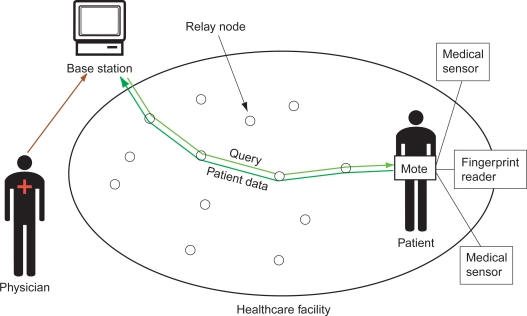
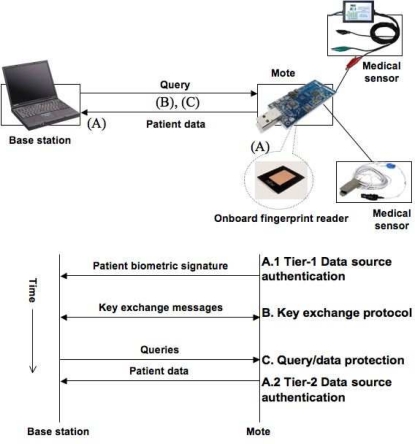
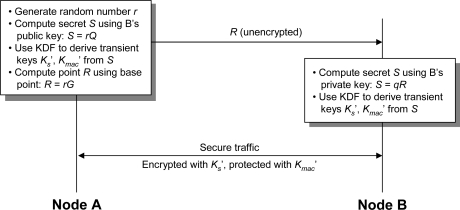
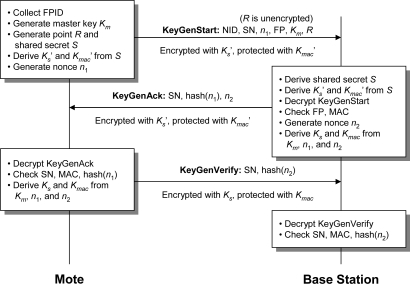
A medical sensor network can wirelessly monitor vital signs of humans, making it useful for long-term health care without sacrificing patient comfort and mobility. For such a network to be viable, its design must protect data privacy and authenticity given that medical data are highly sensitive. We identify the unique security challenges of such a sensor network and propose a set of resource-efficient mechanisms to address these challenges. Our solution includes (1) a novel two-tier scheme for verifying the authenticity of patient data, (2) a secure key agreement protocol to set up shared keys between sensor nodes and base stations, and (3) symmetric encryption/decryption for protecting data confidentiality and integrity. We have implemented the proposed mechanisms on a wireless mote platform, and our results confirm their feasibility.
医疗传感器网络可以无线监测人体的生命体征,在不牺牲患者舒适度和移动性的前提下,非常适合长期的医疗保健。为了使这样的网络具有可行性,其设计必须保护数据隐私和真实性,因为医疗数据非常敏感。我们确定了这种传感器网络的独特安全挑战,并提出了一系列资源高效的机制来解决这些挑战。我们的解决方案包括(1)用于验证患者数据真实性的新颖的两层方案,(2)用于在传感器节点和基站之间建立共享密钥的安全密钥协商协议,以及(3)用于保护数据机密性和完整性的对称加密/解密。我们已经在无线 mote 平台上实现了所提出的机制,并且我们的结果证实了它们的可行性。