University of Tartu, Institute of Technology, Tartu, Estonia.
Nucleic Acids Res. 2012 Jul;40(13):6122-34. doi: 10.1093/nar/gks272. Epub 2012 Mar 28.
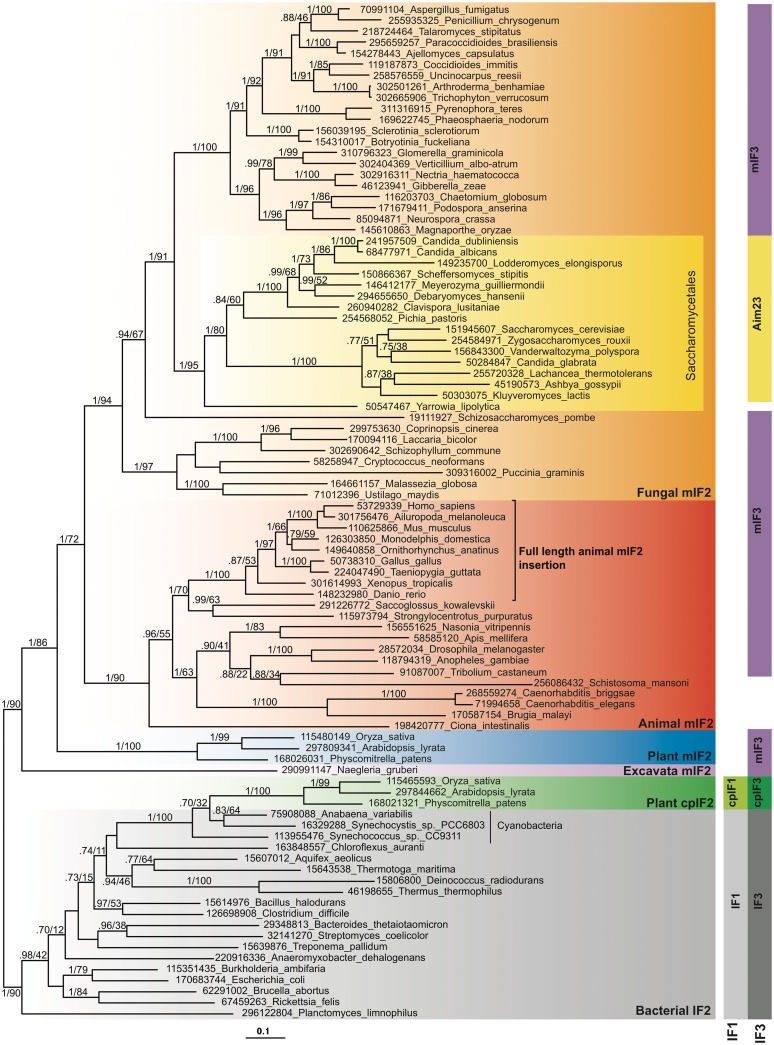
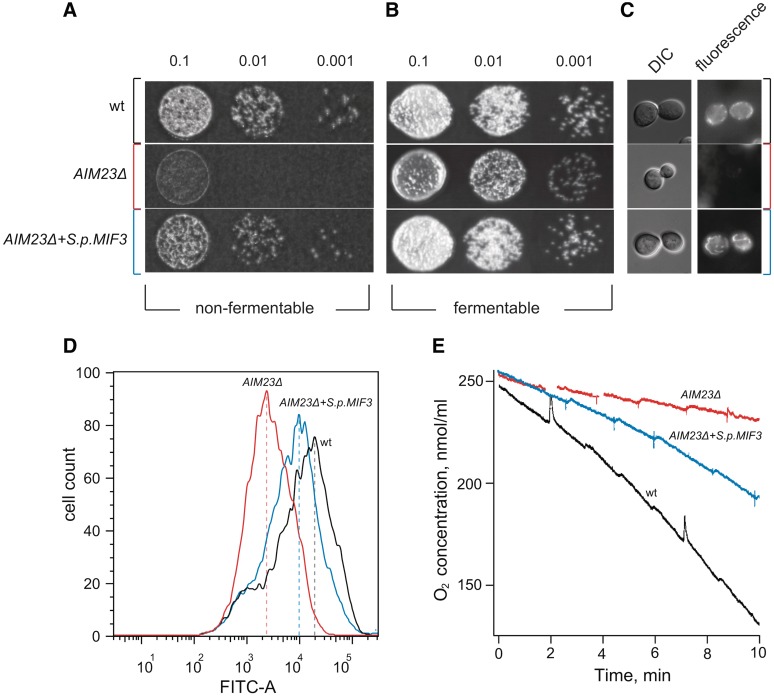
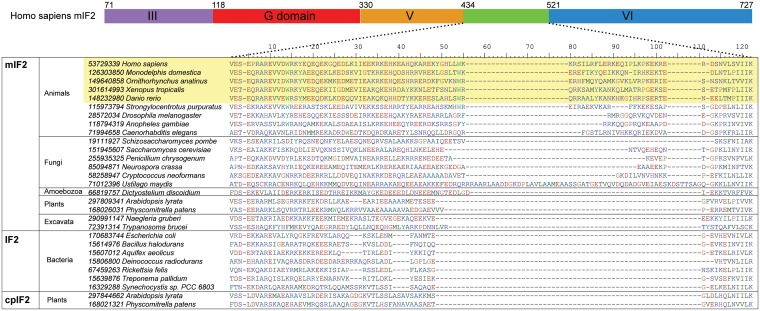
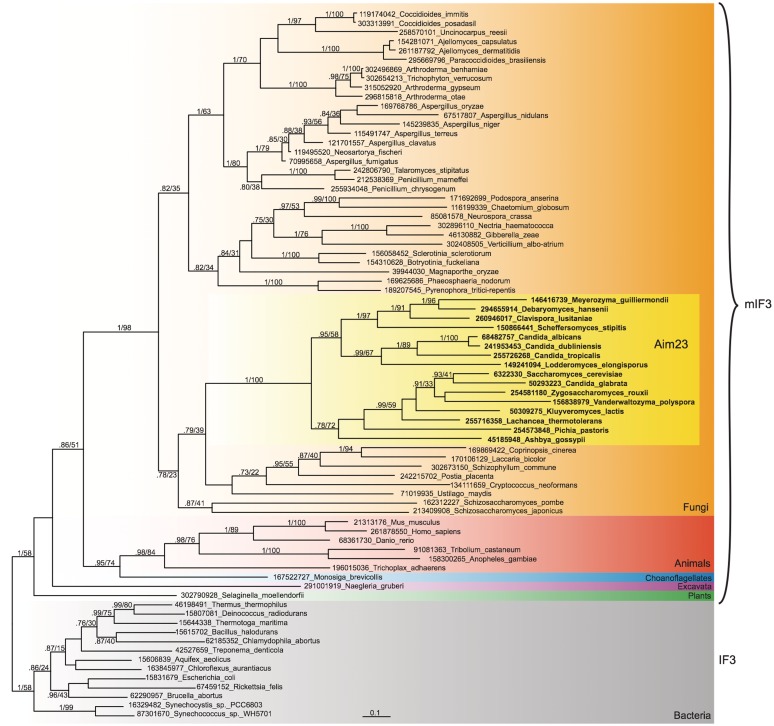
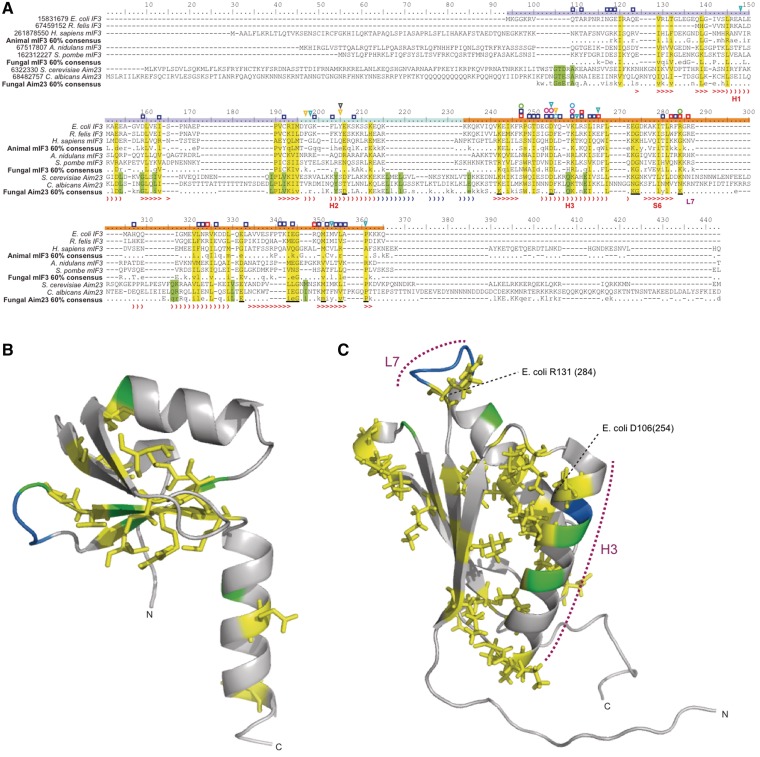
Mitochondrial translation is essentially bacteria-like, reflecting the bacterial endosymbiotic ancestry of the eukaryotic organelle. However, unlike the translation system of its bacterial ancestors, mitochondrial translation is limited to just a few mRNAs, mainly coding for components of the respiratory complex. The classical bacterial initiation factors (IFs) IF1, IF2 and IF3 are universal in bacteria, but only IF2 is universal in mitochondria (mIF2). We analyse the distribution of mitochondrial translation initiation factors and their sequence features, given two well-propagated claims: first, a sequence insertion in mitochondrial IF2 (mIF2) compensates for the universal lack of IF1 in mitochondria, and secondly, no homologue of mitochondrial IF3 (mIF3) is identifiable in Saccharomyces cerevisiae. Our comparative sequence analysis shows that, in fact, the mIF2 insertion is highly variable and restricted in length and primary sequence conservation to vertebrates, while phylogenetic and in vivo complementation analyses reveal that an uncharacterized S. cerevisiae mitochondrial protein currently named Aim23p is a bona fide evolutionary and functional orthologue of mIF3. Our results highlight the lineage-specific nature of mitochondrial translation and emphasise that comparative analyses among diverse taxa are essential for understanding whether generalizations from model organisms can be made across eukaryotes.
线粒体翻译本质上类似于细菌,反映了真核细胞器的细菌内共生起源。然而,与细菌祖先的翻译系统不同,线粒体翻译仅限于少数几个 mRNA,主要编码呼吸复合物的成分。经典的细菌起始因子(IF)IF1、IF2 和 IF3 在细菌中是普遍存在的,但只有 IF2 在线粒体中是普遍存在的(mIF2)。我们分析了线粒体翻译起始因子的分布及其序列特征,考虑到两个广为流传的观点:首先,线粒体 IF2(mIF2)中的序列插入补偿了线粒体中普遍缺乏 IF1 的问题,其次,在酿酒酵母中无法识别线粒体 IF3(mIF3)的同源物。我们的比较序列分析表明,事实上,mIF2 插入高度可变,长度和一级序列保守性仅限于脊椎动物,而系统发育和体内互补分析表明,目前命名为 Aim23p 的酵母线粒体蛋白是 mIF3 的真正进化和功能同源物。我们的研究结果突出了线粒体翻译的谱系特异性,并强调了在不同分类群之间进行比较分析对于理解是否可以从模式生物推广到整个真核生物的一般性问题至关重要。