Department of Surgery, University of North Carolina at Chapel Hill, Chapel Hill, North Carolina, USA.
J Surg Res. 2012 Nov;178(1):105-9. doi: 10.1016/j.jss.2012.03.003. Epub 2012 Mar 22.
Most cardiovascular studies have implicated the central transcription factor nuclear factor kappa-B (NF-κB) as contributing to the detrimental effects of cardiac injury. This ostensibly negative view of NF-κB competes with its important role in the normal host inflammatory and immune response. Pressure overload, left ventricular hypertrophy (LVH), and heart failure represent a spectrum of disease that has both adaptive and maladaptive components. In contrast to its known effects related to myocardial ischemia-reperfusion, we hypothesized that NF-κB is necessary for the compensatory phase of cardiac remodeling.
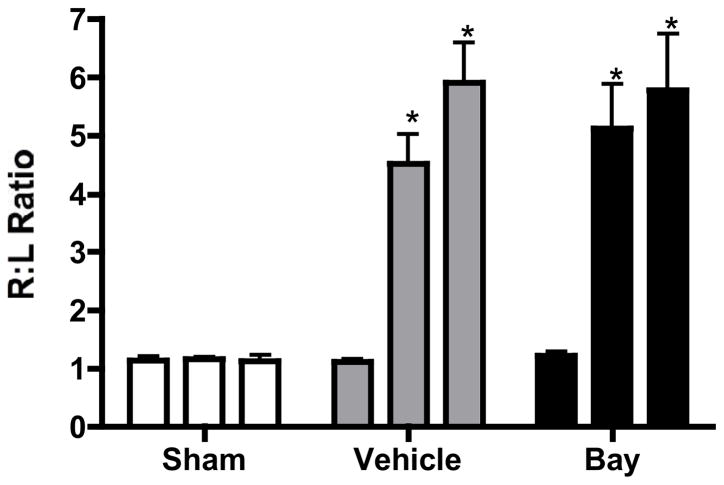
C57BL6 mice underwent minimally invasive transverse aortic constriction with or without inhibition of the proximal NF-κB kinase, inhibitory kappa-B kinase-β. Isolated cardiomyocytes were cultured. Transthoracic echocardiography was performed on all mice.
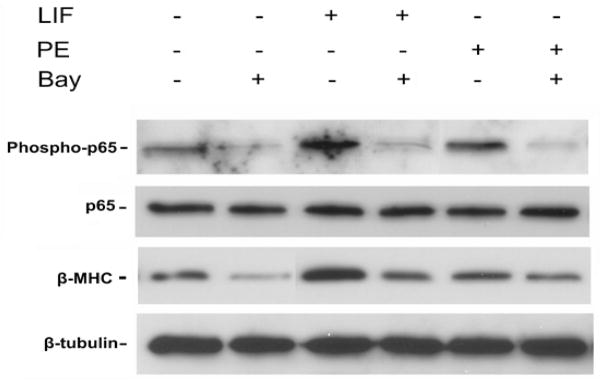
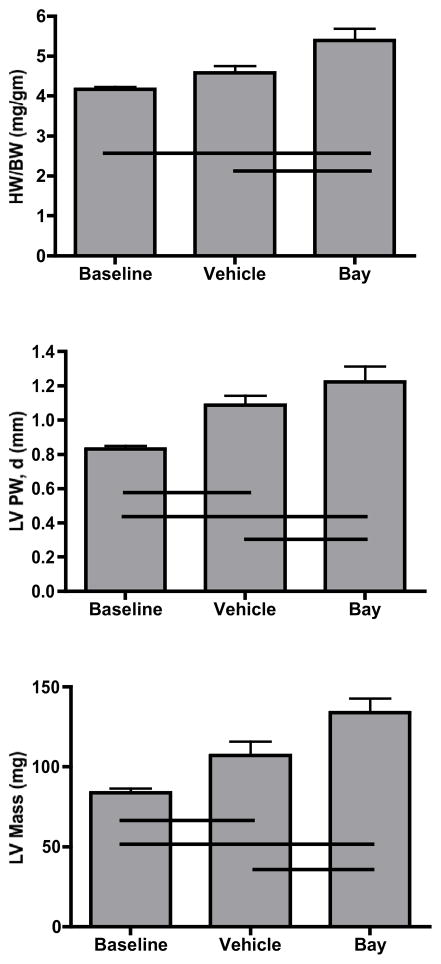
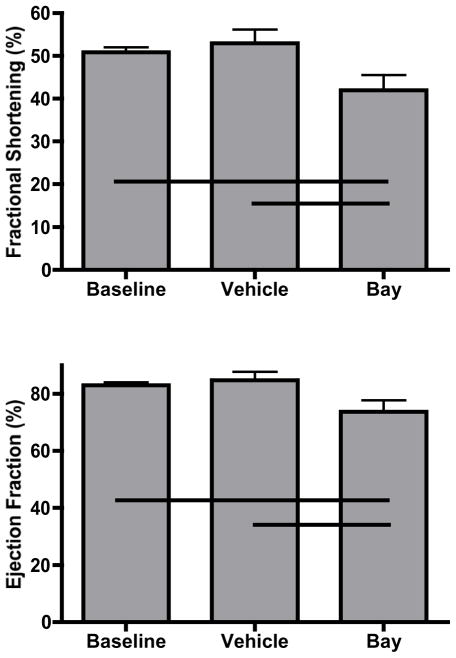
Inhibitory kappa-B kinase-β inhibition successfully decreased cardiomyocyte expression of phosphorylated p65 NF-κB and decreased expression of hypertrophic markers with stimulation in vitro. Three weeks after transverse aortic constriction, the mice treated with inhibitory kappa-B kinase-β inhibition more aggressively developed LVH, as measured by heart weight/body weight ratio, left ventricular mass, and wall thickness. These mice also demonstrated a functional decline, as measured by decreased fractional shortening and ejection fraction. These findings were associated with decreased protein expression of p65 NF-κB.
Although short-term pressure-overload results in compensatory LVH with normal cardiac function, NF-κB inhibition resulted in increased LVH that was associated with functional deterioration. These observations suggest that NF-κB is an important part of the adaptive phase of LVH, and its inhibition detrimentally affects cardiac remodeling.
大多数心血管研究表明,核转录因子 NF-κB(核因子 kappa-B)是导致心脏损伤的有害影响的因素。这种对 NF-κB 的明显负面看法与其在正常宿主炎症和免疫反应中的重要作用相竞争。压力超负荷、左心室肥厚(LVH)和心力衰竭代表了一种具有适应性和失调性成分的疾病谱。与已知与心肌缺血再灌注相关的作用相反,我们假设 NF-κB 是心脏重构代偿阶段所必需的。
C57BL6 小鼠通过微创横主动脉缩窄或近端 NF-κB 激酶、抑制性 κB 激酶-β 抑制进行处理。分离心肌细胞进行培养。对所有小鼠进行经胸超声心动图检查。
抑制性 κB 激酶-β 抑制成功降低了体外刺激时磷酸化 p65 NF-κB 的心肌细胞表达和肥大标志物的表达。横主动脉缩窄 3 周后,用抑制性 κB 激酶-β 抑制剂处理的小鼠更积极地发展为 LVH,以心脏重量/体重比、左心室质量和壁厚度来衡量。这些小鼠还表现出功能下降,以缩短分数和射血分数来衡量。这些发现与 p65 NF-κB 的蛋白表达减少有关。
尽管短期压力超负荷导致 LVH 伴有正常心功能,但 NF-κB 抑制导致 LVH 增加,与功能恶化有关。这些观察结果表明,NF-κB 是 LVH 适应阶段的重要组成部分,其抑制对心脏重构有不利影响。