Institute of Bioprocess and Biosystems Engineering, Hamburg University of Technology, Hamburg, Germany.
BMC Genomics. 2012 Apr 4;13:128. doi: 10.1186/1471-2164-13-128.
Mutans streptococci are a group of gram-positive bacteria including the primary cariogenic dental pathogen Streptococcus mutans and closely related species. Two component systems (TCSs) composed of a signal sensing histidine kinase (HK) and a response regulator (RR) play key roles in pathogenicity, but have not been comparatively studied for these oral bacterial pathogens.
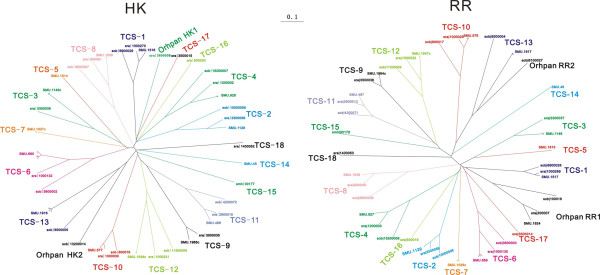
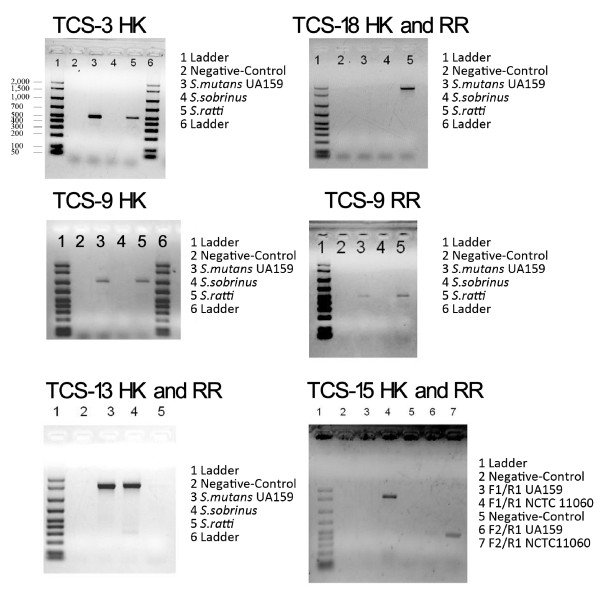
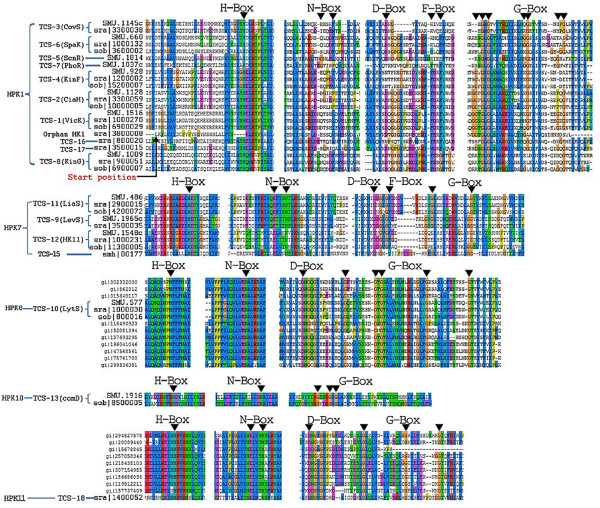
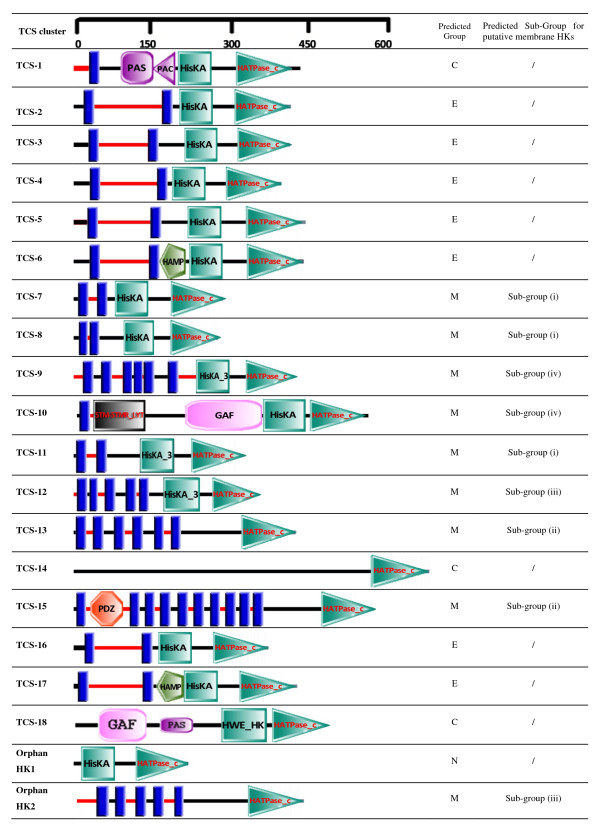
HKs and RRs of 8 newly sequenced mutans streptococci strains, including S. sobrinus DSM20742, S. ratti DSM20564 and six S. mutans strains, were identified and compared to the TCSs of S. mutans UA159 and NN2025, two previously genome sequenced S. mutans strains. Ortholog analysis revealed 18 TCS clusters (HK-RR pairs), 2 orphan HKs and 2 orphan RRs, of which 8 TCS clusters were common to all 10 strains, 6 were absent in one or more strains, and the other 4 were exclusive to individual strains. Further classification of the predicted HKs and RRs revealed interesting aspects of their putative functions. While TCS complements were comparable within the six S. mutans strains, S. sobrinus DSM20742 lacked TCSs possibly involved in acid tolerance and fructan catabolism, and S. ratti DSM20564 possessed 3 unique TCSs but lacked the quorum-sensing related TCS (ComDE). Selected computational predictions were verified by PCR experiments.
Differences in the TCS repertoires of mutans streptococci strains, especially those of S. sobrinus and S. ratti in comparison to S. mutans, imply differences in their response mechanisms for survival in the dynamic oral environment. This genomic level study of TCSs should help in understanding the pathogenicity of these mutans streptococci strains.
变形链球菌是一组革兰氏阳性细菌,包括主要致龋口腔病原体变形链球菌和密切相关的物种。由信号感应组氨酸激酶 (HK) 和应答调节子 (RR) 组成的双组分系统 (TCS) 在致病性中发挥关键作用,但尚未对这些口腔细菌病原体进行比较研究。
鉴定并比较了 8 株新测序的变形链球菌株(包括 S. sobrinus DSM20742、S. ratti DSM20564 和 6 株 S. mutans 株)的 HK 和 RR,以及先前基因组测序的 S. mutans UA159 和 NN2025 的 TCS。直系同源分析显示 18 个 TCS 簇(HK-RR 对)、2 个孤儿 HK 和 2 个孤儿 RR,其中 8 个 TCS 簇存在于所有 10 株菌中,6 个在 1 株或多株菌中缺失,其余 4 个是个别菌株所特有的。对预测的 HK 和 RR 的进一步分类揭示了它们潜在功能的有趣方面。虽然 6 株 S. mutans 株的 TCS 补体相当,但 S. sobrinus DSM20742 缺乏可能参与耐酸和果聚糖分解代谢的 TCS,而 S. ratti DSM20564 则具有 3 个独特的 TCS,但缺乏群体感应相关的 TCS (ComDE)。通过 PCR 实验验证了选择的计算预测。
变形链球菌株的 TCS 谱差异,尤其是 S. sobrinus 和 S. ratti 与 S. mutans 相比,表明它们在动态口腔环境中生存的反应机制存在差异。对 TCS 的这种基因组水平研究应有助于理解这些变形链球菌株的致病性。