Institute of Bioprocess and Biosystems, Technical University Hamburg Harburg, Hamburg Harburg, Germany.
BMC Genomics. 2013 Jun 28;14:430. doi: 10.1186/1471-2164-14-430.
Mutans streptococci are a group of bacteria significantly contributing to tooth decay. Their genetic variability is however still not well understood.
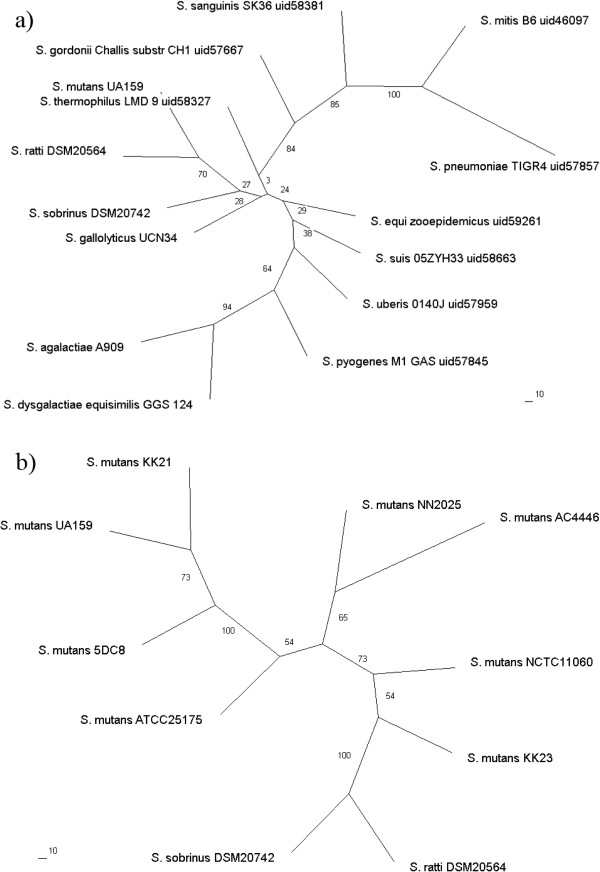
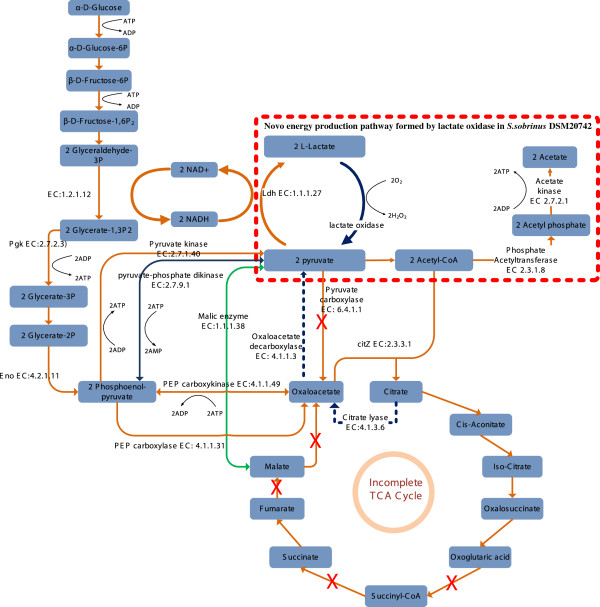
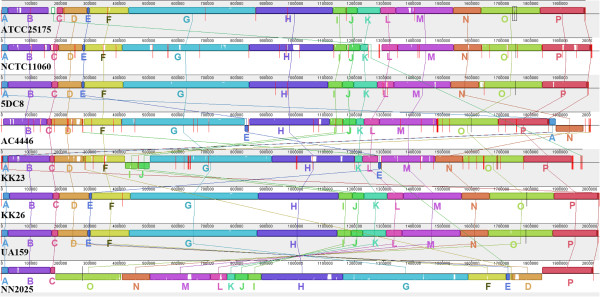
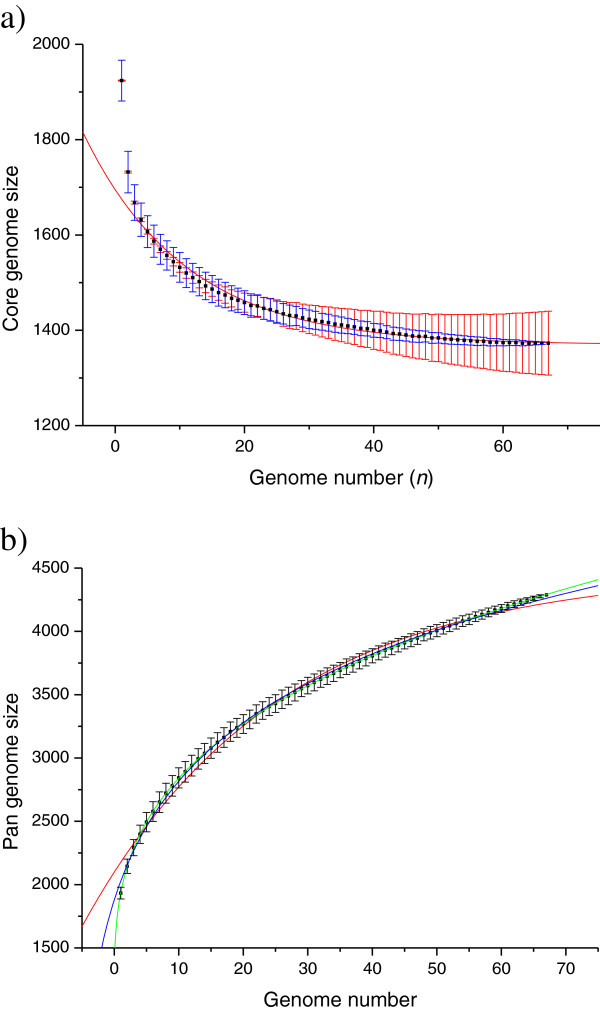
Genomes of 6 clinical S. mutans isolates of different origins, one isolate of S. sobrinus (DSM 20742) and one isolate of S. ratti (DSM 20564) were sequenced and comparatively analyzed. Genome alignment revealed a mosaic-like structure of genome arrangement. Genes related to pathogenicity are found to have high variations among the strains, whereas genes for oxidative stress resistance are well conserved, indicating the importance of this trait in the dental biofilm community. Analysis of genome-scale metabolic networks revealed significant differences in 42 pathways. A striking dissimilarity is the unique presence of two lactate oxidases in S. sobrinus DSM 20742, probably indicating an unusual capability of this strain in producing H2O2 and expanding its ecological niche. In addition, lactate oxidases may form with other enzymes a novel energetic pathway in S. sobrinus DSM 20742 that can remedy its deficiency in citrate utilization pathway.Using 67 S. mutans genomes currently available including the strains sequenced in this study, we estimates the theoretical core genome size of S. mutans, and performed modeling of S. mutans pan-genome by applying different fitting models. An "open" pan-genome was inferred.
The comparative genome analyses revealed diversities in the mutans streptococci group, especially with respect to the virulence related genes and metabolic pathways. The results are helpful for better understanding the evolution and adaptive mechanisms of these oral pathogen microorganisms and for combating them.
变形链球菌是一组对龋齿有重要贡献的细菌。然而,它们的遗传变异性仍未得到很好的理解。
对 6 株不同来源的临床变形链球菌 S. mutans 分离株、1 株 S. sobrinus(DSM 20742)和 1 株 S. ratti(DSM 20564)的基因组进行了测序和比较分析。基因组比对显示出基因组排列的马赛克样结构。致病性相关基因在菌株间存在高度变异,而氧化应激抗性基因则得到很好的保守,表明该特性在口腔生物膜群落中很重要。基因组规模代谢网络分析显示 42 条途径存在显著差异。一个显著的不同之处是 S. sobrinus DSM 20742 中存在两种独特的乳酸氧化酶,这可能表明该菌株在产生 H2O2 和扩展其生态位方面具有异常能力。此外,乳酸氧化酶可能与其他酶一起形成 S. sobrinus DSM 20742 中的一种新的能量途径,可以弥补其柠檬酸利用途径的缺陷。利用包括本研究中测序的菌株在内的 67 株 S. mutans 基因组,我们估计了 S. mutans 的理论核心基因组大小,并通过应用不同的拟合模型对 S. mutans 泛基因组进行建模。推断出一个“开放”的泛基因组。
比较基因组分析揭示了变形链球菌组的多样性,特别是在毒力相关基因和代谢途径方面。这些结果有助于更好地理解这些口腔病原体微生物的进化和适应机制,并有助于对抗它们。