Graduate Institute of Basic Medicine, Fu Jen Catholic University, College of Medicine, Taipei, Taiwan.
PLoS One. 2012;7(3):e34011. doi: 10.1371/journal.pone.0034011. Epub 2012 Mar 30.
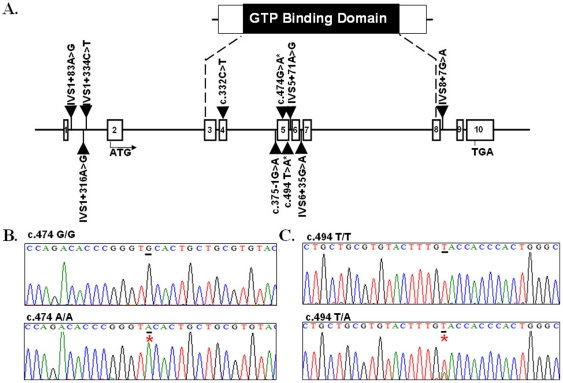
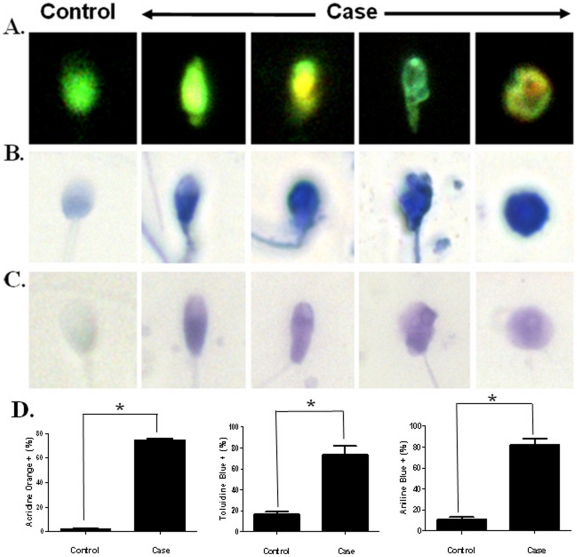
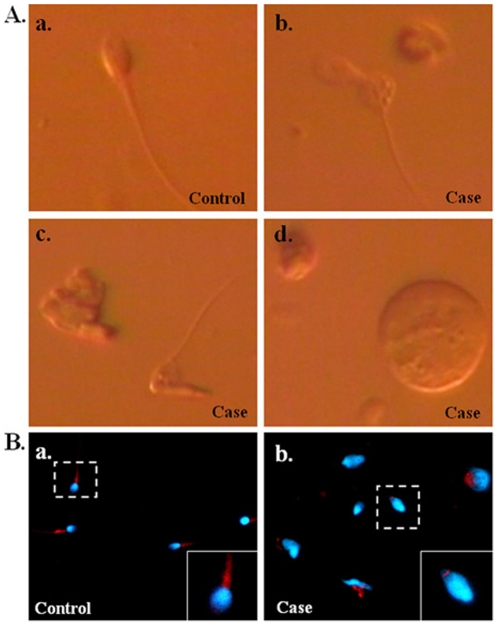
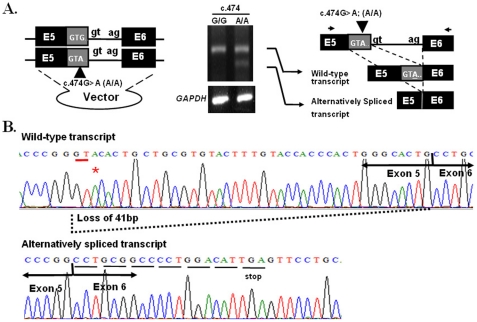
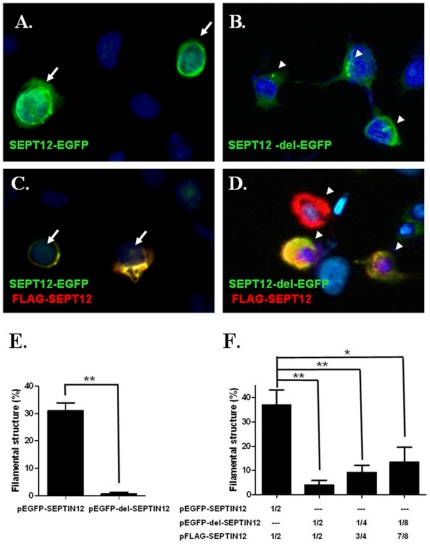
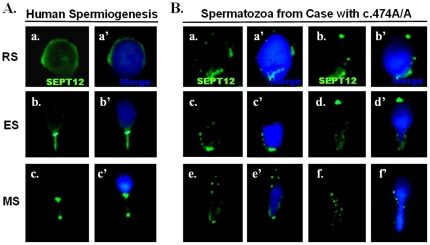
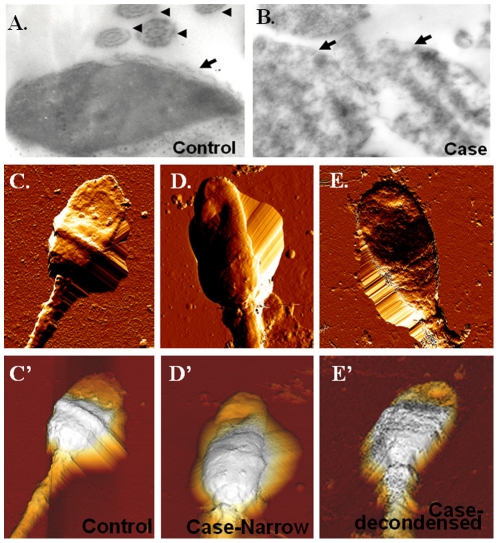
It is estimated that 10-15% of couples are infertile and male factors account for about half of these cases. With the advent of intracytoplasmic sperm injection (ICSI), many infertile men have been able to father offspring. However, teratozoospermia still remains a big challenge to tackle. Septins belong to a family of cytoskeletal proteins with GTPase activity and are involved in various biological processes e.g. morphogenesis, compartmentalization, apoptosis and cytokinesis. SEPTIN12, identified by c-DNA microarray analysis of infertile men, is exclusively expressed in the post meiotic male germ cells. Septin12(+/+)/Septin12(+/-) chimeric mice have multiple reproductive defects including the presence of immature sperm in the semen, and sperm with bent neck (defect of the annulus) and nuclear DNA damage. These facts make SEPTIN12 a potential sterile gene in humans. In this study, we sequenced the entire coding region of SEPTIN12 in infertile men (n = 160) and fertile controls (n = 200) and identified ten variants. Among them is the c.474 G>A variant within exon 5 that encodes part of the GTP binding domain. The variant creates a novel splice donor site that causes skipping of a portion of exon 5, resulting in a truncated protein lacking the C-terminal half of SEPTIN12. Most individuals homozygous for the c.474 A allele had teratozoospermia (abnormal sperm <14%) and their sperm showed bent tail and de-condensed nucleus with significant DNA damage. Ex vivo experiment showed truncated SEPT12 inhibits filament formation in a dose-dependent manner. This study provides the first causal link between SEPTIN12 genetic variant and male infertility with distinctive sperm pathology. Our finding also suggests vital roles of SEPT12 in sperm nuclear integrity and tail development.
据估计,有 10-15%的夫妇患有不孕不育症,其中男性因素约占一半。随着胞浆内单精子注射(ICSI)的出现,许多不孕不育的男性能够生育后代。然而,畸形精子症仍然是一个巨大的挑战。 凝溶胶蛋白属于具有 GTPase 活性的细胞骨架蛋白家族,参与多种生物学过程,如形态发生、区室化、细胞凋亡和胞质分裂。SEPTIN12 是通过对不孕不育男性的 cDNA 微阵列分析鉴定的,它只在减数后雄性生殖细胞中表达。 Septin12(+/+)/Septin12(+/-)嵌合体小鼠存在多种生殖缺陷,包括精液中存在不成熟精子,以及弯曲颈部的精子(环缺陷)和核 DNA 损伤。这些事实使 SEPTIN12 成为人类潜在的不育基因。在这项研究中,我们对 160 名不孕不育男性和 200 名生育正常男性的 SEPTIN12 全长编码区进行了测序,发现了 10 个变体。其中包括位于外显子 5 内的 c.474 G>A 变体,该变体编码 GTP 结合域的一部分。该变体创造了一个新的剪接供体位点,导致外显子 5 的一部分跳过,从而产生一个截短的蛋白,缺乏 SEPTIN12 的 C 端一半。大多数纯合 c.474 A 等位基因的个体患有畸形精子症(异常精子<14%),他们的精子表现出弯曲的尾巴和去浓缩的核,并且有明显的 DNA 损伤。体外实验表明,截断的 SEPT12 以剂量依赖的方式抑制丝形成。本研究首次将 SEPTIN12 遗传变异与具有独特精子病理学的男性不育症联系起来。我们的发现还表明 SEPT12 在精子核完整性和尾巴发育中起着重要作用。