King's College London, Wolfson Centre for Age-Related Diseases, Guy's Campus, London SE1 1UL, UK.
BMC Neurosci. 2012 Apr 5;13:38. doi: 10.1186/1471-2202-13-38.
Riluzole is a neuroprotective drug used in the treatment of motor neurone disease. Recent evidence suggests that riluzole can up-regulate the expression and activity of the astrocyte glutamate transporter, GLT-1. Given that regulation of glutamate transport is predicted to be neuroprotective in Parkinson's disease, we tested the effect of riluzole in parkinsonian rats which had received a unilateral 6-hydroxydopamine injection into the median forebrain bundle.
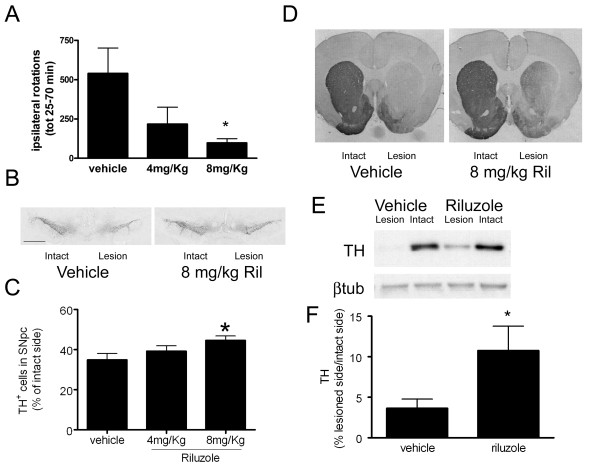
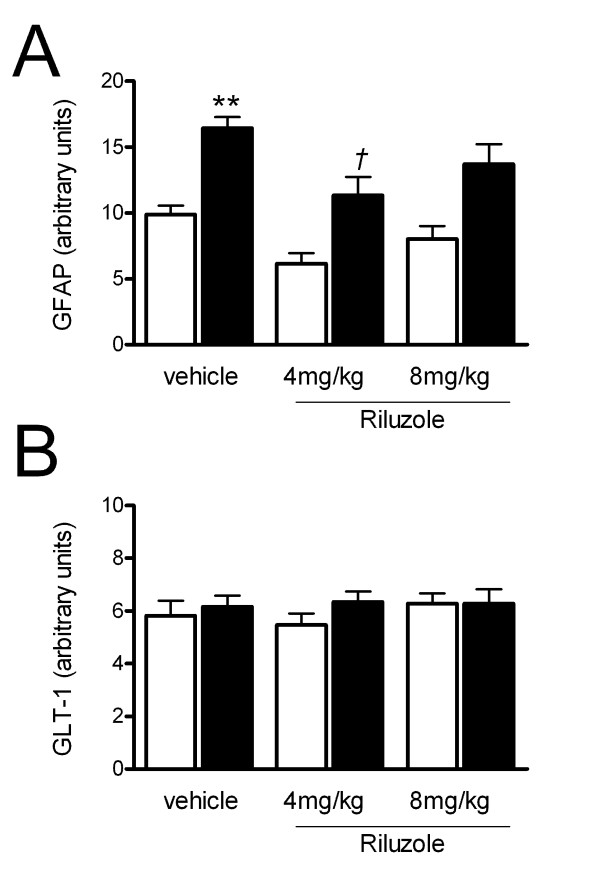
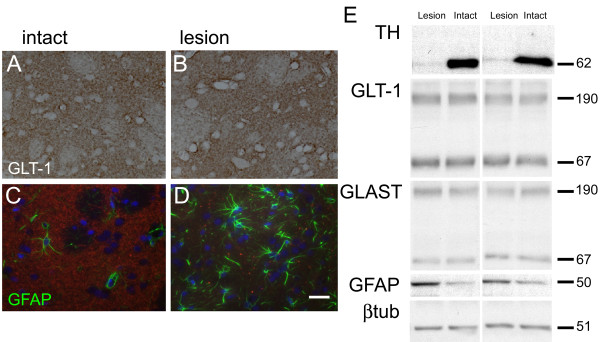
Rats were treated with intraperitoneal riluzole (4 mg/kg or 8 mg/kg), 1 hour before the lesion then once daily for seven days. Riluzole produced a modest but significant attenuation of dopamine neurone degeneration, assessed by suppression of amphetamine-induced rotations, preservation of tyrosine hydroxylase positive neuronal cell bodies in the substantia nigra pars compacta and attenuation of striatal tyrosine hydroxylase protein loss. Seven days after 6-hydroxydopamine lesion, reactive astrocytosis was observed in the striatum, as determined by increases in expression of glial fibrillary acidic protein, however the glutamate transporter, GLT-1, which is also expressed in astrocytes was not regulated by the lesion.
The results confirm that riluzole is a neuroprotective agent in a rodent model of parkinson's disease. Riluzole administration did not regulate GLT-1 levels but significantly reduced GFAP levels, in the lesioned striatum. Riluzole suppression of reactive astrocytosis is an intriguing finding which might contribute to the neuroprotective effects of this drug.
利鲁唑是一种用于治疗运动神经元疾病的神经保护药物。最近的证据表明,利鲁唑可以上调星形胶质细胞谷氨酸转运体 GLT-1 的表达和活性。鉴于谷氨酸转运的调节预计对帕金森病具有神经保护作用,我们测试了利鲁唑在接受单侧 6-羟多巴胺注射到中脑束的帕金森大鼠中的作用。
大鼠在损伤前 1 小时腹腔内给予利鲁唑(4mg/kg 或 8mg/kg),然后每天一次连续 7 天。利鲁唑产生了适度但显著的多巴胺神经元变性抑制作用,通过抑制安非他命诱导的旋转来评估,黑质致密部酪氨酸羟化酶阳性神经元细胞体的保留和纹状体酪氨酸羟化酶蛋白丢失的衰减。在 6-羟多巴胺损伤后 7 天,纹状体中观察到反应性星形胶质细胞增生,如胶质纤维酸性蛋白表达增加所确定,但也在星形胶质细胞中表达的谷氨酸转运体 GLT-1 不受损伤调节。
结果证实利鲁唑是帕金森病啮齿动物模型中的一种神经保护剂。利鲁唑给药不会调节 GLT-1 水平,但可显著降低损伤纹状体中的 GFAP 水平。利鲁唑抑制反应性星形胶质细胞增生是一个有趣的发现,可能有助于该药物的神经保护作用。