Sci Rep. 2012;2:354. doi: 10.1038/srep00354. Epub 2012 Apr 5.
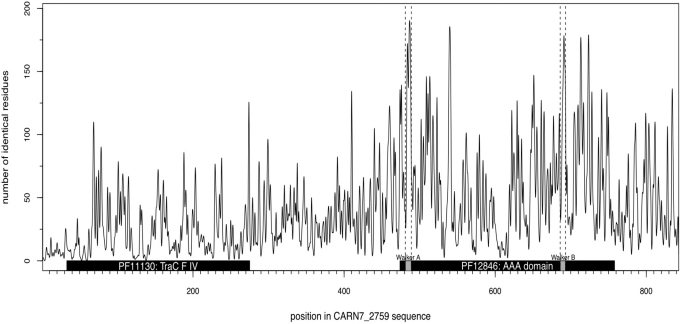
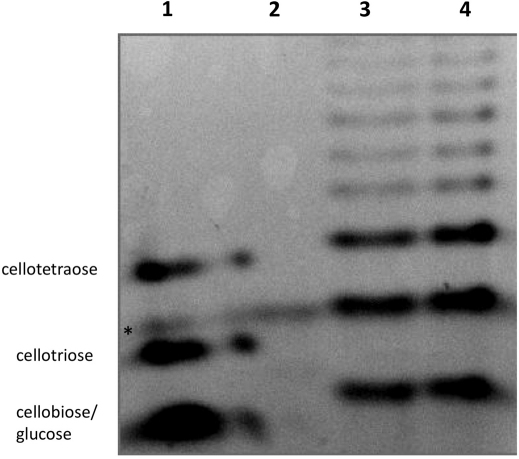
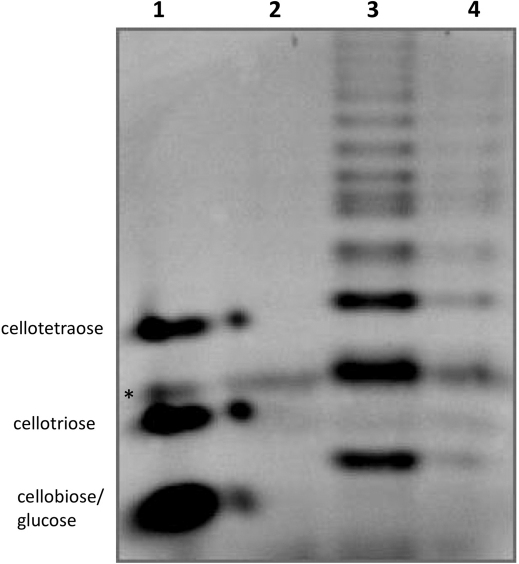
Acid Mine Drainages (AMDs) are extreme environments characterized by acidic and oligotrophic conditions and by metal contaminations. A function-based screening of an AMD-derived metagenomic library led to the discovery and partial characterization of two non-homologous endo-acting amylases sharing no sequence similarity with any known amylase nor glycosidase. None carried known amylolytic domains, nor could be assigned to any GH-family. One amylase displayed no similarity with any known protein, whereas the second one was similar to TraC proteins involved in the bacterial type IV secretion system. According to the scarce similarities with known proteins, 3D-structure modelling using I-TASSER was unsuccessful. This study underlined the utility of a function-driven metagenomic approach to obtain a clearer image of the bacterial community enzymatic landscape. More generally, this work points out that screening for microorganisms or biomolecules in a priori incongruous environments could provide unconventional and new exciting ways for bioprospecting.
酸性矿山排水(AMD)是一种极端环境,其特点是酸性和贫营养条件以及金属污染。对 AMD 衍生宏基因组文库进行基于功能的筛选,发现并部分表征了两种非同源内切作用的淀粉酶,它们与任何已知的淀粉酶或糖苷酶均无序列相似性。它们都不具有已知的淀粉酶结构域,也不能归属于任何 GH 家族。一种淀粉酶与任何已知蛋白质都没有相似性,而第二种则与参与细菌 IV 型分泌系统的 TraC 蛋白相似。根据与已知蛋白质的相似性很少,使用 I-TASSER 的 3D 结构建模不成功。这项研究强调了功能驱动的宏基因组方法在获得更清晰的细菌群落酶学景观方面的效用。更广泛地说,这项工作指出,在前瞻性不一致的环境中筛选微生物或生物分子可能为生物勘探提供非传统和令人兴奋的新途径。