Graduate Program in Neuroscience, University of Connecticut Health Center, Farmington, CT 06030-1410, USA.
Alcohol Clin Exp Res. 2012 Oct;36(10):1678-87. doi: 10.1111/j.1530-0277.2012.01792.x. Epub 2012 Apr 6.
Studies of the effects of alcohol on N-methyl-d-aspartate (NMDA) receptor function and gene expression have depended on rodent or postmortem human brain models. Ideally, the effects of alcohol might better be examined in living neural tissue derived from human subjects. In this study, we used new technologies to reprogram human subject-specific tissue into pluripotent cell colonies and generate human neural cultures as a model system to examine the molecular actions of alcohol.
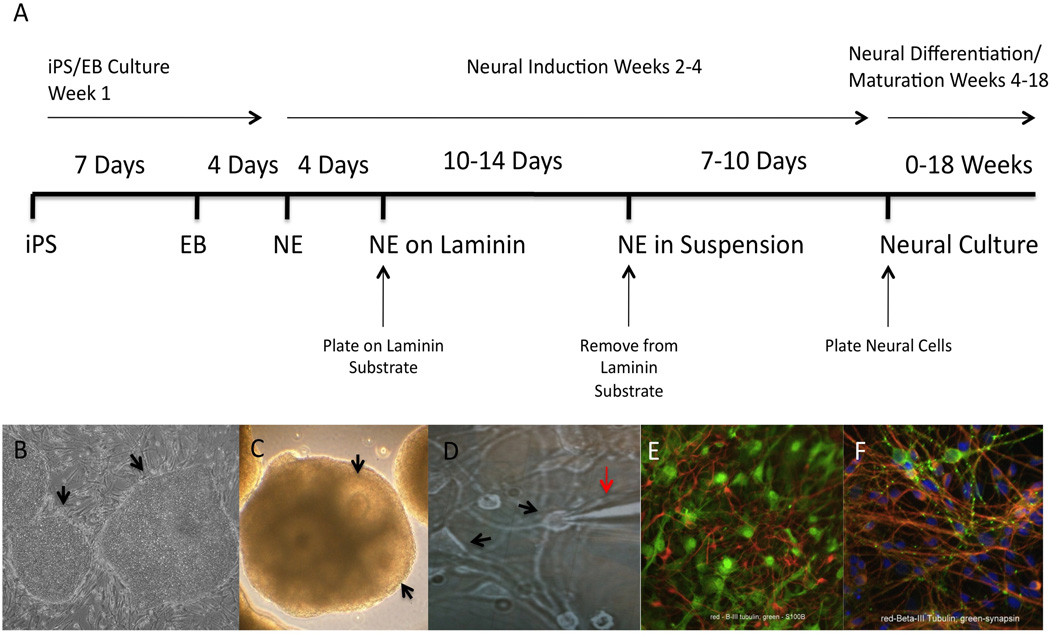
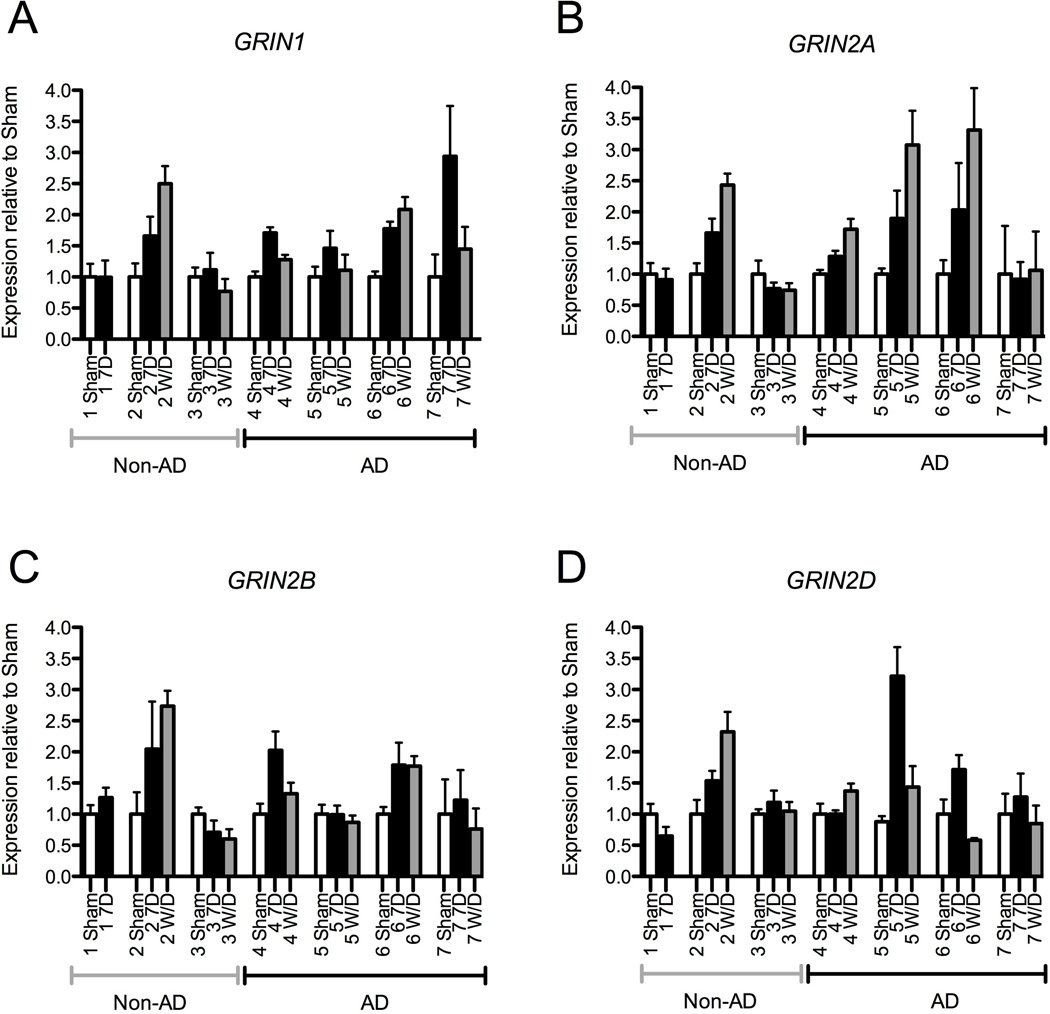
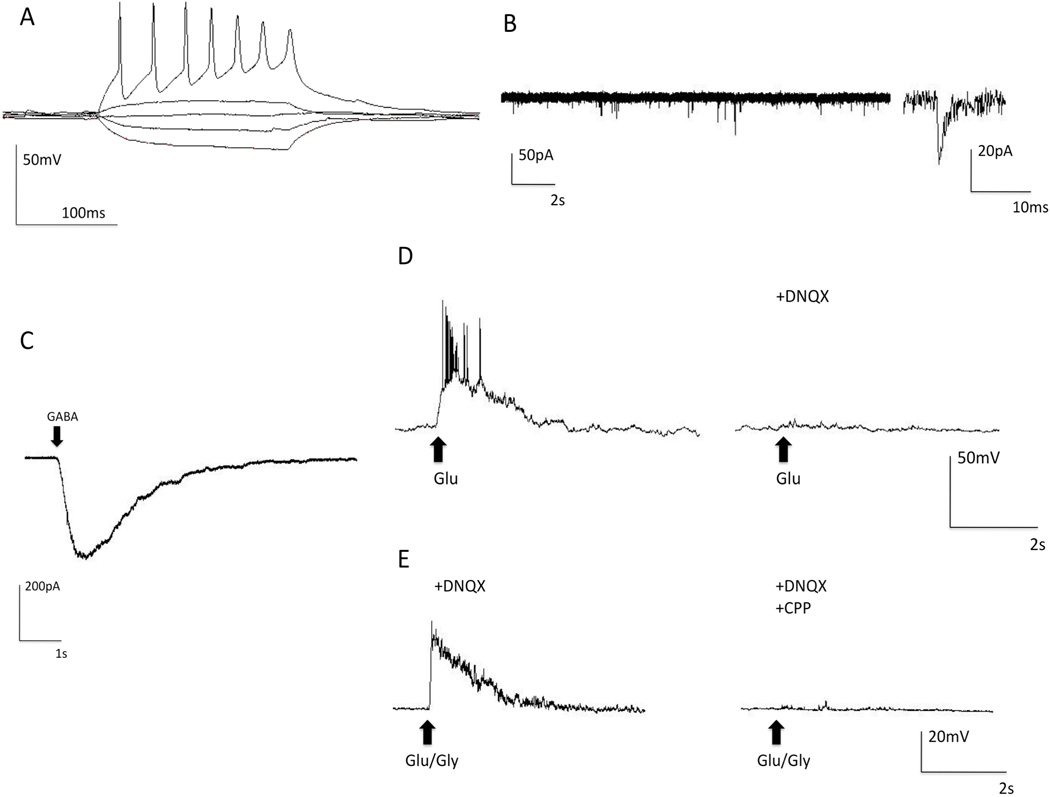
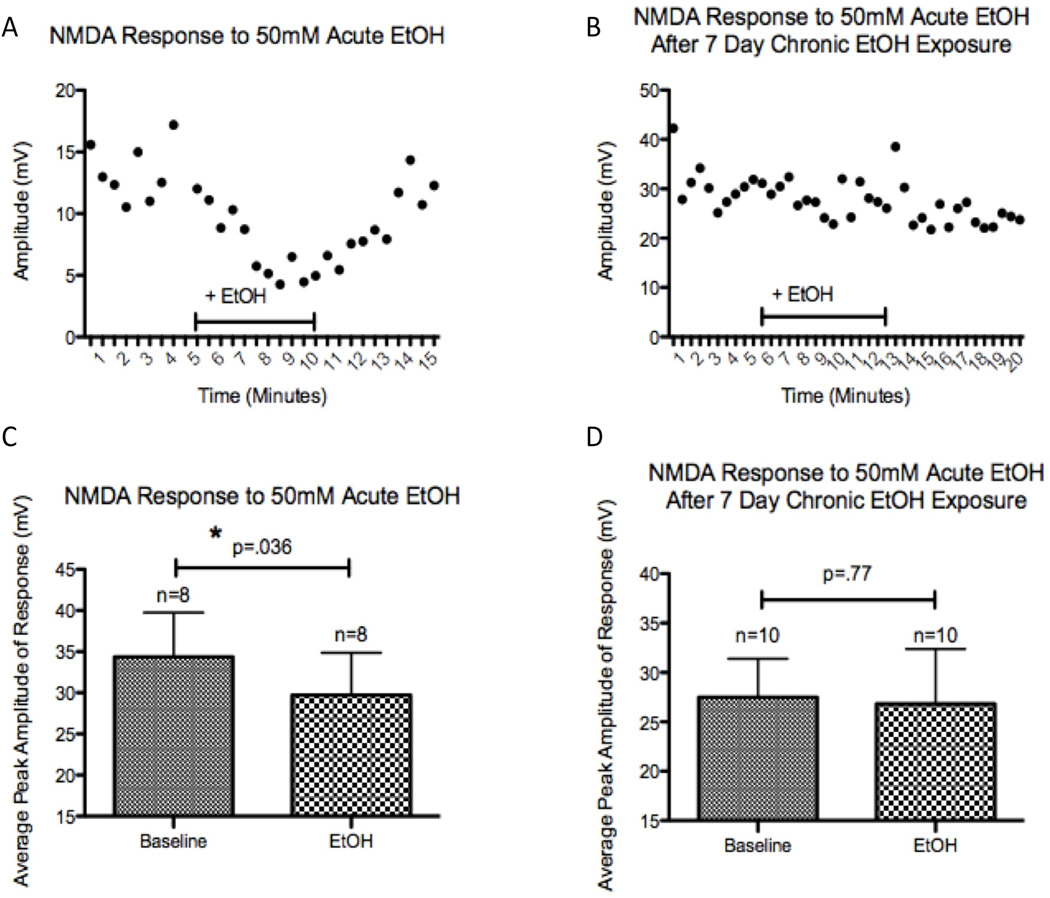
Induced pluripotent stem (iPS) cells were generated from skin biopsies taken from 7 individuals, 4 alcohol-dependent subjects, and 3 social drinkers. We differentiated the iPS cells into neural cultures and characterized them by immunocytochemistry using antibodies for the neuronal marker beta-III tubulin, glial marker s100β, and synaptic marker synpasin-1. Electrophysiology was performed to characterize the iPS-derived neurons and to measure the effects of acute alcohol exposure on the NMDA receptor response in chronically alcohol exposed and nonexposed neural cultures from 1 nonalcoholic. Finally, we examined changes in mRNA expression of the NMDA receptor subunit genes GRIN1, GRIN2A, GRIN2B, and GRIN2D after 7 days of alcohol exposure and after 24-hour withdrawal from chronic alcohol exposure.
Immunocytochemistry revealed positive staining for neuronal, glial, and synaptic markers. iPS-derived neurons displayed spontaneous electrical properties and functional ionotropic receptors. Acute alcohol exposure significantly attenuated the NMDA response, an effect that was not observed after 7 days of chronic alcohol exposure. After 7 days of chronic alcohol exposure, there were significant increases in mRNA expression of GRIN1, GRIN2A, and GRIN2D in cultures derived from alcoholic subjects but not in cultures derived from nonalcoholics.
These findings support the potential utility of human iPS-derived neural cultures as in vitro models to examine the molecular actions of alcohol on human neural cells.
关于酒精对 N-甲基-D-天冬氨酸(NMDA)受体功能和基因表达的影响的研究依赖于啮齿动物或死后人类大脑模型。理想情况下,最好在源自人类受试者的活体神经组织中检查酒精的影响。在这项研究中,我们使用新技术将人类受试者特定组织重新编程为多能细胞集落,并生成人类神经培养物作为模型系统,以检查酒精的分子作用。
从 7 个人(4 名酒精依赖者和 3 名社交饮酒者)的皮肤活检中产生诱导多能干细胞(iPS)细胞。我们将 iPS 细胞分化为神经培养物,并通过神经元标志物β-III 微管蛋白、神经胶质标志物 s100β 和突触标志物 synpasin-1 的免疫细胞化学对其进行特征描述。进行电生理学以表征 iPS 衍生的神经元,并测量急性酒精暴露对慢性酒精暴露和非暴露神经培养物中 NMDA 受体反应的影响。最后,我们检查了在酒精暴露 7 天后和慢性酒精暴露后 24 小时戒断后 NMDA 受体亚基基因 GRIN1、GRIN2A、GRIN2B 和 GRIN2D 的 mRNA 表达变化。
免疫细胞化学显示神经元、神经胶质和突触标志物的阳性染色。iPS 衍生的神经元显示自发的电生理特性和功能性离子型受体。急性酒精暴露显著减弱了 NMDA 反应,而在慢性酒精暴露 7 天后并未观察到这种反应。在慢性酒精暴露 7 天后,源自酒精依赖者的培养物中 GRIN1、GRIN2A 和 GRIN2D 的 mRNA 表达显著增加,但在非酒精依赖者的培养物中没有增加。
这些发现支持人类 iPS 衍生的神经培养物作为体外模型用于检查酒精对人类神经细胞的分子作用的潜力。