Department of Cell and Molecular Biology, Karolinska Institutet, S-17177 Stockholm, Sweden.
J Cell Biol. 2012 Apr 16;197(2):267-81. doi: 10.1083/jcb.201106074. Epub 2012 Apr 9.
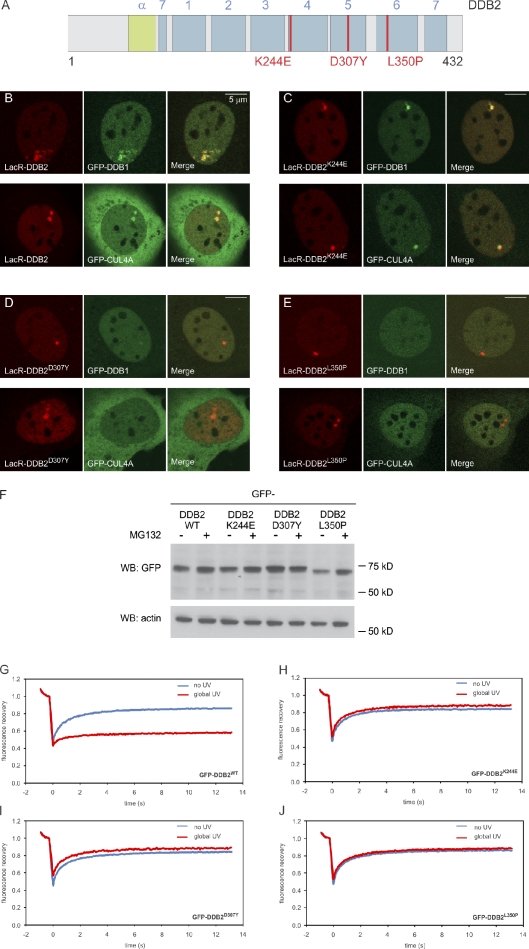
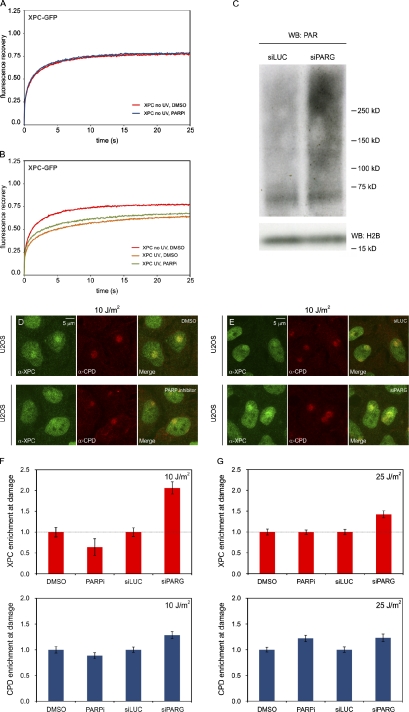
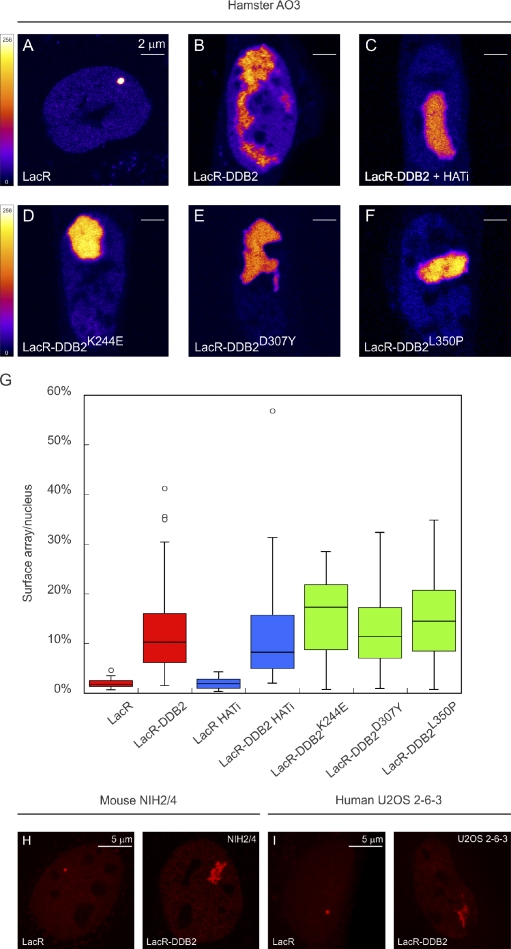
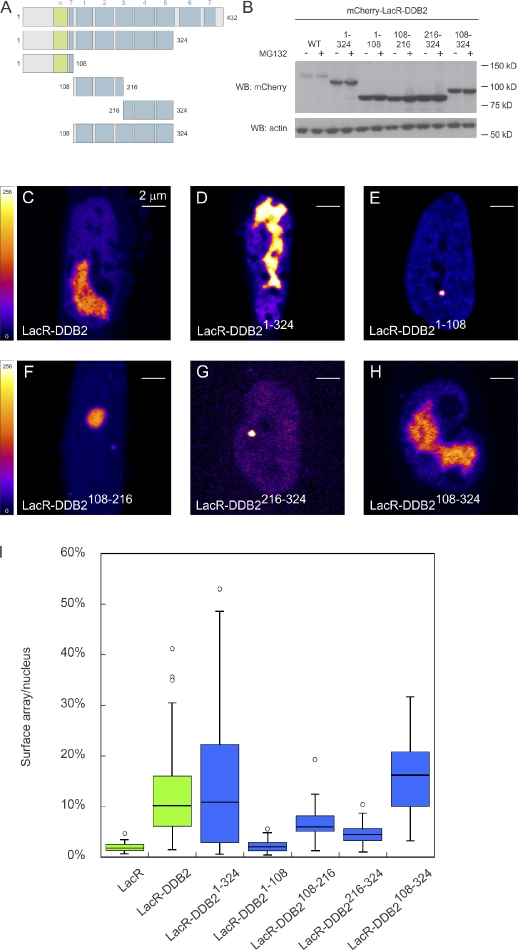
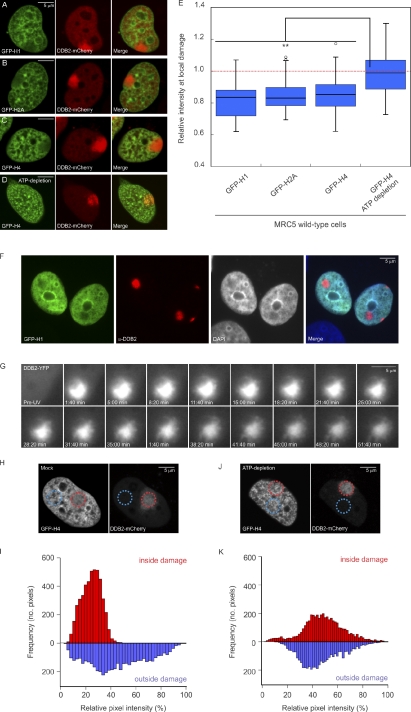
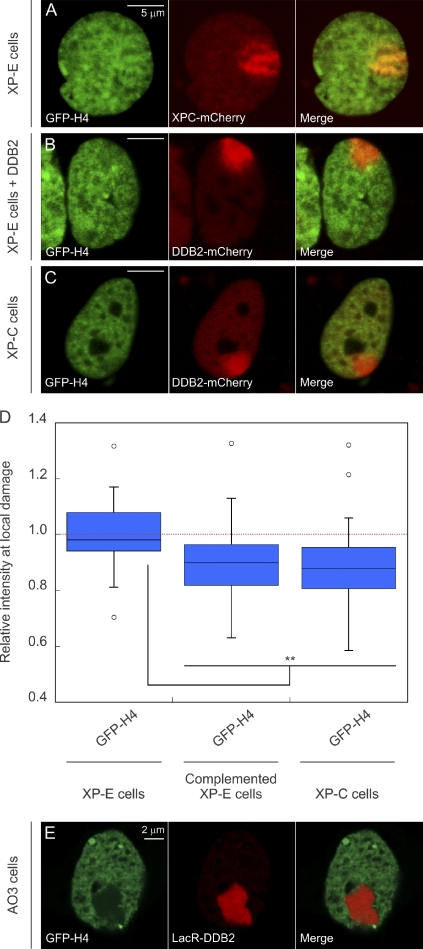
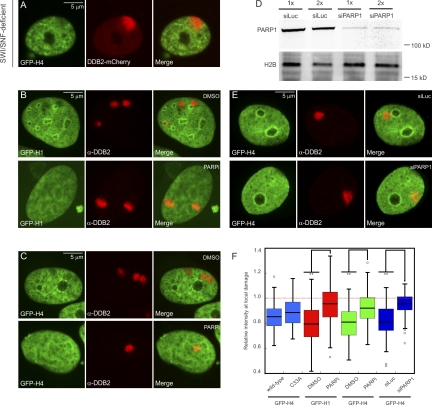
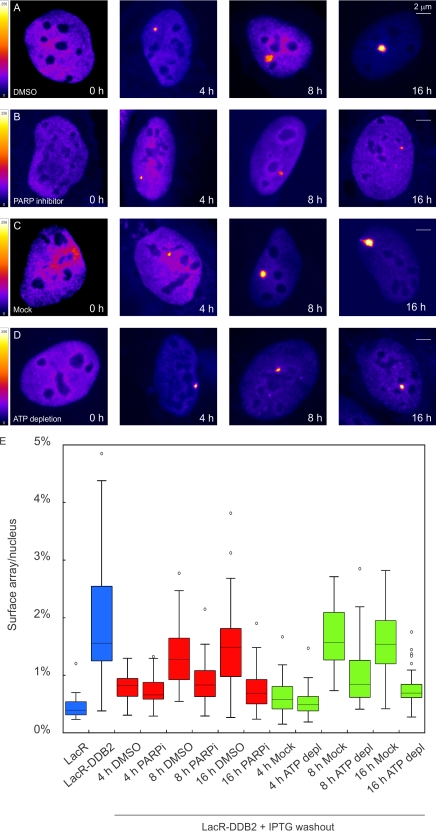
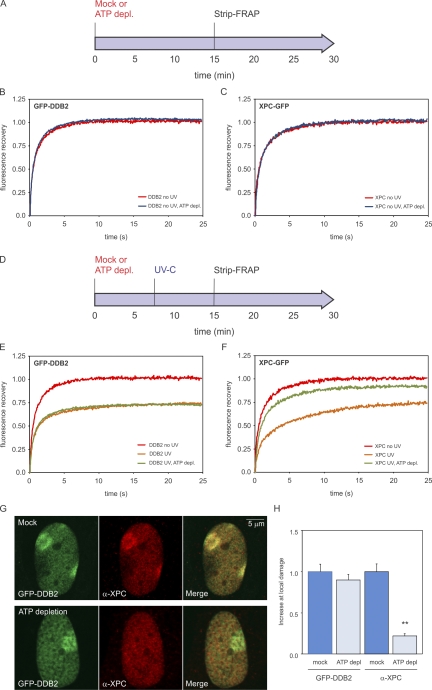
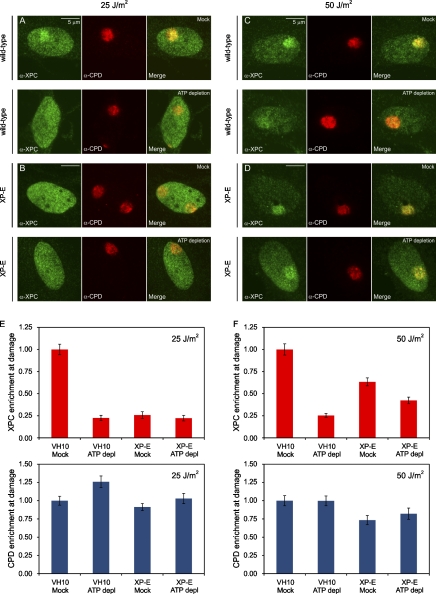
Nucleotide excision repair (NER) is the principal pathway that removes helix-distorting deoxyribonucleic acid (DNA) damage from the mammalian genome. Recognition of DNA lesions by xeroderma pigmentosum group C (XPC) protein in chromatin is stimulated by the damaged DNA-binding protein 2 (DDB2), which is part of a CUL4A-RING ubiquitin ligase (CRL4) complex. In this paper, we report a new function of DDB2 in modulating chromatin structure at DNA lesions. We show that DDB2 elicits unfolding of large-scale chromatin structure independently of the CRL4 ubiquitin ligase complex. Our data reveal a marked adenosine triphosphate (ATP)-dependent reduction in the density of core histones in chromatin containing UV-induced DNA lesions, which strictly required functional DDB2 and involved the activity of poly(adenosine diphosphate [ADP]-ribose) polymerase 1. Finally, we show that lesion recognition by XPC, but not DDB2, was strongly reduced in ATP-depleted cells and was regulated by the steady-state levels of poly(ADP-ribose) chains.
核苷酸切除修复(NER)是从哺乳动物基因组中清除螺旋扭曲的脱氧核糖核酸(DNA)损伤的主要途径。XPC 蛋白在染色质中对 DNA 损伤的识别受到受损 DNA 结合蛋白 2(DDB2)的刺激,DDB2 是 CUL4A-RING 泛素连接酶(CRL4)复合物的一部分。在本文中,我们报告了 DDB2 在调节 DNA 损伤处染色质结构方面的新功能。我们表明,DDB2 独立于 CRL4 泛素连接酶复合物引发大规模染色质结构的展开。我们的数据显示,在含有紫外线诱导的 DNA 损伤的染色质中,核心组蛋白的密度明显降低,这需要功能性 DDB2 和多聚(腺苷二磷酸[ADP]-核糖)聚合酶 1 的活性。最后,我们表明,XPC 对损伤的识别,但不是 DDB2,在 ATP 耗尽的细胞中显著减少,并且受多聚(ADP-核糖)链的稳态水平调节。