Institute of Immunology, Alexander Fleming Biomedical Sciences Research Center, 16672 Athens, Greece.
J Exp Med. 2012 May 7;209(5):925-33. doi: 10.1084/jem.20112012. Epub 2012 Apr 9.
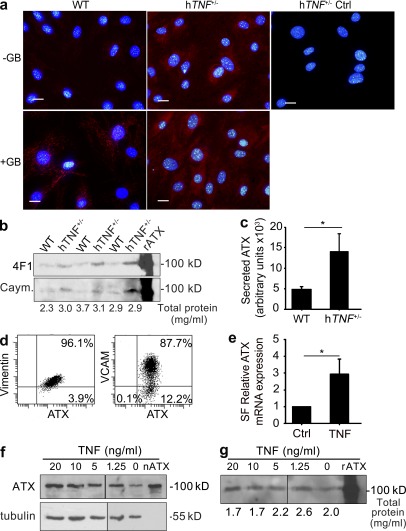
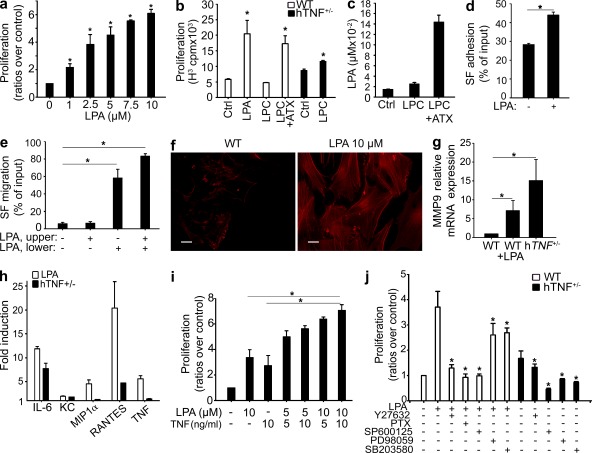
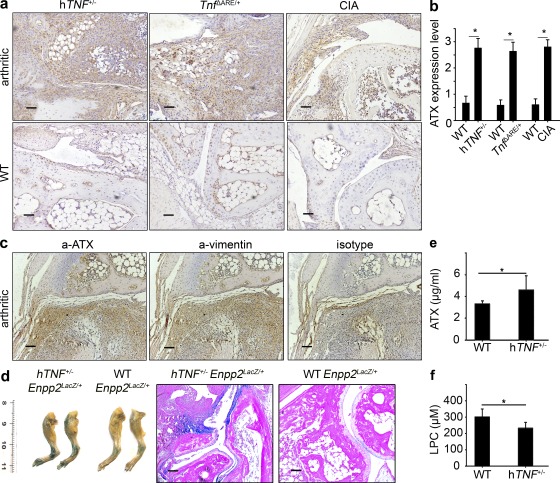
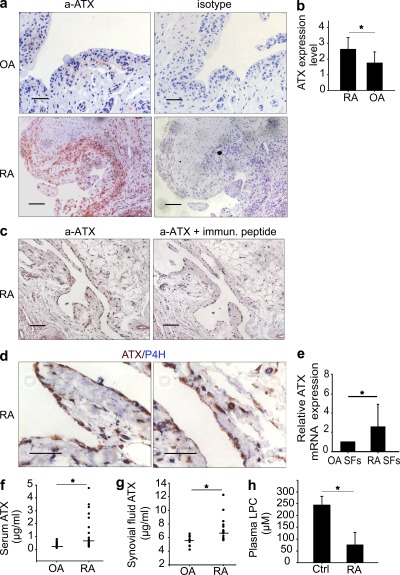
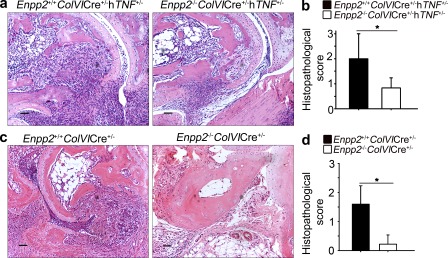
Rheumatoid arthritis is a destructive arthropathy characterized by chronic synovial inflammation that imposes a substantial socioeconomic burden. Under the influence of the proinflammatory milieu, synovial fibroblasts (SFs), the main effector cells in disease pathogenesis, become activated and hyperplastic, releasing proinflammatory factors and tissue-remodeling enzymes. This study shows that activated arthritic SFs from human patients and animal models express significant quantities of autotaxin (ATX; ENPP2), a lysophospholipase D that catalyzes the conversion of lysophosphatidylcholine to lysophosphatidic acid (LPA). ATX expression from SFs was induced by TNF, and LPA induced SF activation and effector functions in synergy with TNF. Conditional genetic ablation of ATX in mesenchymal cells, including SFs, resulted in disease attenuation in animal models of arthritis, establishing the ATX/LPA axis as a novel player in chronic inflammation and the pathogenesis of arthritis and a promising therapeutic target.
类风湿性关节炎是一种破坏性的关节病,其特征为慢性滑膜炎,这给社会经济带来了巨大负担。在促炎环境的影响下,滑膜成纤维细胞(SFs)——疾病发病机制中的主要效应细胞——被激活并增生,释放促炎因子和组织重塑酶。本研究表明,来自人类患者和动物模型的活化关节炎 SFs 表达大量的自分泌酶(ATX;ENPP2),这是一种溶脂酶 D,可催化溶血磷脂酰胆碱转化为溶血磷脂酸(LPA)。TNF 诱导 SFs 中 ATX 的表达,LPA 与 TNF 协同诱导 SF 活化和效应功能。在包括 SFs 在内的间充质细胞中条件性基因敲除 ATX 可导致关节炎动物模型疾病减轻,这确立了 ATX/LPA 轴作为慢性炎症和关节炎发病机制中的一个新的参与者,以及一个有前途的治疗靶点。