Unité Mixte de Recherche_S 1064, ex643, Institut National de la Santé et de la Recherche Médicale, Institute for Transplantation/Urology and Nephrology, Nantes, France.
PLoS One. 2012;7(4):e34795. doi: 10.1371/journal.pone.0034795. Epub 2012 Apr 9.
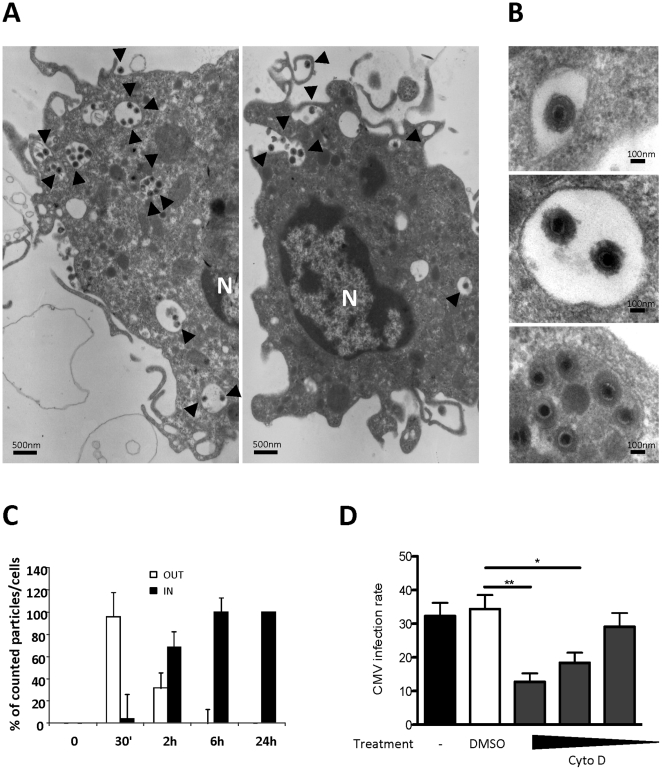
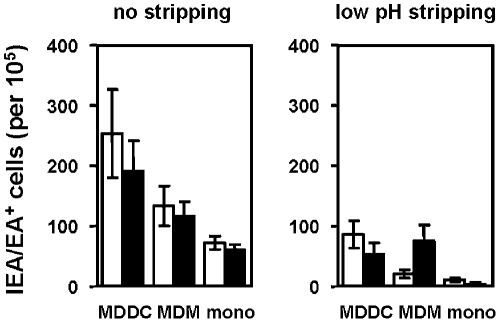
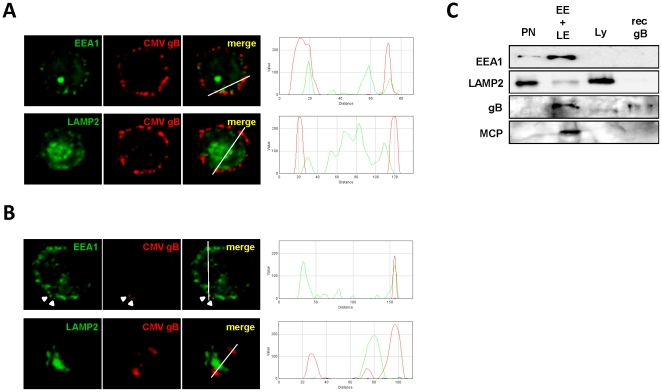
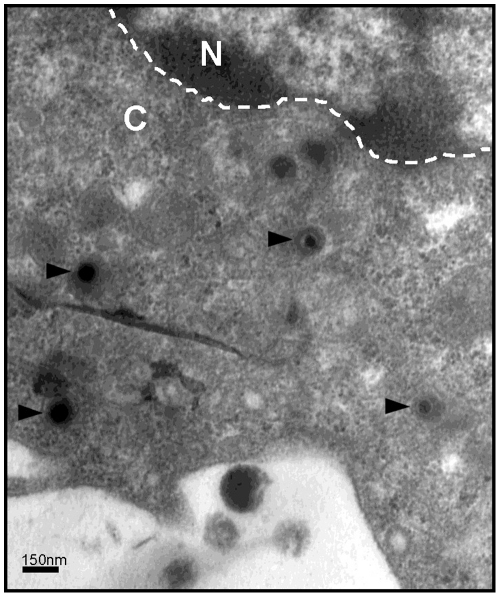
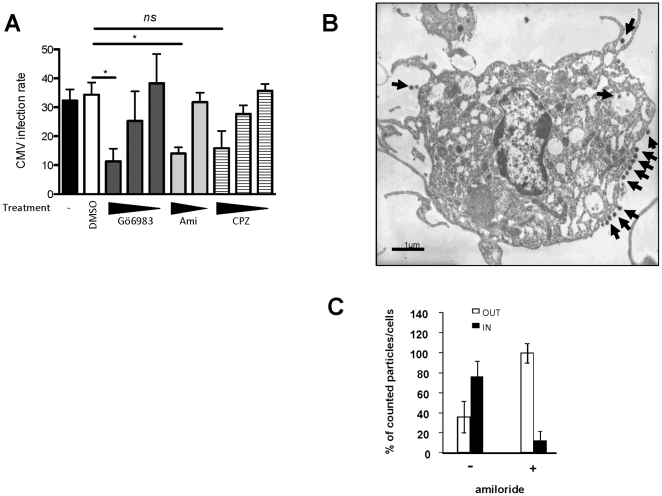
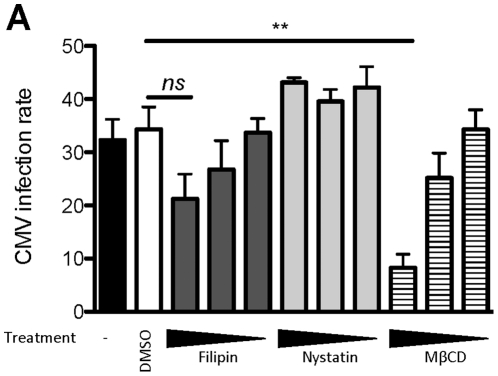
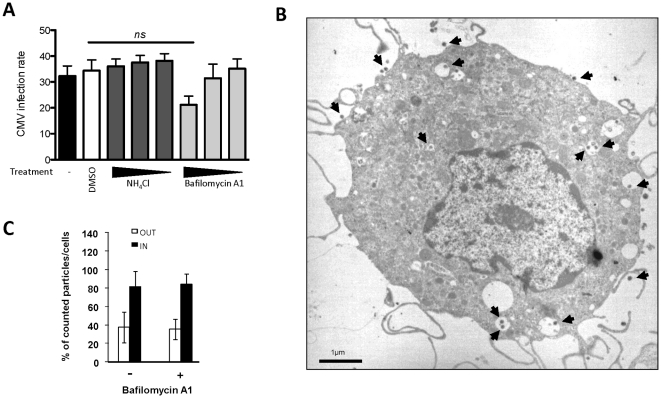
Human cytomegalovirus (HCMV) is a ubiquitous herpesvirus that is able to infect fibroblastic, epithelial, endothelial and hematopoietic cells. Over the past ten years, several groups have provided direct evidence that dendritic cells (DCs) fully support the HCMV lytic cycle. We previously demonstrated that the C-type lectin dendritic cell-specific intercellular adhesion molecule-3-grabbing non-integrin (DC-SIGN) has a prominent role in the docking of HCMV on monocyte-derived DCs (MDDCs). The DC-SIGN/HCMV interaction was demonstrated to be a crucial and early event that substantially enhanced infection in trans, i.e., from one CMV-bearing cell to another non-infected cell (or trans-infection), and rendered susceptible cells fully permissive to HCMV infection. Nevertheless, nothing is yet known about how HCMV enters MDDCs. In this study, we demonstrated that VHL/E HCMV virions (an endothelio/dendrotropic strain) are first internalized into MDDCs by a macropinocytosis-like process in an actin- and cholesterol-dependent, but pH-independent, manner. We observed the accumulation of virions in large uncoated vesicles with endosomal features, and the virions remained as intact particles that retained infectious potential for several hours. This trans-infection property was specific to MDDCs because monocyte-derived macrophages or monocytes from the same donor were unable to allow the accumulation of and the subsequent transmission of the virus. Together, these data allowed us to delineate the early mechanisms of the internalization and entry of an endothelio/dendrotropic HCMV strain into human MDDCs and to propose that DCs can serve as a "Trojan horse" to convey CMV from entry sites to other locations that may favor the occurrence of either latency or acute infection.
人类巨细胞病毒(HCMV)是一种普遍存在的疱疹病毒,能够感染成纤维细胞、上皮细胞、内皮细胞和造血细胞。在过去的十年中,有几个研究小组提供了直接证据,表明树突状细胞(DC)完全支持 HCMV 的裂解周期。我们之前的研究表明,C 型凝集素树突状细胞特异性细胞间黏附分子-3 捕获非整合素(DC-SIGN)在 HCMV 与单核细胞衍生的树突状细胞(MDDC)对接中具有重要作用。DC-SIGN/HCMV 相互作用是一个关键的早期事件,它显著增强了从一个携带 HCMV 的细胞到另一个未感染的细胞的感染(或转染感染),并使易感细胞对 HCMV 感染完全易感。然而,目前还不知道 HCMV 是如何进入 MDDC 的。在这项研究中,我们证明了 VHL/E HCMV 病毒粒子(一种内皮/树突状趋化性株)首先通过类似于巨胞饮的过程,以肌动蛋白和胆固醇依赖但 pH 不依赖的方式被内化到 MDDC 中。我们观察到病毒粒子在具有内体特征的大未涂层小泡中积累,并且病毒粒子保持完整的颗粒状态,在几个小时内保持感染能力。这种转染特性是 MDDC 特有的,因为来自同一供体的单核细胞衍生的巨噬细胞或单核细胞不能允许病毒的积累和随后的传播。这些数据使我们能够描绘内皮/树突状趋化性 HCMV 株进入人 MDDC 的内化和进入的早期机制,并提出 DC 可以作为“特洛伊木马”,将 CMV 从进入部位传递到其他可能有利于潜伏或急性感染发生的部位。