Eisenberg David L, Allsworth Jenifer E, Zhao Qiuhong, Peipert Jeffrey F
Division of Clinical Research, Department of Obstetrics & Gynecology, Washington University School of Medicine in St. Louis, St. Louis, MO 63110, USA.
Infect Dis Obstet Gynecol. 2012;2012:717163. doi: 10.1155/2012/717163. Epub 2012 Feb 14.
To analyze a nationally representative sample of women for correlates of dual-contraceptive-method use.
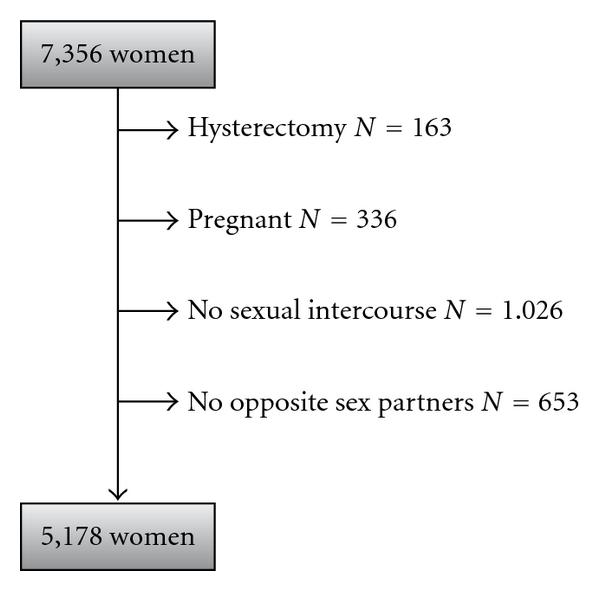
We conducted an analysis of the National Survey of Family Growth, 2006-2008, a cross-sectional survey of reproductive-aged women in the United States.
Dual method use was reported by 7.3% of the 5,178 women in the sample. Correlates of higher rates of dual-contraceptive-method use included age younger than 36 years and nonmarried marital status. Lower rates of dual method use were observed for women with less than a high-school education and women without consistent health insurance in the past year. Compared to women using oral contraceptives, use of the contraceptive injection or long-acting reversible contraception was associated with lower dual-method use.
The overall rate of dual-method use in the USA is low. Future interventions to promote dual method use should target high-risk groups with modifiable risk factors.
分析具有全国代表性的女性样本中使用双重避孕方法的相关因素。
我们对2006 - 2008年全国家庭生育调查进行了分析,这是一项针对美国育龄女性的横断面调查。
样本中的5178名女性中有7.3%报告使用双重避孕方法。双重避孕方法使用率较高的相关因素包括年龄小于36岁和未婚婚姻状况。受教育程度低于高中的女性以及过去一年没有持续医疗保险的女性双重避孕方法使用率较低。与使用口服避孕药的女性相比,使用避孕针剂或长效可逆避孕方法与较低的双重避孕方法使用率相关。
美国双重避孕方法的总体使用率较低。未来促进双重避孕方法使用的干预措施应针对具有可改变风险因素的高危人群。