Laboratory of Microbiology, Department of Agrotechnology and Food Sciences, Wageningen University, Wageningen, The Netherlands.
Mol Cell. 2012 Jun 8;46(5):595-605. doi: 10.1016/j.molcel.2012.03.018. Epub 2012 Apr 19.
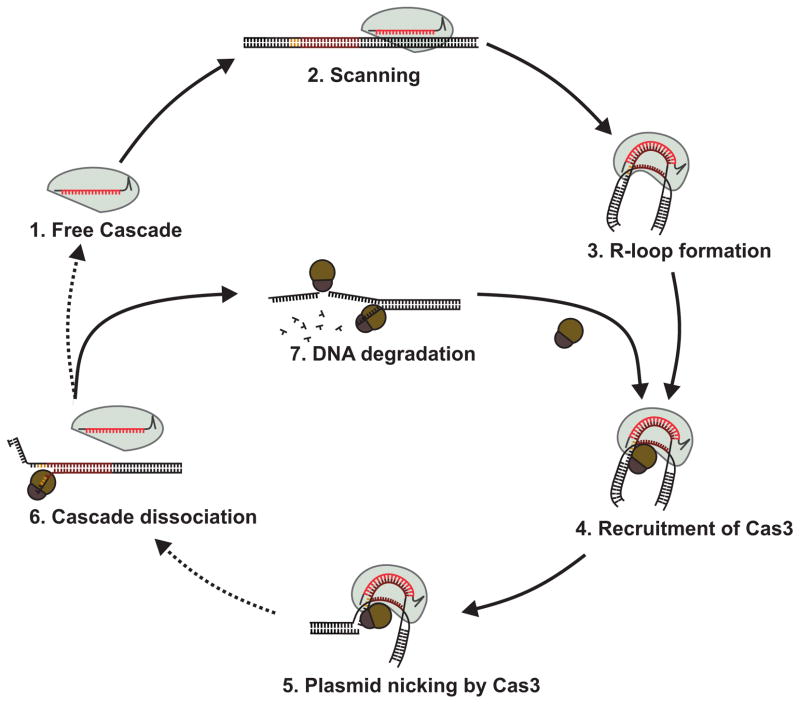
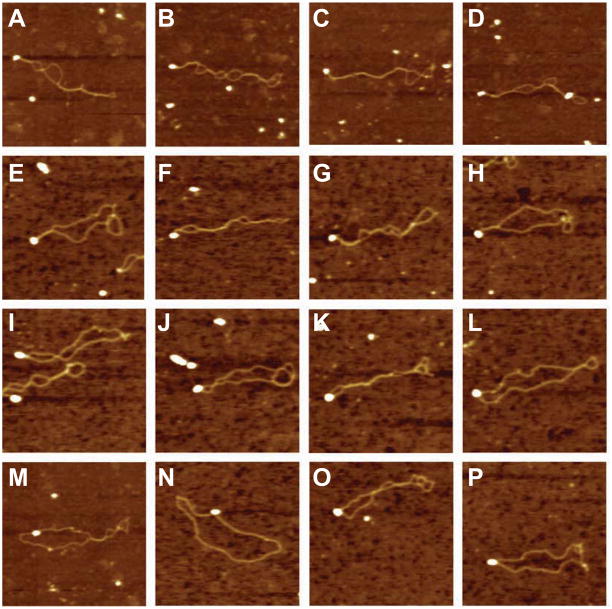
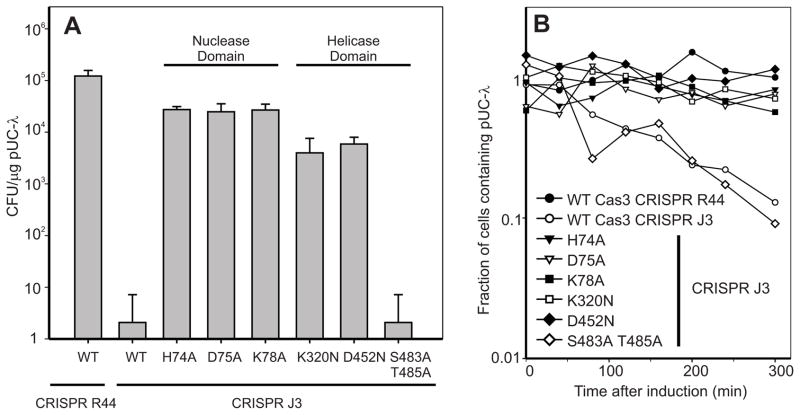
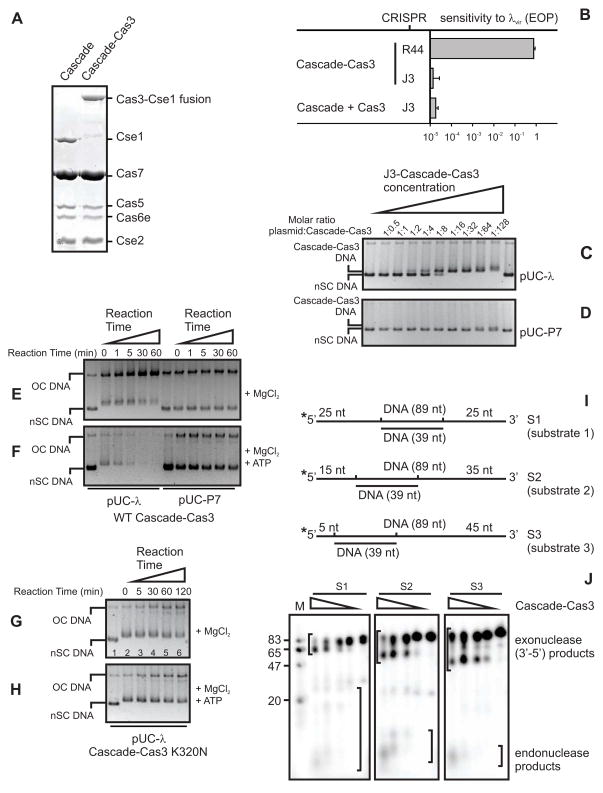
The prokaryotic CRISPR/Cas immune system is based on genomic loci that contain incorporated sequence tags from viruses and plasmids. Using small guide RNA molecules, these sequences act as a memory to reject returning invaders. Both the Cascade ribonucleoprotein complex and the Cas3 nuclease/helicase are required for CRISPR interference in Escherichia coli, but it is unknown how natural target DNA molecules are recognized and neutralized by their combined action. Here we show that Cascade efficiently locates target sequences in negatively supercoiled DNA, but only if these are flanked by a protospacer-adjacent motif (PAM). PAM recognition by Cascade exclusively involves the crRNA-complementary DNA strand. After Cascade-mediated R loop formation, the Cse1 subunit recruits Cas3, which catalyzes nicking of target DNA through its HD-nuclease domain. The target is then progressively unwound and cleaved by the joint ATP-dependent helicase activity and Mg(2+)-dependent HD-nuclease activity of Cas3, leading to complete target DNA degradation and invader neutralization.
原核生物的 CRISPR/Cas 免疫系统基于基因组基因座,这些基因座包含来自病毒和质粒的整合序列标签。利用小的向导 RNA 分子,这些序列作为记忆来排斥返回的入侵者。在大肠杆菌中,级联核糖核蛋白复合物和 Cas3 核酸酶/解旋酶都需要 CRISPR 干扰,但目前尚不清楚它们的联合作用如何识别和中和天然靶 DNA 分子。在这里,我们表明级联可以有效地在负超螺旋 DNA 中定位靶序列,但前提是这些序列侧翼有一个间隔邻近基序(PAM)。级联通过 crRNA 互补 DNA 链专一地识别 PAM。在级联介导的 R 环形成之后,Cse1 亚基招募 Cas3,Cas3 通过其 HD-核酸酶结构域催化靶 DNA 的切口。然后,靶标通过 Cas3 的联合 ATP 依赖性解旋酶活性和 Mg2+依赖性 HD-核酸酶活性逐渐展开并切割,导致靶标 DNA 完全降解和入侵体中和。