Dartmouth Medical School, Department of Anesthesiology, Lebanon, NH, USA.
Mol Pain. 2012 Apr 27;8:34. doi: 10.1186/1744-8069-8-34.
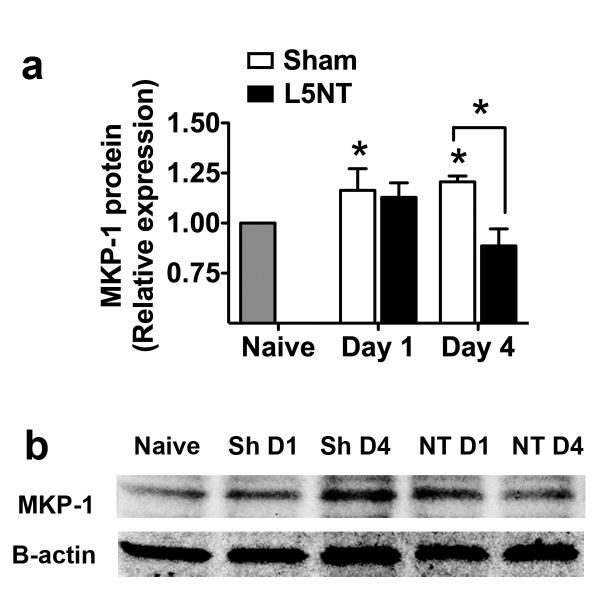
Neuropathic pain due to nerve injury is one of the most difficult types of pain to treat. Following peripheral nerve injury, neuronal and glial plastic changes contribute to central sensitization and perpetuation of mechanical hypersensitivity in rodents. The mitogen activated protein kinase (MAPK) family is pivotal in this spinal cord plasticity. MAPK phosphatases (MKPs) limit inflammatory processes by dephosphorylating MAPKs. For example, MKP-1 preferentially dephosphorylates p-p38. Since spinal p-p38 is pivotal for the development of chronic hypersensitivity in rodent models of pain, and p-p38 inhibitors have shown clinical potential in acute and chronic pain patients, we hypothesize that induction of spinal MKP-1 will prevent the development of peripheral nerve-injury-induced hypersensitivity and p-p38 overexpression.
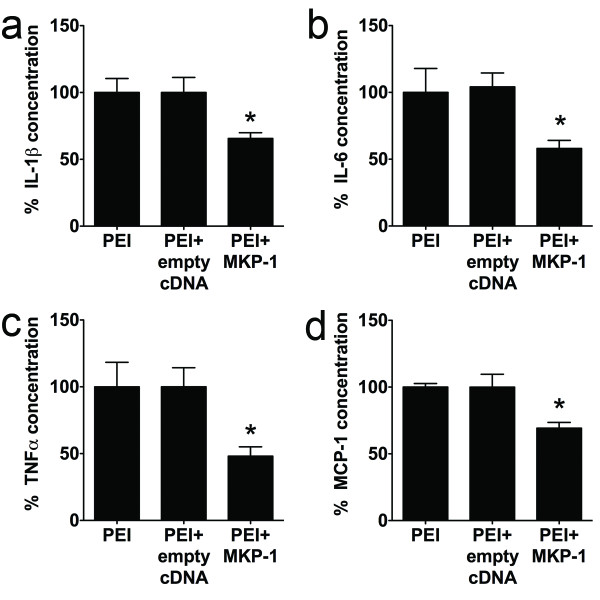
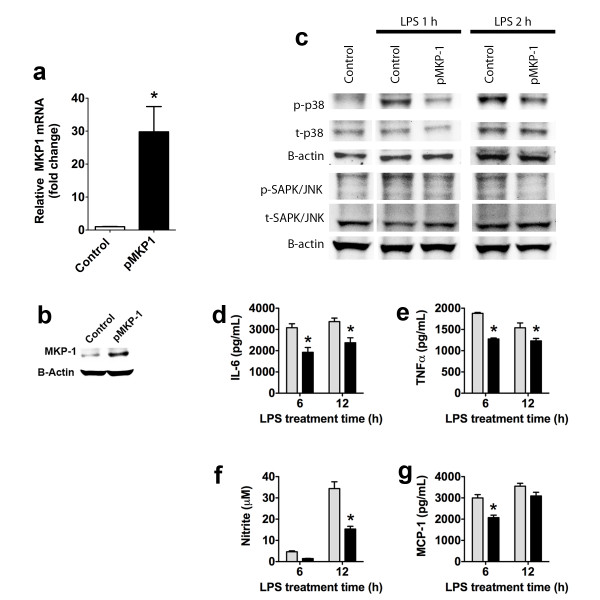
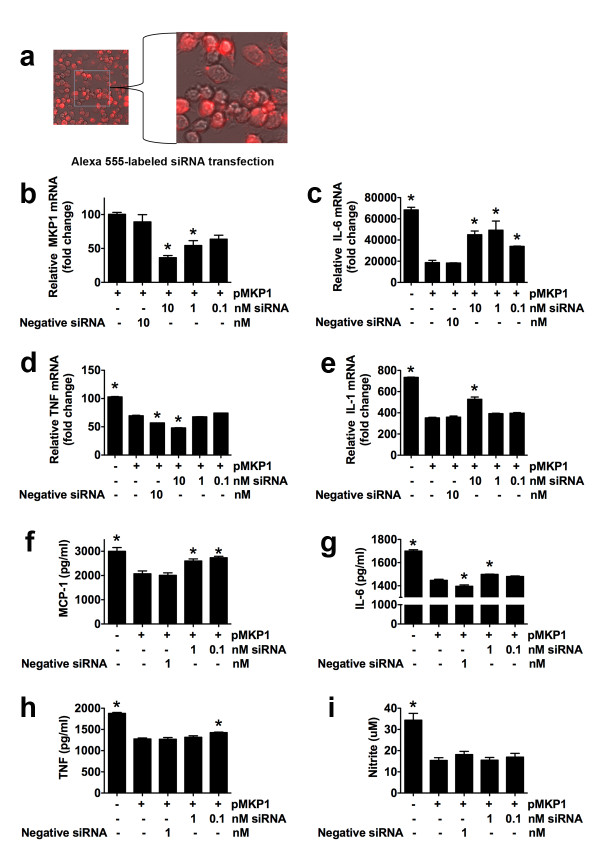
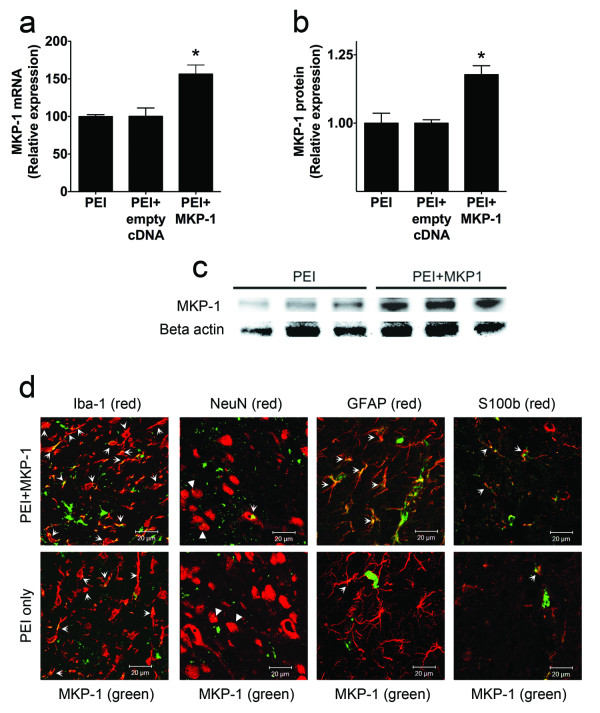
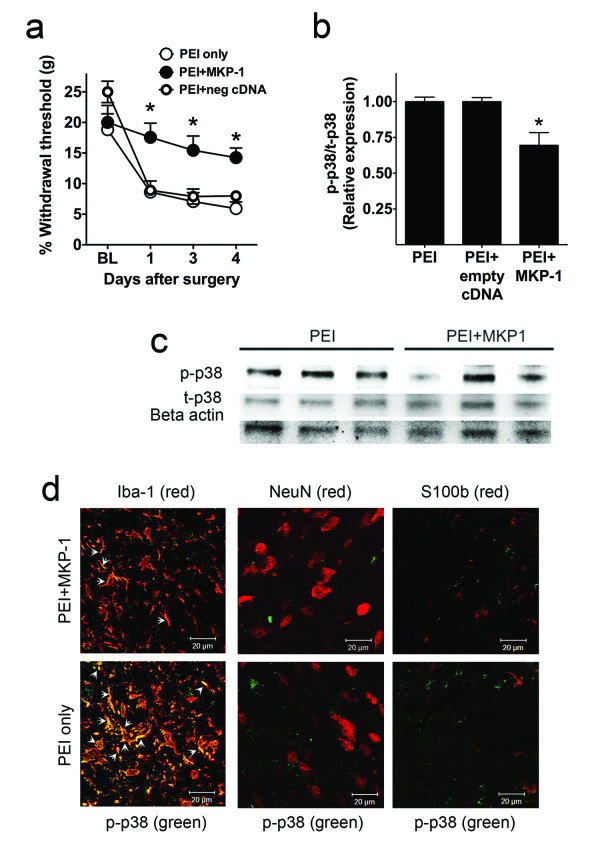
We cloned rat spinal cord MKP-1 and optimize MKP-1 cDNA in vitro using transfections to BV-2 cells. We observed that in vitro overexpression of MKP-1 blocked lipopolysaccharide-induced phosphorylation of p38 (and other MAPKs) as well as release of pro-algesic effectors (i.e., cytokines, chemokines, nitric oxide). Using this cDNA MKP-1 and a non-viral, in vivo nanoparticle transfection approach, we found that spinal cord overexpression of MKP-1 prevented development of peripheral nerve-injury-induced tactile hypersensitivity and reduced pro-inflammatory cytokines and chemokines and the phosphorylated form of p38.
Our results indicate that MKP-1, the natural regulator of p-p38, mediates resolution of the spinal cord pro-inflammatory milieu induced by peripheral nerve injury, resulting in prevention of chronic mechanical hypersensitivity. We propose that MKP-1 is a potential therapeutic target for pain treatment or prevention.
神经损伤引起的神经性疼痛是最难治疗的疼痛类型之一。在外周神经损伤后,神经元和神经胶质的可塑性变化导致啮齿动物的机械性超敏反应和持续性中央敏化。丝裂原活化蛋白激酶(MAPK)家族在脊髓可塑性中起着至关重要的作用。MAPK 磷酸酶(MKP)通过去磷酸化 MAPK 来限制炎症过程。例如,MKP-1 优先去磷酸化 p-p38。由于脊髓 p-p38 对于啮齿动物疼痛模型中慢性超敏反应的发展至关重要,并且 p-p38 抑制剂在急性和慢性疼痛患者中显示出临床潜力,因此我们假设诱导脊髓 MKP-1 将预防外周神经损伤诱导的超敏反应和 p-p38 过表达的发展。
我们克隆了大鼠脊髓 MKP-1,并通过转染 BV-2 细胞在体外优化了 MKP-1 cDNA。我们观察到体外过表达 MKP-1 可阻断脂多糖诱导的 p38(和其他 MAPK)磷酸化以及致痛效应物(即细胞因子、趋化因子、一氧化氮)的释放。使用这种 cDNA MKP-1 和非病毒、体内纳米颗粒转染方法,我们发现脊髓中 MKP-1 的过表达可预防外周神经损伤引起的触觉超敏反应,并减少促炎细胞因子和趋化因子以及 p38 的磷酸化形式。
我们的结果表明,MKP-1 是 p-p38 的天然调节剂,介导了外周神经损伤诱导的脊髓促炎环境的解决,从而预防了慢性机械性超敏反应。我们提出 MKP-1 是疼痛治疗或预防的潜在治疗靶点。