Department of Medicine, University of Texas Health Science Center, 7703 Floyd Curl Drive, San Antonio, TX 78229-3900, USA.
J Oncol. 2012;2012:806382. doi: 10.1155/2012/806382. Epub 2012 Mar 28.
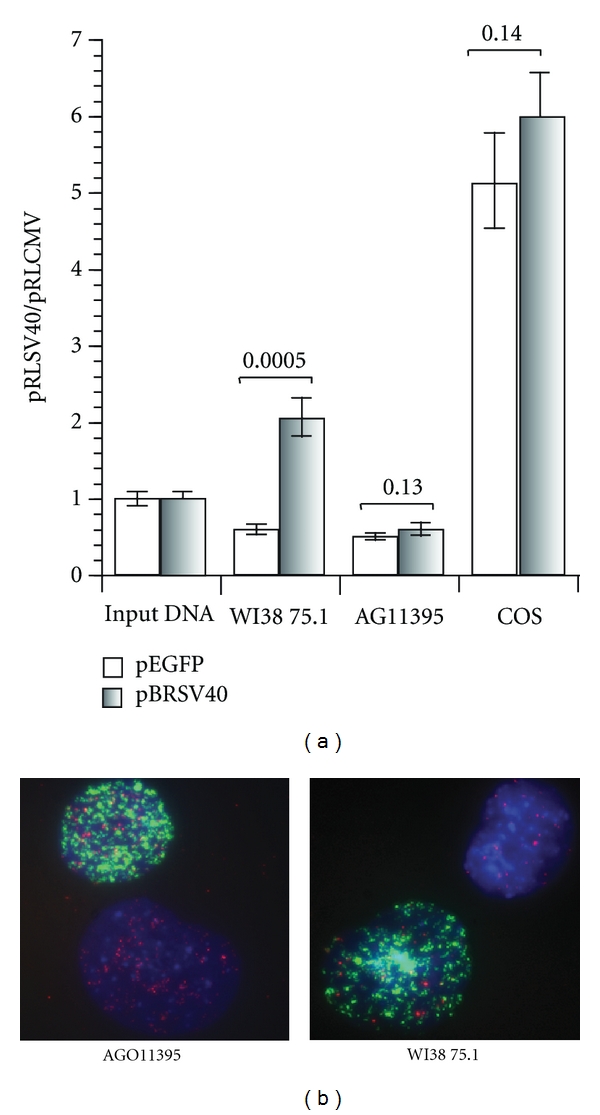
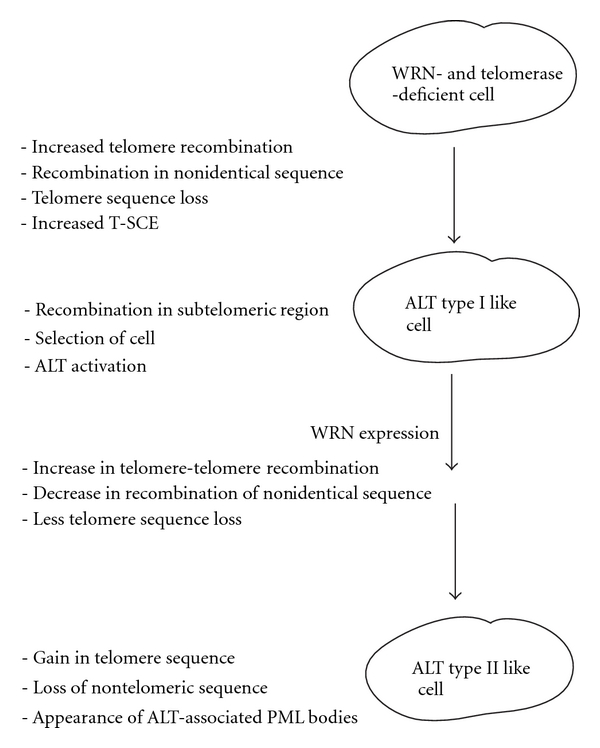
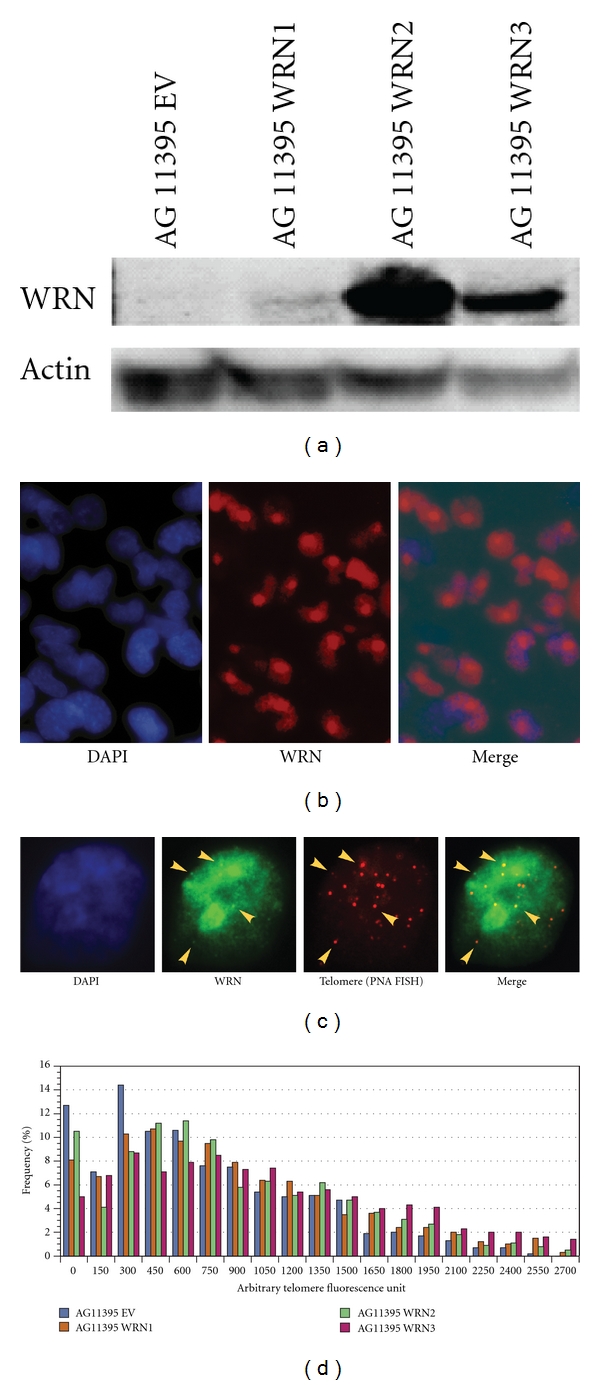
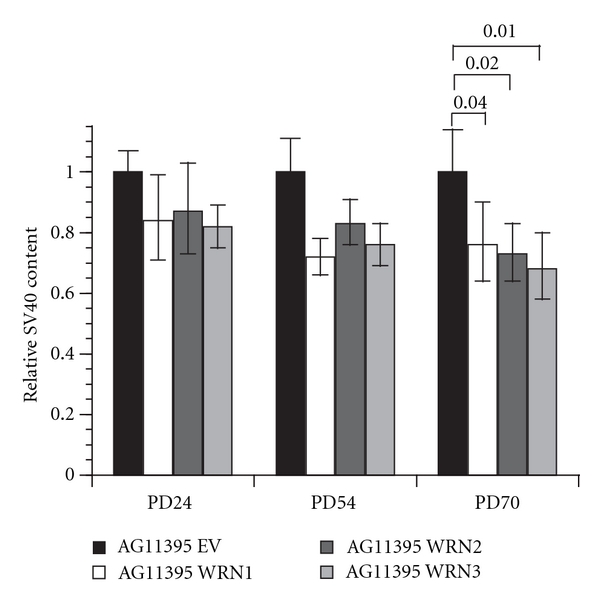
The alternative lengthening of telomeres (ALT) is a recombination-based mechanism of telomere maintenance activated in 5-20% of human cancers. In Saccharomyces cerevisiae, survivors that arise after inactivation of telomerase can be classified as type I or type II ALT. In type I, telomeres have a tandem array structure, with each subunit consisting of a subtelomeric Y' element and short telomere sequence. Telomeres in type II have only long telomere repeats and require Sgs1, the S. cerevisiae RecQ family helicase. We previously described the first human ALT cell line, AG11395, that has a telomere structure similar to type I ALT yeast cells. This cell line lacks the activity of the Werner syndrome protein, a human RecQ helicase. The telomeres in this cell line consist of tandem repeats containing SV40 DNA, including the origin of replication, and telomere sequence. We investigated the role of the SV40 origin of replication and the effects of Werner protein and telomerase on telomere structure and maintenance in AG11395 cells. We report that the expression of Werner protein facilitates the transition in human cells of ALT type I like telomeres to type II like telomeres in some aspects. These findings have implications for the diagnosis and treatment of cancer.
端粒的替代性延长(ALT)是一种基于重组的端粒维持机制,在 5-20%的人类癌症中被激活。在酿酒酵母中,端粒酶失活后出现的存活细胞可以分为 I 型或 II 型 ALT。在 I 型中,端粒具有串联阵列结构,每个亚基由亚端粒 Y'元件和短端粒序列组成。II 型中的端粒只有长端粒重复序列,需要 Sgs1,即酿酒酵母 RecQ 家族解旋酶。我们之前描述了第一个人类 ALT 细胞系 AG11395,其端粒结构类似于 I 型 ALT 酵母细胞。该细胞系缺乏 Werner 综合征蛋白(一种人类 RecQ 解旋酶)的活性。该细胞系的端粒由包含 SV40 DNA 的串联重复组成,包括复制起点和端粒序列。我们研究了 SV40 复制起点以及 Werner 蛋白和端粒酶对 AG11395 细胞中端粒结构和维持的作用。我们报告称,Werner 蛋白的表达有助于人类细胞中 ALT 型 I 样端粒向某些方面的 II 样端粒的转变。这些发现对癌症的诊断和治疗具有重要意义。