Behjati Mohaddeseh, Torktaz Ibrahim, Mohammadpour Mehrdad, Ahmadian Gholamreza, Easton Andrew J
Bioinformation. 2012;8(7):336-40. doi: 10.6026/97320630008336. Epub 2012 Apr 13.
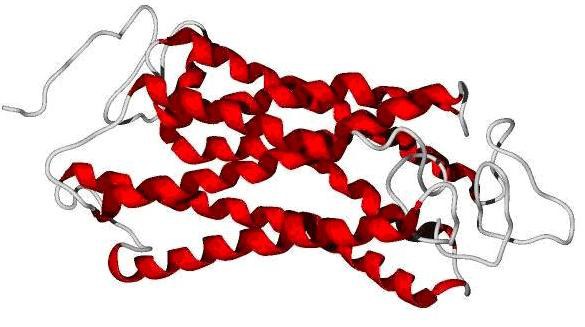
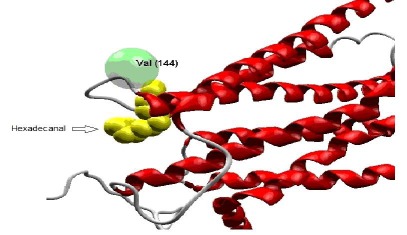
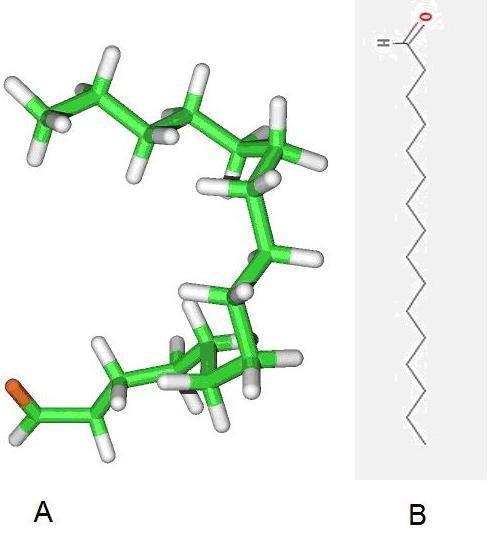
Human CCRL1 belongs to the family of silent chemokine receptors. This transmembrane protein plays a role in blunting function of chemokines through binding to them. This will attenuate immune responses. Interaction between CCRL1 and CCL21 determines this immune extinction. Thus inhibiting the action of this atypical chemokine seems to stimulate immune responses especially in the case of suppressed and immune deficient conditions. In this study we predicted 3D structure of CCRL1 using comparative modeling and Hiddebn Markov Model algorithm. Final predicted model optimized by Modeller v9.8 and minimized regarding energy level using UCSF chimera candidate version1.5.3. ClasPro webserver was used to find interacting residues between CCRL1 and CCL21. Interacting residues were used as target for chemical inhibitors by simulated docking study. For finding potential inhibitors, library of KEGG compounds screened and 97 obtained chemicals docked against interacting residues between CCRL1- CCL21 and MolDock was used as docking scoring function. Results indicated that Hexadecanal is a potential inhibitor of CCRL1- CCL21 interaction. Inhibition of this interaction will increase intercellular level of CCl21 and interaction between CCL21 and CCR7 causes immune potentiaiton.
人类CCRL1属于沉默趋化因子受体家族。这种跨膜蛋白通过与趋化因子结合来减弱其功能,从而减弱免疫反应。CCRL1与CCL21之间的相互作用决定了这种免疫抑制作用。因此,抑制这种非典型趋化因子的作用似乎会刺激免疫反应,尤其是在免疫抑制和免疫缺陷的情况下。在本研究中,我们使用比较建模和隐马尔可夫模型算法预测了CCRL1的三维结构。最终预测模型由Modeller v9.8优化,并使用UCSF chimera候选版本1.5.3在能量水平上进行了最小化处理。使用ClasPro网络服务器查找CCRL1与CCL21之间的相互作用残基。通过模拟对接研究,将相互作用残基作为化学抑制剂的靶点。为了寻找潜在的抑制剂,筛选了KEGG化合物库,并将97种获得的化学物质与CCRL1 - CCL21之间的相互作用残基进行对接,使用MolDock作为对接评分函数。结果表明,十六醛是CCRL1 - CCL21相互作用的潜在抑制剂。抑制这种相互作用将增加细胞间CCL21的水平,并且CCL21与CCR7之间的相互作用会导致免疫增强。