• 文献检索
  • 文档翻译
  • 深度研究
  • 学术资讯
  • Suppr Zotero 插件Zotero 插件
  • 邀请有礼
  • 套餐&价格
  • 历史记录
应用&插件
Suppr Zotero 插件Zotero 插件浏览器插件Mac 客户端Windows 客户端微信小程序
定价
高级版会员购买积分包购买API积分包
服务
文献检索文档翻译深度研究API 文档MCP 服务
关于我们
关于 Suppr公司介绍联系我们用户协议隐私条款
关注我们

Suppr 超能文献

核心技术专利:CN118964589B侵权必究
粤ICP备2023148730 号-1Suppr @ 2026

文献检索

告别复杂PubMed语法,用中文像聊天一样搜索,搜遍4000万医学文献。AI智能推荐,让科研检索更轻松。

立即免费搜索

文件翻译

保留排版,准确专业,支持PDF/Word/PPT等文件格式,支持 12+语言互译。

免费翻译文档

深度研究

AI帮你快速写综述,25分钟生成高质量综述,智能提取关键信息,辅助科研写作。

立即免费体验

登革出血热患者维生素 D 水平升高和甘露糖结合凝集素缺乏。

Elevated levels of vitamin D and deficiency of mannose binding lectin in dengue hemorrhagic fever.

机构信息

Dengue Group, National Institute of Virology, 20-A, Ambedkar road, Pune, Maharashtra, India.

出版信息

Virol J. 2012 May 4;9:86. doi: 10.1186/1743-422X-9-86.

DOI:10.1186/1743-422X-9-86
PMID:22559908
原文链接:https://pmc.ncbi.nlm.nih.gov/articles/PMC3413536/
Abstract

BACKGROUND

Altered plasma concentrations of vitamin D and mannose binding lectin (MBL), components of innate immunity, have been shown to be associated with the pathogenesis of viral infections. The objective of the present study was to find out whether plasma concentrations of MBL and vitamin D are different in patients with dengue fever (DF) and dengue hemorrhagic fever (DHF).

THE RESULTS

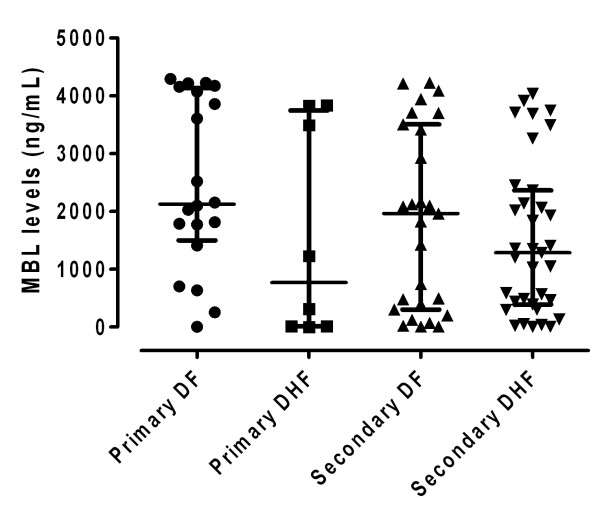
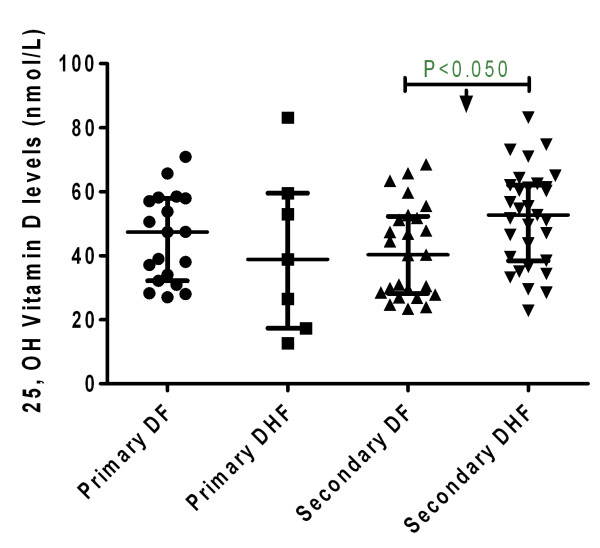
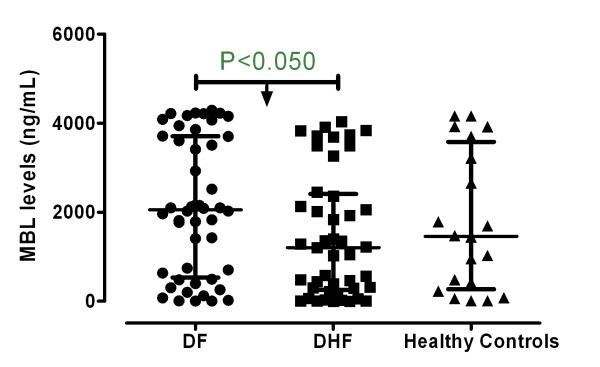
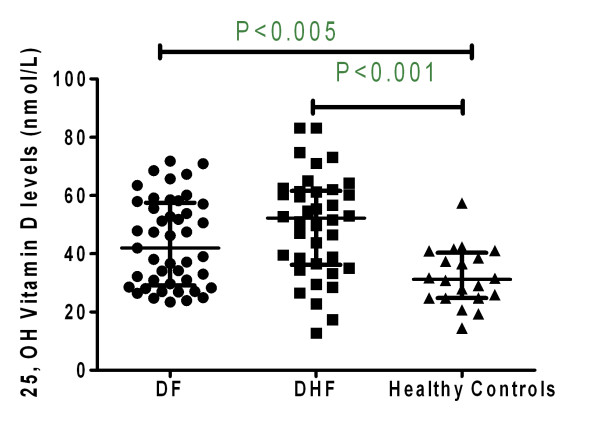
The plasma concentrations of vitamin D and MBL were assessed in 48 DF cases, 45 DHF cases and 20 apparently healthy controls using ELISA based methods. Vitamin D concentrations were found to be higher among both DF and DHF cases as compared to healthy controls (P < 0.005 and P < 0.001). Vitamin D concentrations were not different between DF and DHF cases. When the dengue cases were classified into primary and secondary infections, secondary DHF cases had significantly higher concentrations of vitamin D as compared to secondary DF cases (P < 0.050). MBL concentrations were not significantly different between healthy controls and dengue cases. MBL concentrations were observed to be lower in DHF cases as compared to DF cases (P < 0.050). Although MBL levels were not different DF and DHF cases based on immune status, the percentage of primary DHF cases (50%) having MBL levels lower than 500 ng/ml were less compared to primary DF cases (P = 0.038).

CONCLUSIONS

The present study suggests that higher concentrations of vitamin D might be associated with secondary DHF while deficiency of MBL may be associated with primary DHF.

摘要

背景

已证实,改变的血浆维生素 D 和甘露糖结合凝集素(MBL)浓度,先天免疫的组成部分,与病毒感染的发病机制相关。本研究的目的是查明登革热(DF)和登革出血热(DHF)患者的 MBL 和维生素 D 血浆浓度是否存在差异。

结果

采用 ELISA 法检测了 48 例 DF 病例、45 例 DHF 病例和 20 名健康对照者的 MBL 和维生素 D 血浆浓度。与健康对照组相比,DF 和 DHF 病例的维生素 D 浓度均较高(P<0.005 和 P<0.001)。DF 和 DHF 病例之间维生素 D 浓度无差异。当将登革热病例分为原发性和继发性感染时,与继发性 DF 病例相比,继发性 DHF 病例的维生素 D 浓度显著较高(P<0.050)。健康对照组和登革热病例之间 MBL 浓度无差异。与 DF 病例相比,DHF 病例的 MBL 浓度较低(P<0.050)。尽管根据免疫状态,DF 和 DHF 病例之间的 MBL 水平无差异,但原发性 DHF 病例(50%)MBL 水平低于 500ng/ml 的比例低于原发性 DF 病例(P=0.038)。

结论

本研究表明,较高的维生素 D 浓度可能与继发性 DHF 相关,而 MBL 缺乏可能与原发性 DHF 相关。
https://cdn.ncbi.nlm.nih.gov/pmc/blobs/9016/3413536/bed72dbf7552/1743-422X-9-86-4.jpg
https://cdn.ncbi.nlm.nih.gov/pmc/blobs/9016/3413536/7fc99e2c46d8/1743-422X-9-86-1.jpg
https://cdn.ncbi.nlm.nih.gov/pmc/blobs/9016/3413536/8a47bafe350e/1743-422X-9-86-2.jpg
https://cdn.ncbi.nlm.nih.gov/pmc/blobs/9016/3413536/879af4090e3a/1743-422X-9-86-3.jpg
https://cdn.ncbi.nlm.nih.gov/pmc/blobs/9016/3413536/bed72dbf7552/1743-422X-9-86-4.jpg
https://cdn.ncbi.nlm.nih.gov/pmc/blobs/9016/3413536/7fc99e2c46d8/1743-422X-9-86-1.jpg
https://cdn.ncbi.nlm.nih.gov/pmc/blobs/9016/3413536/8a47bafe350e/1743-422X-9-86-2.jpg
https://cdn.ncbi.nlm.nih.gov/pmc/blobs/9016/3413536/879af4090e3a/1743-422X-9-86-3.jpg
https://cdn.ncbi.nlm.nih.gov/pmc/blobs/9016/3413536/bed72dbf7552/1743-422X-9-86-4.jpg

相似文献

1
Elevated levels of vitamin D and deficiency of mannose binding lectin in dengue hemorrhagic fever.登革出血热患者维生素 D 水平升高和甘露糖结合凝集素缺乏。
Virol J. 2012 May 4;9:86. doi: 10.1186/1743-422X-9-86.
2
Mannose-binding lectin gene (MBL2) polymorphisms related to the mannose-binding lectin low levels are associated to dengue disease severity.与甘露糖结合凝集素水平低下相关的甘露糖结合凝集素基因(MBL2)多态性与登革热疾病严重程度相关。
Hum Immunol. 2016 Jul;77(7):571-5. doi: 10.1016/j.humimm.2016.05.006. Epub 2016 May 11.
3
Vitamin D serostatus and dengue fever progression to dengue hemorrhagic fever/dengue shock syndrome.维生素D血清状态与登革热进展为登革出血热/登革休克综合征的关系。
Epidemiol Infect. 2017 Oct;145(14):2961-2970. doi: 10.1017/S0950268817002059. Epub 2017 Sep 14.
4
Dengue NS1-specific antibody responses: isotype distribution and serotyping in patients with Dengue fever and Dengue hemorrhagic fever.登革热NS1特异性抗体反应:登革热和登革出血热患者的抗体类型分布及血清分型
J Med Virol. 2000 Oct;62(2):224-32. doi: 10.1002/1096-9071(200010)62:2<224::aid-jmv14>3.0.co;2-c.
5
Dengue and the Lectin Pathway of the Complement System.登革热与补体系统的凝集素途径。
Viruses. 2021 Jun 24;13(7):1219. doi: 10.3390/v13071219.
6
Determination of tumor necrosis factor-alpha levels in dengue virus infected patients by sensitive biotin-streptavidin enzyme-linked immunosorbent assay.采用灵敏的生物素-链霉亲和素酶联免疫吸附测定法测定登革病毒感染患者的肿瘤坏死因子-α水平。
J Virol Methods. 2000 Oct;90(1):51-7. doi: 10.1016/s0166-0934(00)00215-9.
7
Alternative complement pathway deregulation is correlated with dengue severity.替代补体途径失调与登革热的严重程度相关。
PLoS One. 2009 Aug 26;4(8):e6782. doi: 10.1371/journal.pone.0006782.
8
Association of mast cell-derived VEGF and proteases in Dengue shock syndrome.在登革热休克综合征中,肥大细胞衍生的 VEGF 和蛋白酶的关联。
PLoS Negl Trop Dis. 2012;6(2):e1505. doi: 10.1371/journal.pntd.0001505. Epub 2012 Feb 21.
9
Serum lactate and lactate dehydrogenase as parameters for the prediction of dengue severity.血清乳酸和乳酸脱氢酶作为预测登革热严重程度的参数。
J Med Assoc Thai. 2014 Jun;97 Suppl 6:S220-31.
10
Serum metabolome changes in adult patients with severe dengue in the critical and recovery phases of dengue infection.登革热感染重症和恢复期成人重症登革热患者血清代谢组学变化。
PLoS Negl Trop Dis. 2018 Jan 24;12(1):e0006217. doi: 10.1371/journal.pntd.0006217. eCollection 2018 Jan.

引用本文的文献

1
Flying under the radar - impact and factors influencing asymptomatic DENV infections.隐匿传播——无症状登革热感染的影响因素和影响。
Front Cell Infect Microbiol. 2023 Nov 24;13:1284651. doi: 10.3389/fcimb.2023.1284651. eCollection 2023.
2
The vitamin D receptor agonist EB1089 can exert its antiviral activity independently of the vitamin D receptor.维生素 D 受体激动剂 EB1089 可以独立于维生素 D 受体发挥其抗病毒活性。
PLoS One. 2023 Oct 17;18(10):e0293010. doi: 10.1371/journal.pone.0293010. eCollection 2023.
3
Vitamin D Deficiency (VDD) and Susceptibility towards Severe Dengue Fever-A Prospective Cross-Sectional Study of Hospitalized Dengue Fever Patients from Lahore, Pakistan.

本文引用的文献

1
Complement-mediated neutralization of dengue virus requires mannose-binding lectin.补体介导的登革病毒中和作用需要甘露糖结合凝集素。
mBio. 2011 Dec 13;2(6). doi: 10.1128/mBio.00276-11. Print 2011.
2
Detection of dengue-4 virus in pune, western india after an absence of 30 years--its association with two severe cases.在印度西部浦那市时隔 30 年后再次检测到登革 4 型病毒——与两例重症病例相关。
Virol J. 2011 Feb 1;8:46. doi: 10.1186/1743-422X-8-46.
3
Vitamin D and the anti-viral state.维生素 D 与抗病毒状态。
维生素D缺乏与重症登革热易感性——来自巴基斯坦拉合尔住院登革热患者的前瞻性横断面研究
Trop Med Infect Dis. 2023 Jan 5;8(1):43. doi: 10.3390/tropicalmed8010043.
4
Vitamin D deficiency in dengue fever patients' coinfected with in Pakistan. A case-control study.巴基斯坦登革热合并感染患者的维生素 D 缺乏症。一项病例对照研究。
Front Public Health. 2022 Oct 31;10:1035560. doi: 10.3389/fpubh.2022.1035560. eCollection 2022.
5
Association of systemic vitamin D on the course of dengue virus infection in adults: a single-centre dengue cohort study at a large institution in Singapore.系统性维生素 D 对成人登革病毒感染病程的影响:新加坡一家大型机构的登革热队列研究。
Singapore Med J. 2024 Jun 1;65(6):332-339. doi: 10.11622/smedj.2022064. Epub 2022 Jun 2.
6
Vitamin D Deficiency in Dengue Hemorrhagic Fever and Dengue Shock Syndrome among Sri Lankan Children: A Case-Control Study.斯里兰卡儿童登革出血热和登革休克综合征中的维生素D缺乏:一项病例对照研究
J Trop Med. 2021 Oct 14;2021:4173303. doi: 10.1155/2021/4173303. eCollection 2021.
7
Seropositivity and history of hospitalisation for dengue in relation to anthropometric indices among Colombian children and adults.哥伦比亚儿童和成人的血清阳性率和登革热住院史与人体测量指数的关系。
Epidemiol Infect. 2021 Feb 15;149:e58. doi: 10.1017/S0950268821000388.
8
Activity of vitamin D receptor agonists against dengue virus.维生素 D 受体激动剂对登革热病毒的活性。
Sci Rep. 2020 Jul 2;10(1):10835. doi: 10.1038/s41598-020-67783-z.
9
Levels of 25-hydroxy Vitamin D3 and Vitamin D Receptor Polymorphism in Severe Dengue Cases from New Delhi.新德里重症登革热病例中25-羟基维生素D3水平及维生素D受体多态性
Trop Med Infect Dis. 2020 May 3;5(2):72. doi: 10.3390/tropicalmed5020072.
10
Association between MBL2 haplotypes and dengue severity in children from Rio de Janeiro, Brazil.巴西里约热内卢儿童中MBL2单倍型与登革热严重程度之间的关联。
Mem Inst Oswaldo Cruz. 2019;114:e190004. doi: 10.1590/0074-02760190004. Epub 2019 May 23.
J Clin Virol. 2011 Mar;50(3):194-200. doi: 10.1016/j.jcv.2010.12.006. Epub 2011 Jan 15.
4
High-dose vitamin D(3) during intensive-phase antimicrobial treatment of pulmonary tuberculosis: a double-blind randomised controlled trial.高剂量维生素 D(3)在肺结核强化期抗菌治疗中的应用:一项双盲随机对照试验。
Lancet. 2011 Jan 15;377(9761):242-50. doi: 10.1016/S0140-6736(10)61889-2. Epub 2011 Jan 5.
5
Direct complement restriction of flavivirus infection requires glycan recognition by mannose-binding lectin.直接补体限制黄病毒感染需要甘露糖结合凝集素识别聚糖。
Cell Host Microbe. 2010 Aug 19;8(2):186-95. doi: 10.1016/j.chom.2010.07.007.
6
Immunophenotype of vitamin D receptor polymorphism associated to risk of HIV-1 infection and rate of disease progression.与HIV-1感染风险及疾病进展速率相关的维生素D受体多态性的免疫表型
Curr HIV Res. 2010 Sep;8(6):487-92. doi: 10.2174/157016210793499330.
7
Serum levels of Mannan-binding lectin in patients with Crimean-Congo hemorrhagic fever.克里米亚-刚果出血热患者血清甘露聚糖结合凝集素水平。
Vector Borne Zoonotic Dis. 2010 Dec;10(10):1037-41. doi: 10.1089/vbz.2009.0060. Epub 2010 Apr 28.
8
Antagonism of the complement component C4 by flavivirus nonstructural protein NS1.黄病毒非结构蛋白 NS1 拮抗补体成分 C4。
J Exp Med. 2010 Apr 12;207(4):793-806. doi: 10.1084/jem.20092545. Epub 2010 Mar 22.
9
Clinical findings and pro-inflammatory cytokines in dengue patients in Western India: a facility-based study.印度西部登革热患者的临床发现和促炎细胞因子:一项基于医疗机构的研究。
PLoS One. 2010 Jan 14;5(1):e8709. doi: 10.1371/journal.pone.0008709.
10
Dengue virus pathogenesis: an integrated view.登革热病毒发病机制:综合观点。
Clin Microbiol Rev. 2009 Oct;22(4):564-81. doi: 10.1128/CMR.00035-09.