Chakravarti Anita, Bharara Tanisha, Kapoor Neeru, Ashraf Anzar
Department of Microbiology, Shree Guru Gobind Singh Tricentenary University, Gurugram (Haryana) 1222505, India.
Department of Microbiology, Maulana Azad Medical College, New Delhi 110002, India.
Trop Med Infect Dis. 2020 May 3;5(2):72. doi: 10.3390/tropicalmed5020072.
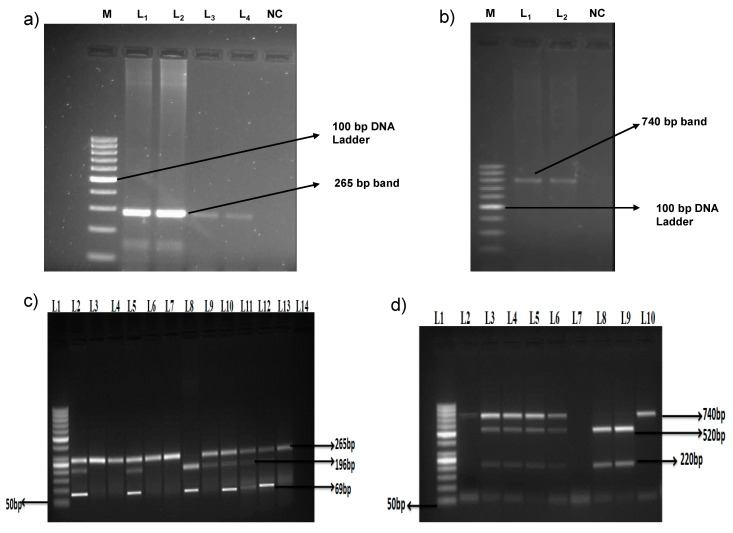
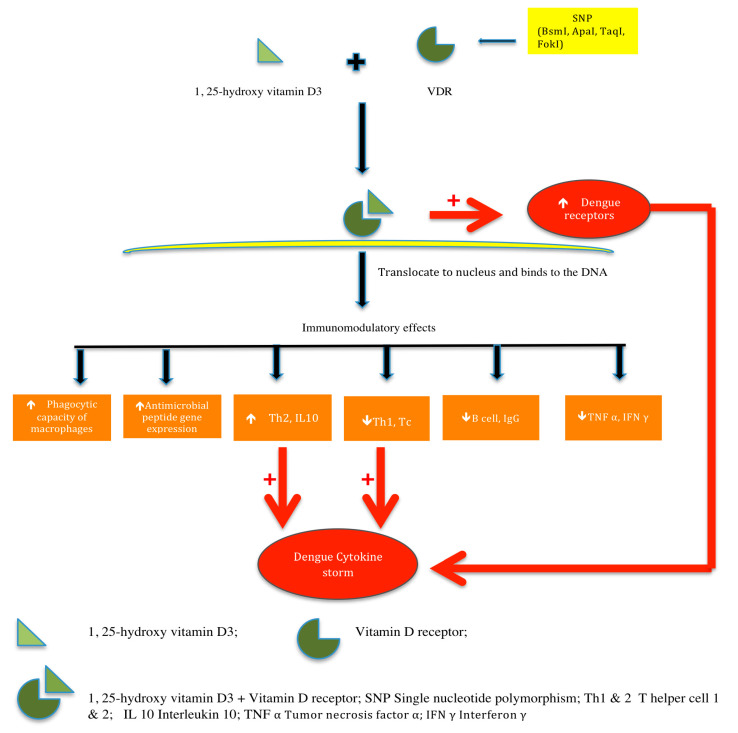
Dengue is the "phoenix" that never went to ashes. First identified in 1943, in Japan, dengue virus has worldwide distribution and is a grave public health concern in developing countries like India; Methods: A cross sectional study was conducted among adults suspected of having dengue fever and attending Lok Nayak Hospital, New Delhi. Restriction Fragment Length Polymorphism was completed for the detection of vitamin D receptor (VDR) gene polymorphism; Results: Serum 25-hydroxy vitamin D3 (vitamin D) levels were found to be 1.6 times elevated in severe dengue cases as compared to healthy controls. Vitamin D levels were significantly higher in secondary infections compared to primary infections as well as secondary severe dengue cases as compared to secondary non-severe cases ( value < 0.05). A significant association of the T allele (rs2228570) was seen in severe dengue cases, while, when comparing the A/A with A/C and C/C genotypes (rs7975232) among dengue cases and healthy controls, the odds ratio was estimated to be 1.24 (0.55-2.75, > 0.05) and 0.28 (0.08-0.96, < 0.05) respectively; Conclusions: The present study is an attempt at decoding the role of vitamin D in dengue disease pathogenesis and exploring the role of genetic polymorphism in dengue disease pathogenesis.
登革热是“浴火重生的凤凰”。登革热病毒于1943年在日本首次被发现,在全球范围内传播,是印度等发展中国家严重的公共卫生问题;方法:对怀疑患有登革热并前往新德里洛克·奈亚克医院就诊的成年人进行了一项横断面研究。完成了限制性片段长度多态性分析以检测维生素D受体(VDR)基因多态性;结果:发现重症登革热病例的血清25-羟基维生素D3(维生素D)水平比健康对照者高1.6倍。与初次感染相比,二次感染时的维生素D水平显著更高,与二次非重症病例相比,二次重症登革热病例的维生素D水平也显著更高(P值<0.05)。在重症登革热病例中发现T等位基因(rs2228570)存在显著关联,而在登革热病例与健康对照者中比较A/A与A/C及C/C基因型(rs7975232)时,优势比分别估计为1.24(0.55 - 2.75,P>0.05)和0.28(0.08 - 0.96,P<0.05);结论:本研究旨在解读维生素D在登革热发病机制中的作用,并探索基因多态性在登革热发病机制中的作用。