Department of Pharmacology, Ufuk University School of Medicine. Mevlana Bulvari, Balgat, Ankara, Turkey.
Diabetes Metab Syndr Obes. 2012;5:89-99. doi: 10.2147/DMSO.S30005. Epub 2012 Apr 5.
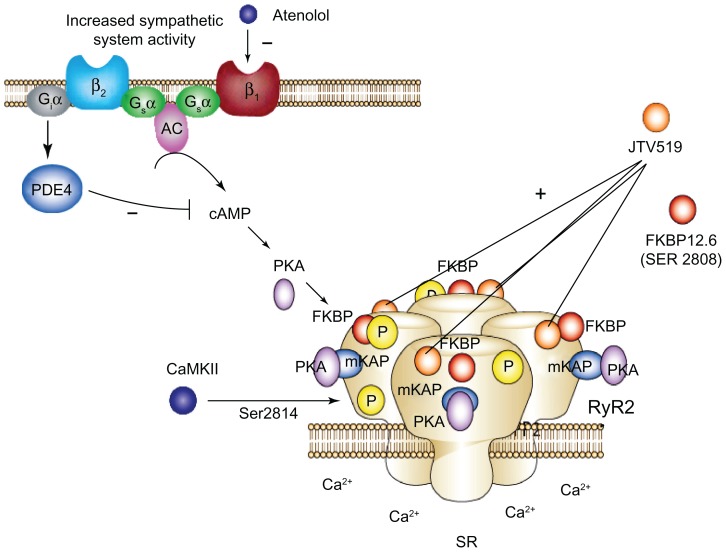
Metabolic syndrome is characterized by a combination of obesity, hypertension, insulin resistance, dyslipidemia, and impaired glucose tolerance. This multifaceted syndrome is often accompanied by a hyperdynamic circulatory state characterized by increased blood pressure, total blood volume, cardiac output, and metabolic tissue demand. Experimental, epidemiological, and clinical studies have demonstrated that patients with metabolic syndrome have significantly elevated cardiovascular morbidity and mortality rates. One of the main and frequent complications seen in metabolic syndrome is cardiovascular disease. The primary endpoints of cardiometabolic risk are coronary and peripheral arterial disease, myocardial infarction, congestive heart failure, arrhythmia, and stroke. Alterations in expression and/or functioning of several key proteins involved in regulating and maintaining ionic homeostasis can cause cardiac disturbances. One such group of proteins is known as ryanodine receptors (intracellular calcium release channels), which are the major channels through which Ca(2+) ions leave the sarcoplasmic reticulum, leading to cardiac muscle contraction. The economic cost of metabolic syndrome and its associated complications has a significant effect on health care budgets. Improvements in body weight, blood lipid profile, and hyperglycemia can reduce cardiometabolic risk. However, constant hyperadrenergic stimulation still contributes to the burden of disease. Normalization of the hyperdynamic circulatory state with conventional therapies is the most reasonable therapeutic strategy to date. JTV519 (K201) is a newly developed 1,4-benzothiazepine drug with antiarrhythmic and cardioprotective properties. It appears to be very effective in not only preventing but also in reversing the characteristic myocardial changes and preventing lethal arrhythmias. It is also a unique candidate to improve diastolic heart failure in metabolic syndrome.
代谢综合征的特征是肥胖、高血压、胰岛素抵抗、血脂异常和糖耐量受损的综合表现。这种多方面的综合征通常伴随着高动力循环状态,表现为血压、总血容量、心输出量和代谢组织需求的增加。实验、流行病学和临床研究表明,代谢综合征患者的心血管发病率和死亡率显著升高。代谢综合征的主要和常见并发症之一是心血管疾病。心脏代谢风险的主要终点是冠状动脉和外周动脉疾病、心肌梗死、充血性心力衰竭、心律失常和中风。调节和维持离子稳态的几种关键蛋白的表达和/或功能的改变可导致心脏紊乱。其中一组蛋白被称为兰尼碱受体(细胞内钙离子释放通道),它们是钙离子离开肌浆网的主要通道,导致心肌收缩。代谢综合征及其相关并发症的经济成本对医疗保健预算有重大影响。改善体重、血脂谱和高血糖可以降低心脏代谢风险。然而,持续的高肾上腺素能刺激仍然对疾病负担有贡献。用常规疗法使高动力循环状态正常化是迄今为止最合理的治疗策略。JTV519(K201)是一种新开发的 1,4-苯并噻嗪类药物,具有抗心律失常和心脏保护作用。它不仅在预防而且在逆转特征性心肌变化和预防致命性心律失常方面似乎非常有效。它也是改善代谢综合征舒张性心力衰竭的独特候选药物。