Veistinen Lotta, Takatalo Maarit, Tanimoto Yukiho, Kesper Dörthe A, Vortkamp Andrea, Rice David P C
Department of Orthodontics, Institute of Dentistry, University of Helsinki Helsinki, Finland.
Front Physiol. 2012 May 3;3:121. doi: 10.3389/fphys.2012.00121. eCollection 2012.
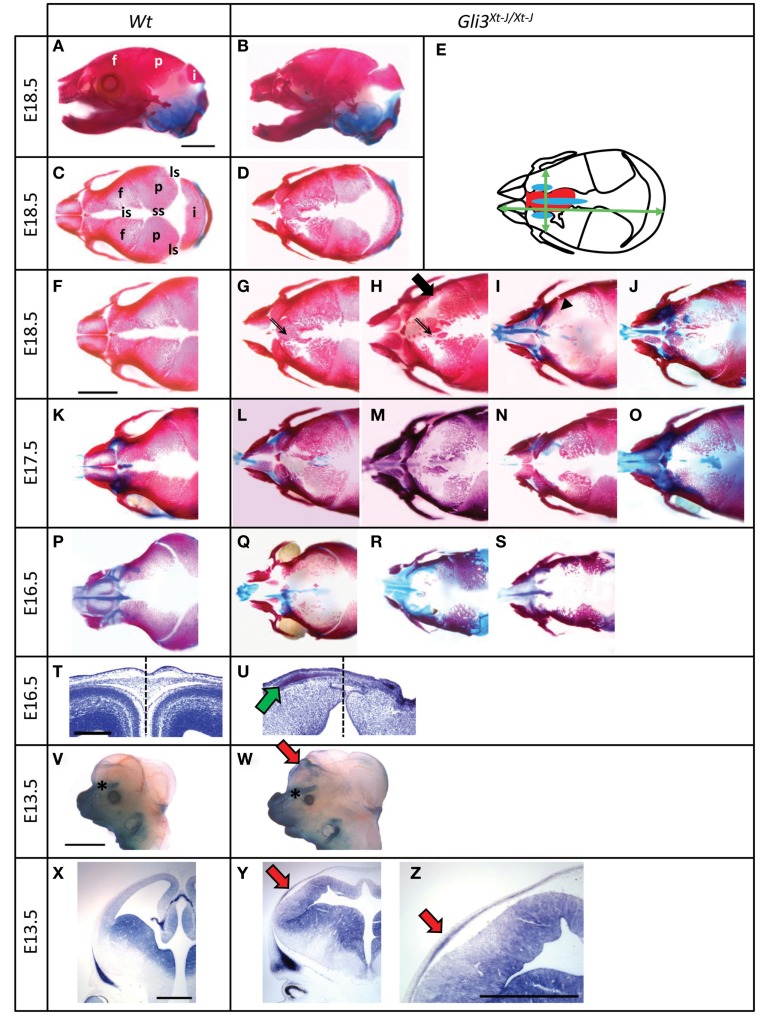
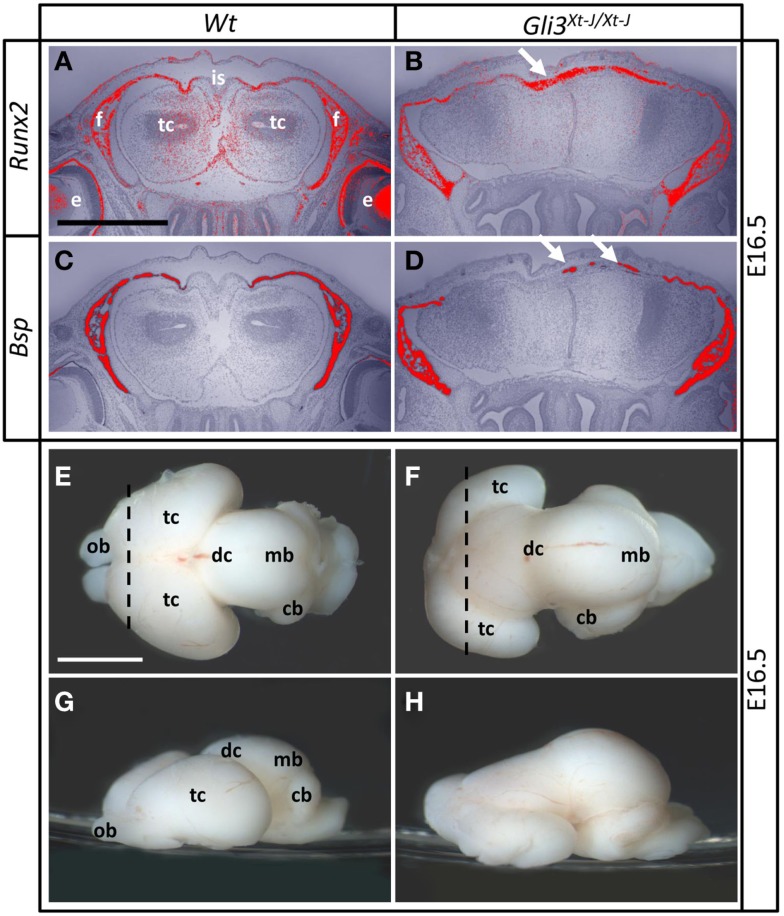
Greig cephalopolysyndactyly syndrome (GCPS) is an autosomal dominant disorder with polydactyly and syndactyly of the limbs and a broad spectrum of craniofacial abnormalities. Craniosynostosis of the metopic suture (interfrontal suture in mice) is an important but rare feature associated with GCPS. GCPS is caused by mutations in the transcription factor GLI3, which regulates Hedgehog signaling. The Gli3 loss-of-function (Gli3(Xt-J/Xt-J)) mouse largely phenocopies the human syndrome with the mice exhibiting polydactyly and several craniofacial abnormalities. Here we show that Gli3(Xt-J/Xt-J) mice exhibit ectopic ossification in the interfrontal suture and in the most severe cases the suture fuses already prior to birth. We show that abnormalities in frontal bones occur early in calvarial development, before the establishment of the interfrontal suture. It provides a model for the metopic suture pathology that can occur in GCPS.
Greig头多指并指综合征(GCPS)是一种常染色体显性疾病,具有四肢多指并指以及广泛的颅面畸形。额缝(小鼠的额间缝)颅缝早闭是与GCPS相关的一个重要但罕见的特征。GCPS由转录因子GLI3的突变引起,该转录因子调节Hedgehog信号通路。Gli3功能缺失(Gli3(Xt-J/Xt-J))小鼠在很大程度上模拟了人类综合征,小鼠表现出多指以及多种颅面畸形。在这里,我们表明Gli3(Xt-J/Xt-J)小鼠在额间缝处出现异位骨化,在最严重的情况下,该缝在出生前就已经融合。我们表明额骨异常在颅盖骨发育早期就出现,早于额间缝的形成。它为GCPS中可能出现的额缝病理提供了一个模型。