Department of Geriatric Medicine and Metabolic Diseases, Second University of Naples, Naples, Italy.
PLoS One. 2012;7(4):e35999. doi: 10.1371/journal.pone.0035999. Epub 2012 Apr 26.
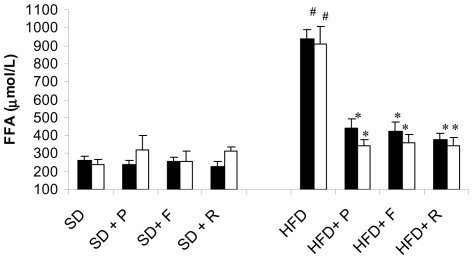
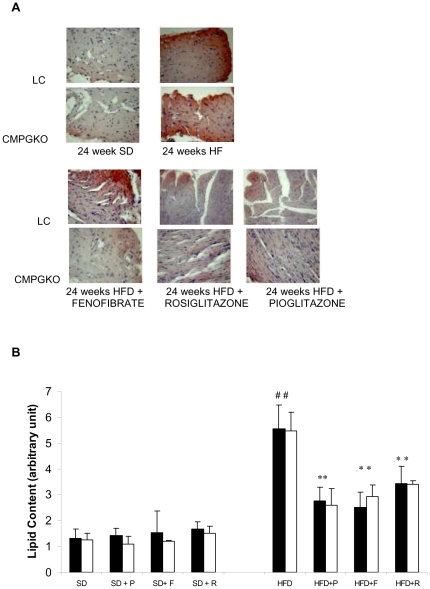
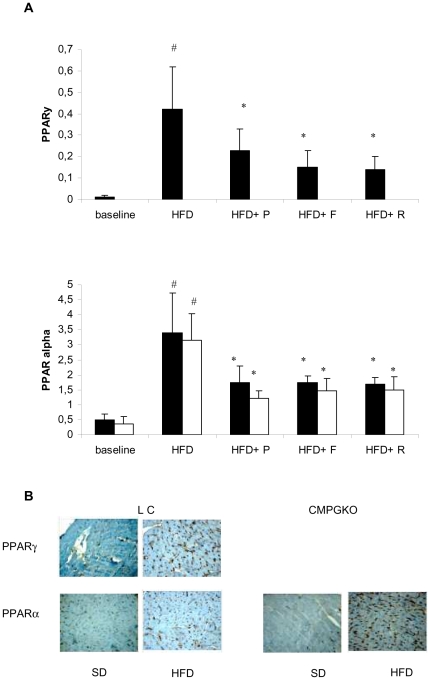
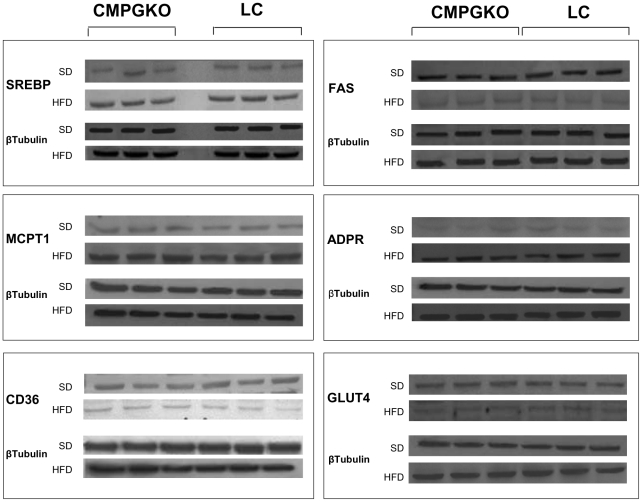
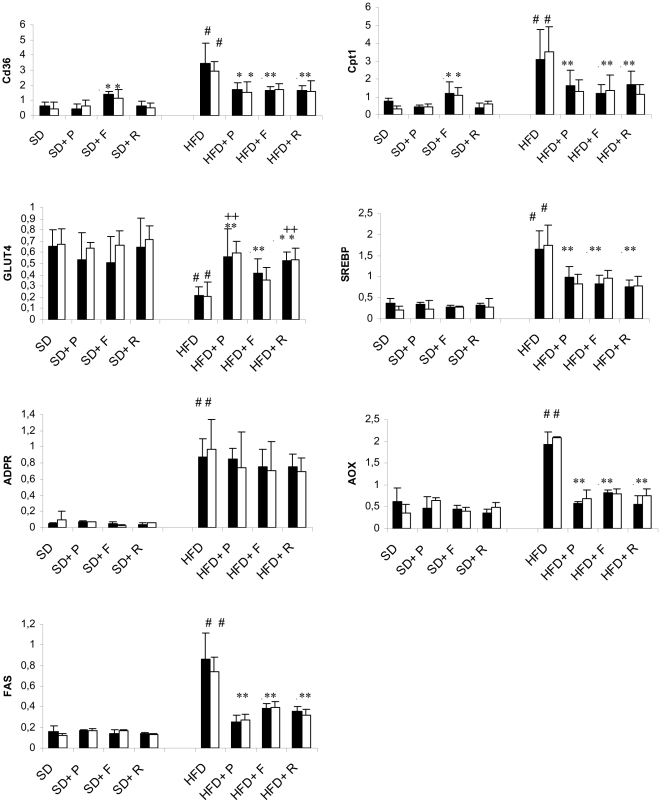
Understanding the molecular regulatory mechanisms controlling for myocardial lipid metabolism is of critical importance for the development of new therapeutic strategies for heart diseases. The role of PPARγ and thiazolidinediones in regulation of myocardial lipid metabolism is controversial. The aim of our study was to assess the role of PPARγ on myocardial lipid metabolism and function and differentiate local/from systemic actions of PPARs agonists using cardiomyocyte-specific PPARγ -knockout (CM-PGKO) mice. To this aim, the effect of PPARγ, PPARγ/PPARα and PPARα agonists on cardiac function, intra-myocyte lipid accumulation and myocardial expression profile of genes and proteins, affecting lipid oxidation, uptake, synthesis, and storage (CD36, CPT1MIIA, AOX, FAS, SREBP1-c and ADPR) was evaluated in cardiomyocyte-specific PPARγ-knockout (CM-PGKO) and littermate control mice undergoing standard and high fat diet (HFD). At baseline, protein levels and mRNA expression of genes involved in lipid uptake, oxidation, synthesis, and accumulation of CM-PGKO mice were not significantly different from those of their littermate controls. At baseline, no difference in myocardial lipid content was found between CM-PGKO and littermate controls. In standard condition, pioglitazone and rosiglitazone do not affect myocardial metabolism while, fenofibrate treatment significantly increased CD36 and CPT1MIIA gene expression. In both CM-PGKO and control mice submitted to HFD, six weeks of treatment with rosiglitazone, fenofibrate and pioglitazone lowered myocardial lipid accumulation shifting myocardial substrate utilization towards greater contribution of glucose. In conclusion, at baseline, PPARγ does not play a crucial role in regulating cardiac metabolism in mice, probably due to its low myocardial expression. PPARs agonists, indirectly protect myocardium from lipotoxic damage likely reducing fatty acids delivery to the heart through the actions on adipose tissue. Nevertheless a direct non-PPARγ mediated mechanism of PPARγ agonist could not be ruled out.
了解控制心肌脂质代谢的分子调节机制对于开发心脏疾病的新治疗策略至关重要。PPARγ 和噻唑烷二酮在调节心肌脂质代谢中的作用存在争议。本研究旨在评估 PPARγ 在心肌脂质代谢和功能中的作用,并使用心肌细胞特异性 PPARγ 敲除(CM-PGKO)小鼠区分 PPAR 激动剂的局部/全身作用。为此,评估了 PPARγ、PPARγ/PPARα 和 PPARα 激动剂对心脏功能、细胞内脂质积累以及影响脂质氧化、摄取、合成和储存的基因和蛋白质在心肌细胞特异性 PPARγ 敲除(CM-PGKO)和同窝对照小鼠中的表达谱(CD36、CPT1MIIA、AOX、FAS、SREBP1-c 和 ADPR)在接受标准和高脂肪饮食(HFD)的 CM-PGKO 和同窝对照小鼠中。在基线时,CM-PGKO 小鼠的脂质摄取、氧化、合成和积累相关基因的蛋白水平和 mRNA 表达与同窝对照小鼠无显著差异。在基线时,CM-PGKO 小鼠和同窝对照小鼠的心肌脂质含量无差异。在标准条件下,吡格列酮和罗格列酮对心肌代谢没有影响,而非诺贝特治疗显著增加了 CD36 和 CPT1MIIA 基因表达。在接受 HFD 的 CM-PGKO 和对照小鼠中,6 周的罗格列酮、非诺贝特和吡格列酮治疗降低了心肌脂质积累,使心肌底物利用向葡萄糖贡献增加。总之,在基线时,PPARγ 在调节小鼠心脏代谢中不起关键作用,可能是由于其在心肌中的低表达。PPAR 激动剂通过对脂肪组织的作用间接保护心肌免受脂肪毒性损伤,可能减少脂肪酸向心脏的输送。然而,不能排除 PPARγ 激动剂的直接非 PPARγ 介导机制。