Neuroimmunology Unit, Department of Clinical Neurosciences, Karolinska Institutet, Stockholm, Sweden.
PLoS One. 2012;7(5):e35439. doi: 10.1371/journal.pone.0035439. Epub 2012 May 1.
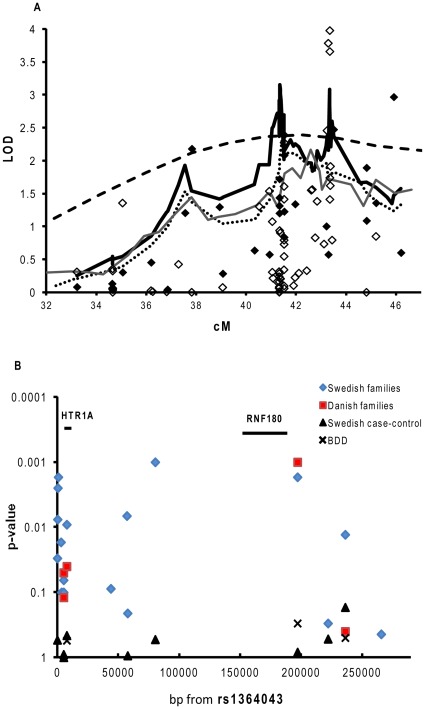
We have previously performed a genome-wide linkage study in Scandinavian Type 1 diabetes (T1D) families. In the Swedish families, we detected suggestive linkage (LOD≤2.2) to the chromosome 5p13-q13 region. The aim of our study was to investigate the linked region in search for possible T1D susceptibility genes.
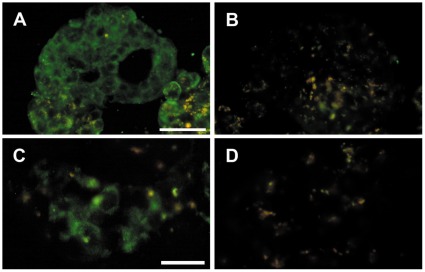
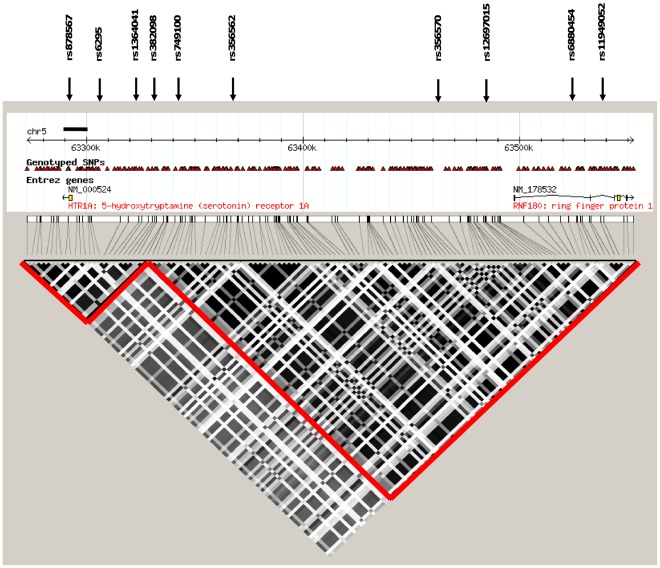
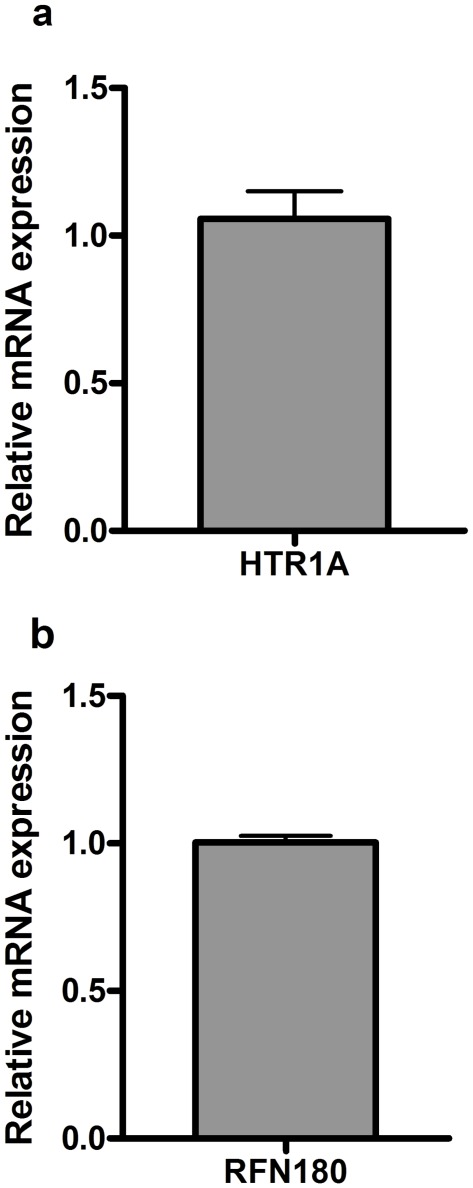
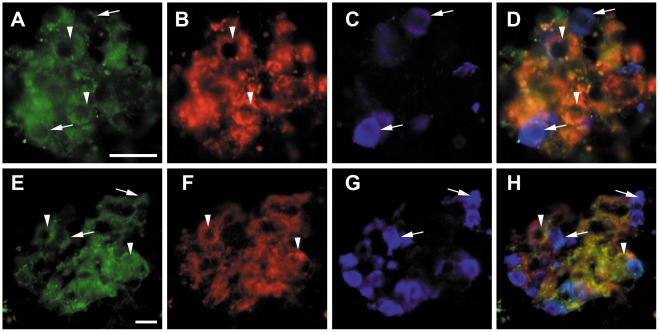
METHODOLOGY/PRINCIPAL FINDINGS: Microsatellites were genotyped in the Scandinavian families to fine-map the previously linked region. Further, SNPs were genotyped in Swedish and Danish families as well as Swedish sporadic cases. In the Swedish families we detected genome-wide significant linkage to the 5-hydroxytryptamine receptor 1A (HTR1A) gene (LOD 3.98, p<9.8×10(-6)). Markers tagging two separate genes; the ring finger protein 180 (RNF180) and HTR1A showed association to T1D in the Swedish and Danish families (p<0.002, p<0.001 respectively). The association was not confirmed in sporadic cases. Conditional analysis indicates that the primary association was to HTR1A. Quantitative PCR show that transcripts of both HTR1A and RNF180 are present in human islets of Langerhans. Moreover, immunohistochemical analysis confirmed the presence of the 5-HTR1A protein in isolated human islets of Langerhans as well as in sections of human pancreas.
We have identified and confirmed the association of both HTR1A and RFN180, two genes in high linkage disequilibrium (LD) to T1D in two separate family materials. As both HTR1A and RFN180 were expressed at the mRNA level and HTR1A as protein in human islets of Langerhans, we suggest that HTR1A may affect T1D susceptibility by modulating the initial autoimmune attack or either islet regeneration, insulin release, or both.
我们曾对斯堪的纳维亚 1 型糖尿病(T1D)家族进行了全基因组连锁研究。在瑞典家族中,我们检测到染色体 5p13-q13 区域有提示性连锁(LOD≤2.2)。我们研究的目的是在该连锁区域内寻找可能的 T1D 易感基因。
方法/主要发现:对斯堪的纳维亚家族进行微卫星基因分型,以精细定位先前连锁的区域。此外,还对瑞典和丹麦家族以及瑞典散发性病例进行了 SNP 基因分型。在瑞典家族中,我们检测到与 5-羟色胺受体 1A(HTR1A)基因的全基因组显著连锁(LOD3.98,p<9.8×10(-6))。标记两个独立基因的标记物;环指蛋白 180(RNF180)和 HTR1A,在瑞典和丹麦家族中与 T1D 相关(p<0.002,p<0.001)。该关联在散发性病例中未得到确认。条件分析表明,主要关联是 HTR1A。定量 PCR 显示,HTR1A 和 RNF180 的转录本均存在于人类胰岛中。此外,免疫组织化学分析证实了 5-HTR1A 蛋白在分离的人类胰岛和人类胰腺切片中的存在。
我们已经鉴定并确认了 HTR1A 和 RNF180 的关联,这两个基因在两个独立的家族材料中与 T1D 呈高度连锁不平衡(LD)。由于 HTR1A 和 RNF180 均在人类胰岛中以 mRNA 水平表达,并且 HTR1A 作为蛋白质表达,我们认为 HTR1A 可能通过调节初始自身免疫攻击或胰岛再生、胰岛素释放或两者来影响 T1D 的易感性。