Department of Craniofacial Development, King's College London, Guy's Campus, Tower Wing Floor 27, London SE1 9RT, UK.
Dev Biol. 2012 Jul 1;367(1):55-65. doi: 10.1016/j.ydbio.2012.04.025. Epub 2012 Apr 28.
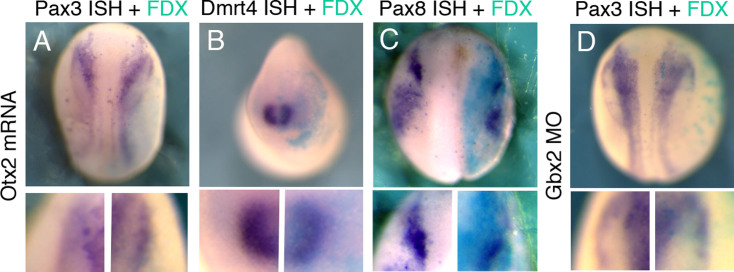
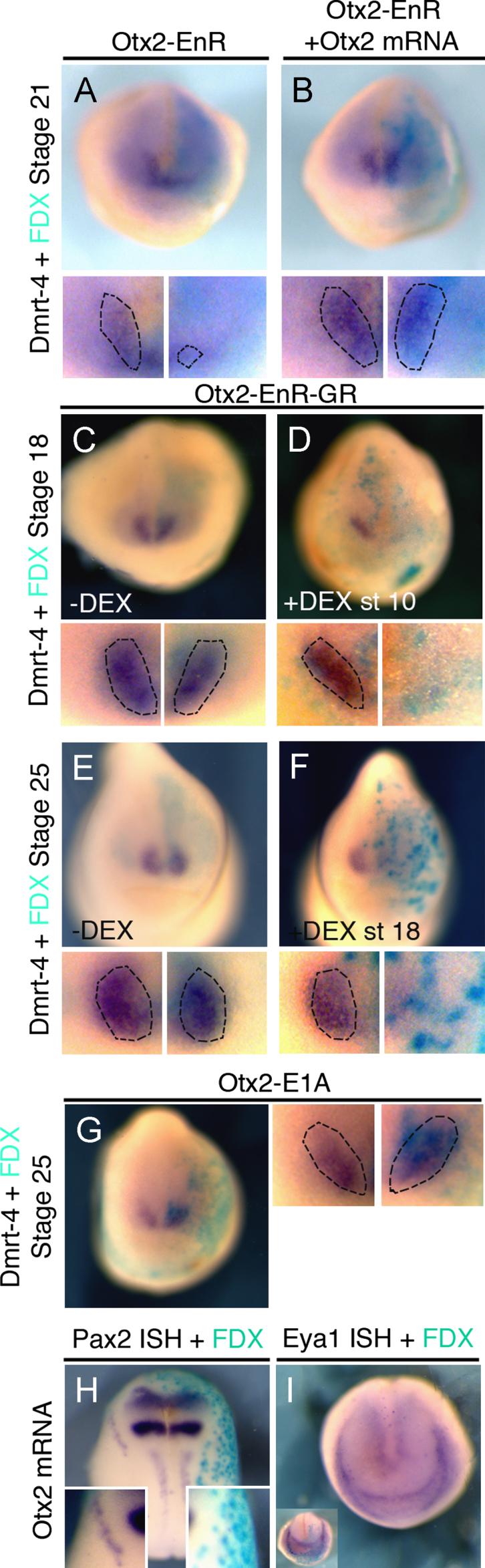
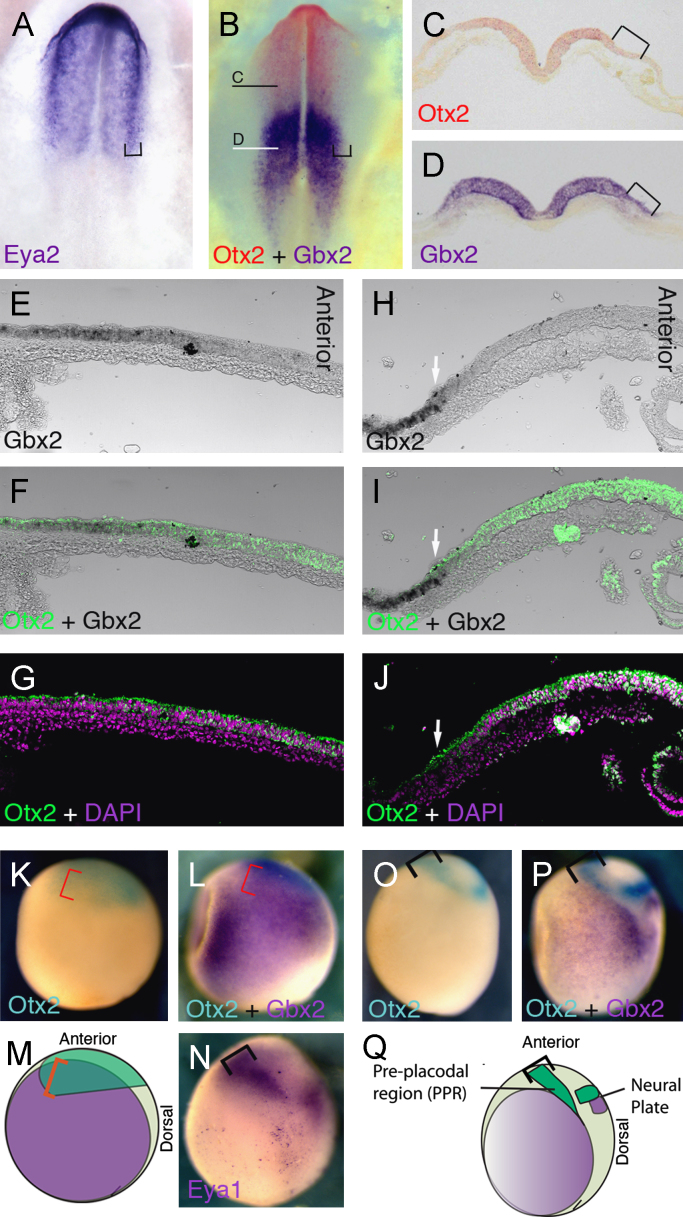
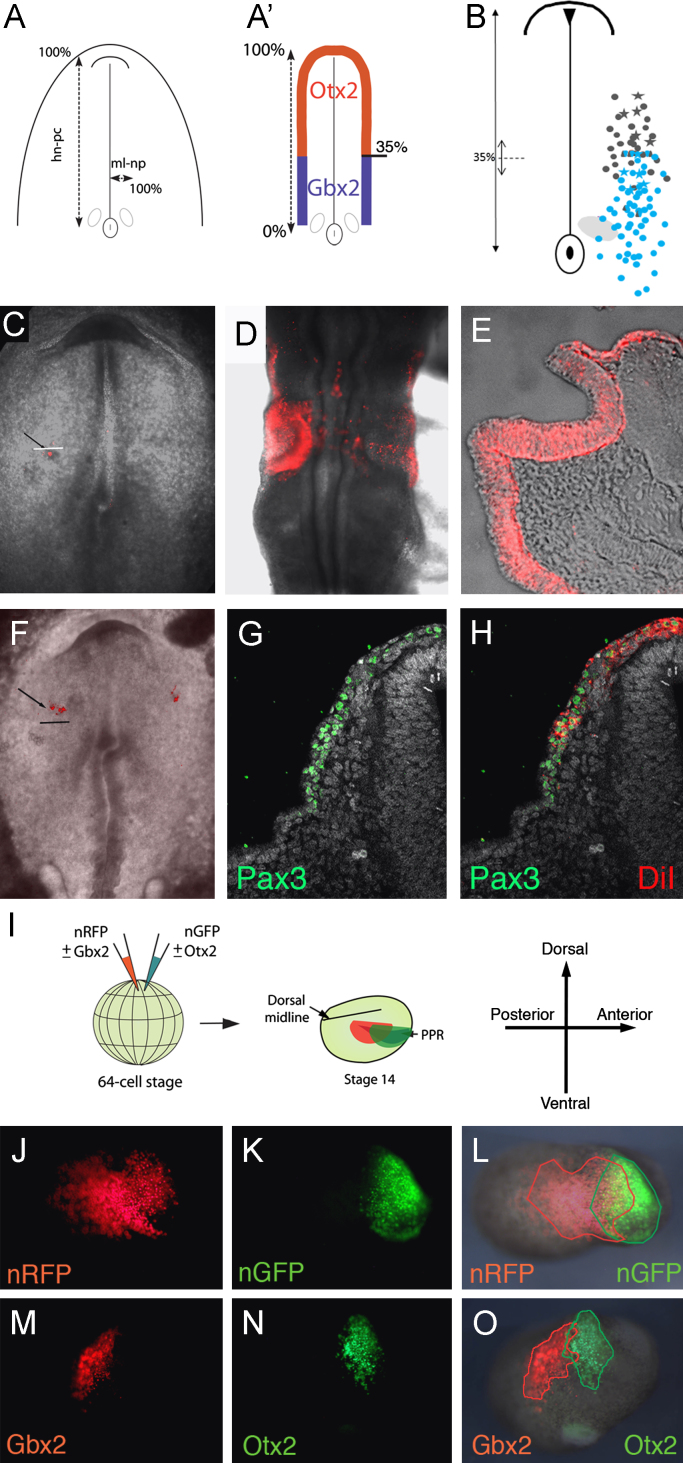
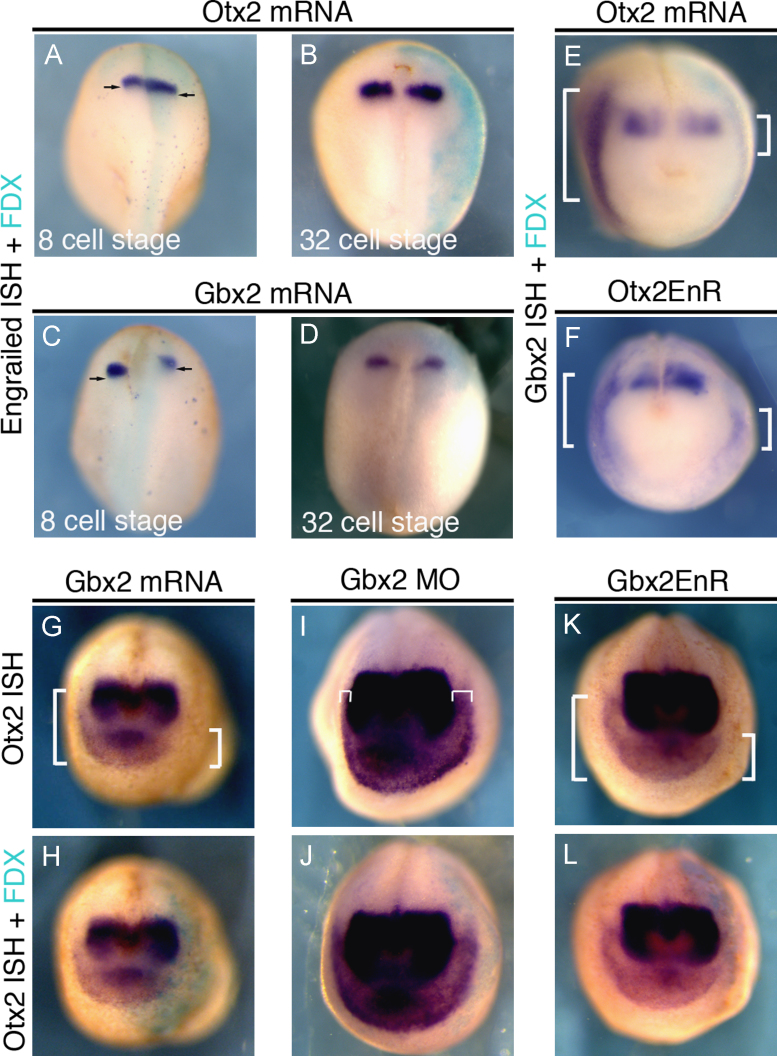
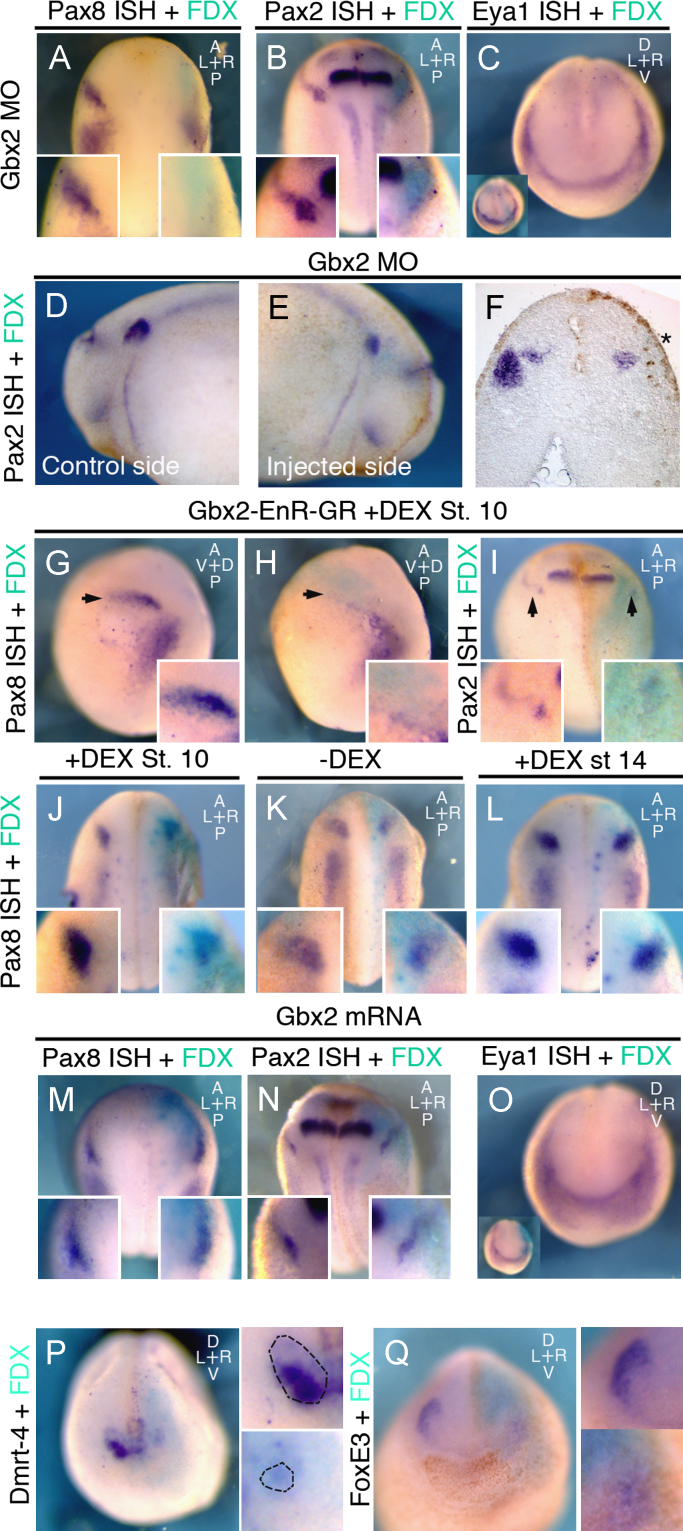
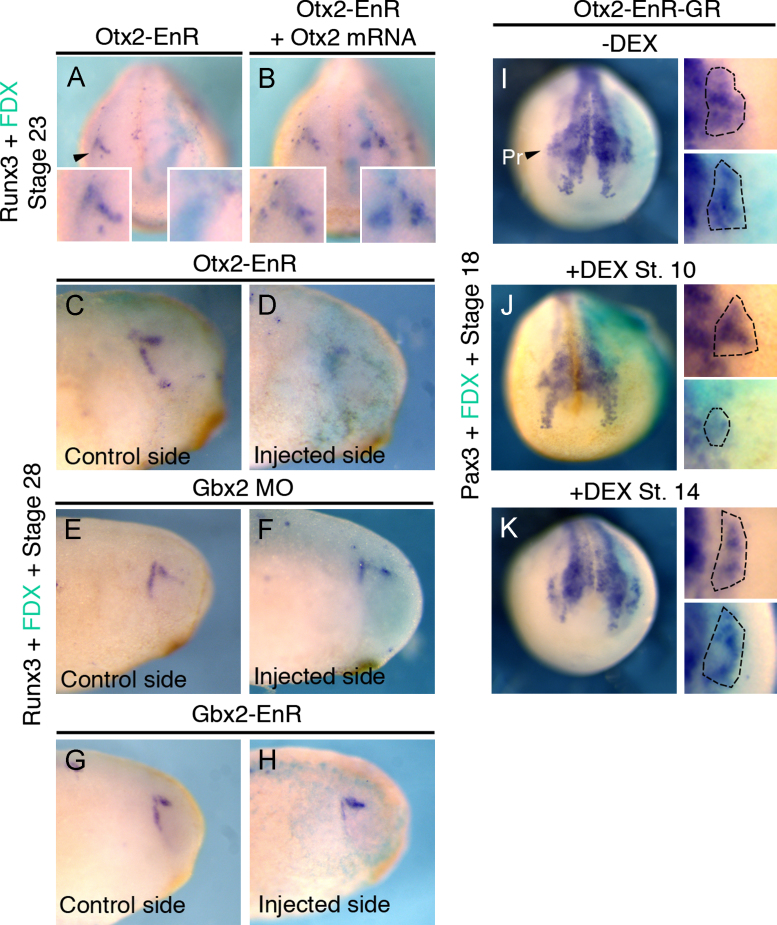
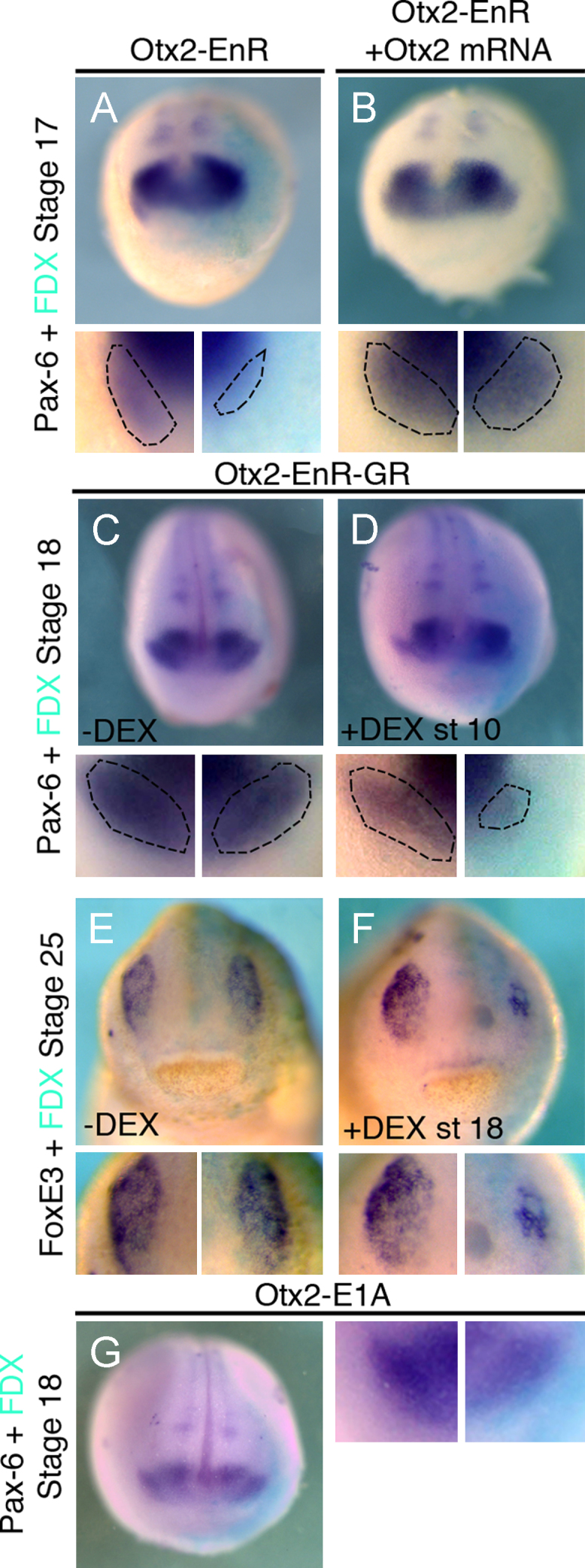
In the vertebrate head, central and peripheral components of the sensory nervous system have different embryonic origins, the neural plate and sensory placodes. This raises the question of how they develop in register to form functional sense organs and sensory circuits. Here we show that mutual repression between the homeobox transcription factors Gbx2 and Otx2 patterns the placode territory by influencing regional identity and by segregating inner ear and trigeminal progenitors. Activation of Otx2 targets is necessary for anterior olfactory, lens and trigeminal character, while Gbx2 function is required for the formation of the posterior otic placode. Thus, like in the neural plate antagonistic interaction between Otx2 and Gbx2 establishes positional information thus providing a general mechanism for rostro-caudal patterning of the ectoderm. Our findings support the idea that the Otx/Gbx boundary has an ancient evolutionary origin to which different modules were recruited to specify cells of different fates.
在脊椎动物头部,感觉神经系统的中枢和外周成分具有不同的胚胎起源,即神经板和感觉基板。这就提出了一个问题,即它们如何协调发育以形成功能性感觉器官和感觉回路。在这里,我们表明,同源盒转录因子 Gbx2 和 Otx2 之间的相互抑制通过影响区域身份并分离内耳和三叉神经祖细胞来塑造基板区域。Otx2 靶基因的激活对于前嗅、晶状体和三叉神经特征是必需的,而 Gbx2 功能对于后耳基板的形成是必需的。因此,就像在神经板中一样,Otx2 和 Gbx2 之间的拮抗相互作用建立了位置信息,从而为外胚层的头-尾模式提供了一种普遍机制。我们的发现支持这样一种观点,即 Otx/Gbx 边界具有古老的进化起源,不同的模块被招募来指定不同命运的细胞。