Nilson Kyle A, Price David H
Molecular and Cellular Biology Program, The University of Iowa, Iowa City, IA 52242, USA.
Genet Res Int. 2011;2011:726901. doi: 10.4061/2011/726901. Epub 2011 Oct 13.
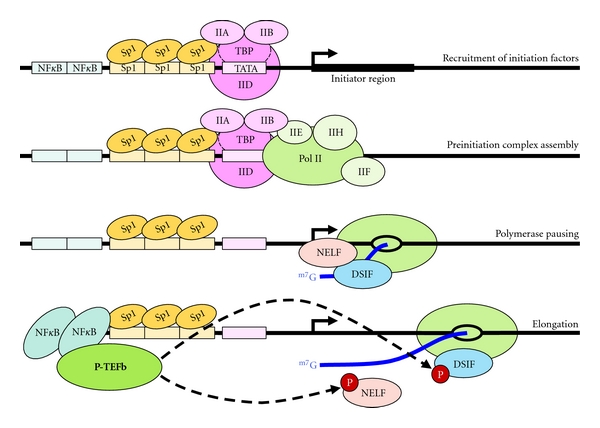
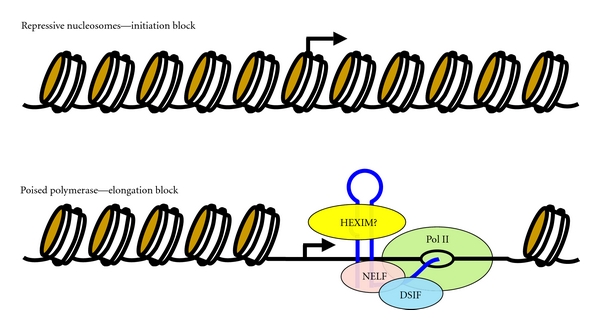
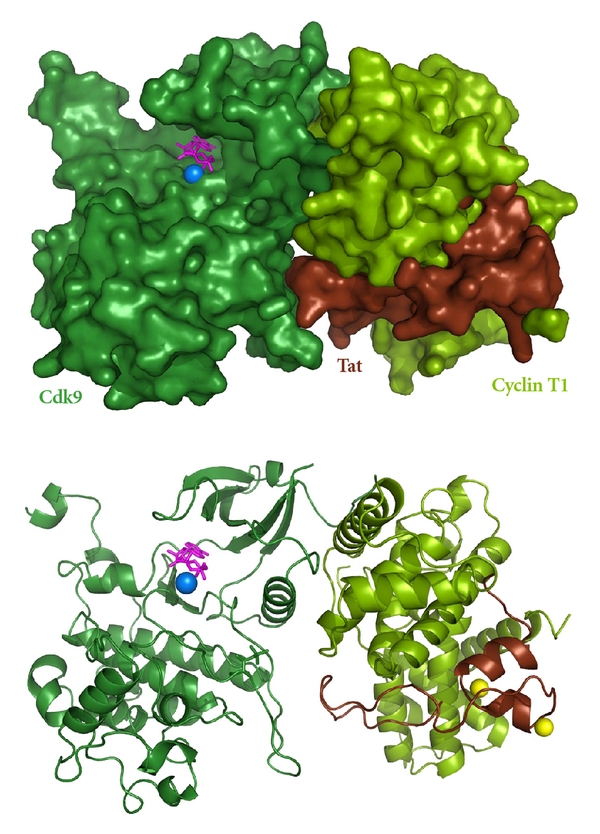
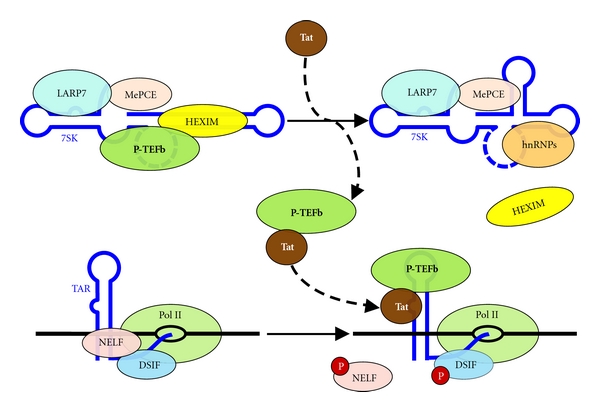
HIV-1 usurps the RNA polymerase II elongation control machinery to regulate the expression of its genome during lytic and latent viral stages. After integration into the host genome, the HIV promoter within the long terminal repeat (LTR) is subject to potent downregulation in a postinitiation step of transcription. Once produced, the viral protein Tat commandeers the positive transcription elongation factor, P-TEFb, and brings it to the engaged RNA polymerase II (Pol II), leading to the production of viral proteins and genomic RNA. HIV can also enter a latent phase during which factors that regulate Pol II elongation may play a role in keeping the virus silent. HIV, the causative agent of AIDS, is a worldwide health concern. It is hoped that knowledge of the mechanisms regulating the expression of the HIV genome will lead to treatments and ultimately a cure.
人类免疫缺陷病毒1型(HIV-1)在裂解性和潜伏性病毒阶段利用RNA聚合酶II延伸控制机制来调控其基因组的表达。整合到宿主基因组后,长末端重复序列(LTR)内的HIV启动子在转录起始后的步骤中受到强烈的下调。一旦产生,病毒蛋白Tat会征用正性转录延伸因子P-TEFb,并将其带到结合的RNA聚合酶II(Pol II)处,从而导致病毒蛋白和基因组RNA的产生。HIV也可进入潜伏阶段,在此期间,调节Pol II延伸的因子可能在使病毒保持沉默方面发挥作用。HIV是艾滋病的病原体,是全球健康关注的问题。希望对调控HIV基因组表达机制的了解能带来治疗方法并最终实现治愈。