Castonguay Emilie, Angers Bernard
Wellcome Trust Centre for Cell Biology, University of Edinburgh, Mayfield Road, Edinburgh EH9 3JR, UK.
Genet Res Int. 2012;2012:534289. doi: 10.1155/2012/534289. Epub 2012 Feb 14.
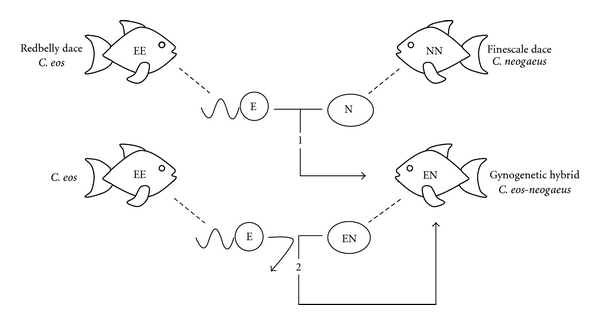
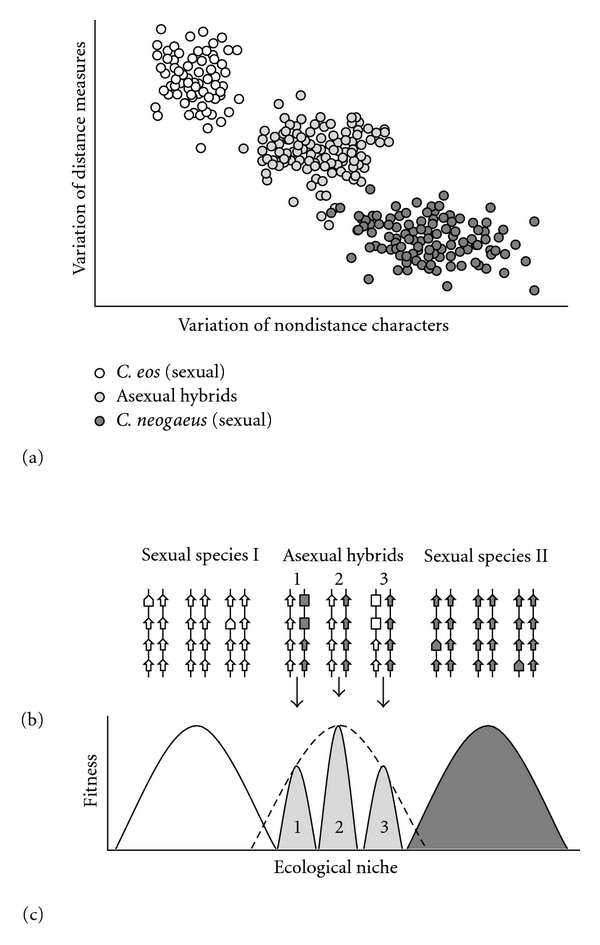
Asexual organisms, often perceived as evolutionary dead ends, can be long-lived and geographically widespread. We propose that epigenetic mechanisms could play a crucial role in the evolutionary persistence of these lineages. Genetically identical organisms could rely on phenotypic plasticity to face environmental variation. Epigenetic modifications could be the molecular mechanism enabling such phenotypic plasticity; they can be influenced by the environment and act at shorter timescales than mutation. Recent work on the asexual vertebrate Chrosomus eos-neogaeus (Pisces: Cyprinidae) provides broad insights into the contribution of epigenetics in genetically identical individuals. We discuss the extension of these results to other asexual organisms, in particular those resulting from interspecific hybridizations. We finally develop on the evolutionary relevance of epigenetic variation in the context of heritability.
无性生物通常被视为进化的死胡同,但它们可以寿命很长且分布广泛。我们提出表观遗传机制可能在这些谱系的进化持久性中发挥关键作用。基因相同的生物可以依靠表型可塑性来应对环境变化。表观遗传修饰可能是实现这种表型可塑性的分子机制;它们会受到环境影响,且作用时间尺度比突变短。最近对无性脊椎动物新红腹美首鲇(鱼类:鲤科)的研究为表观遗传学在基因相同个体中的作用提供了广泛见解。我们讨论了将这些结果扩展到其他无性生物,特别是那些由种间杂交产生的生物。我们最后阐述了表观遗传变异在遗传力背景下的进化相关性。