Howard Hughes Medical Institute and Department of Molecular, Cell and Developmental Biology, University of California, Los Angeles, CA 90095, USA.
Science. 2010 Oct 29;330(6004):622-7. doi: 10.1126/science.1190614.
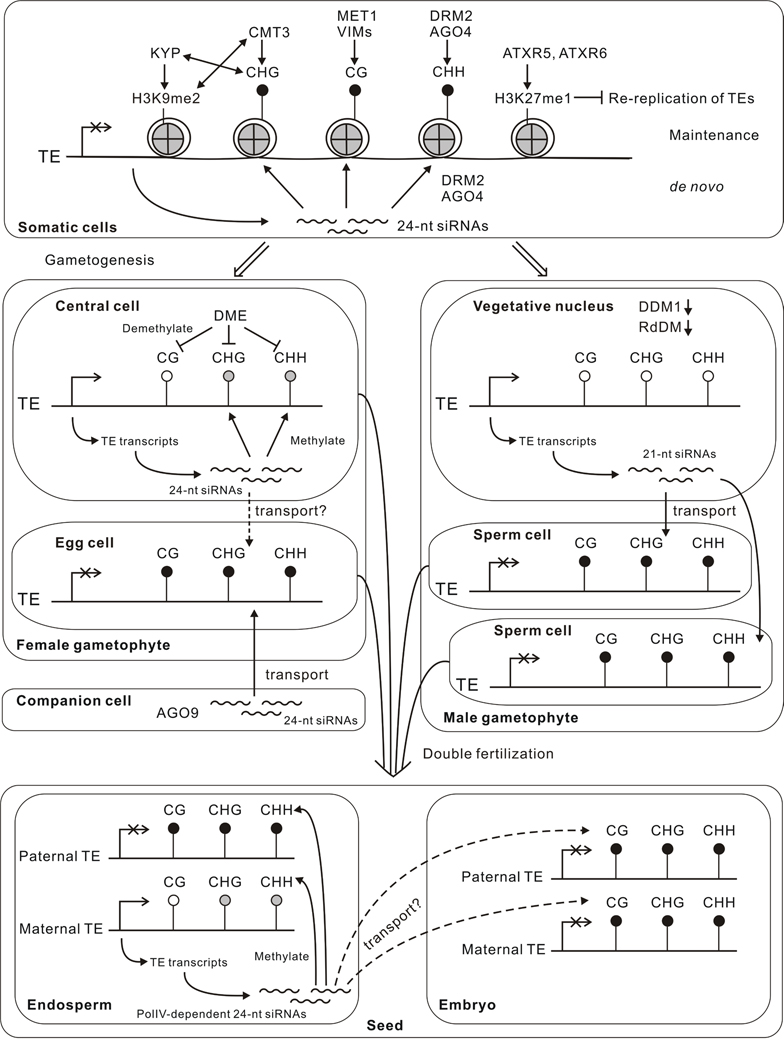
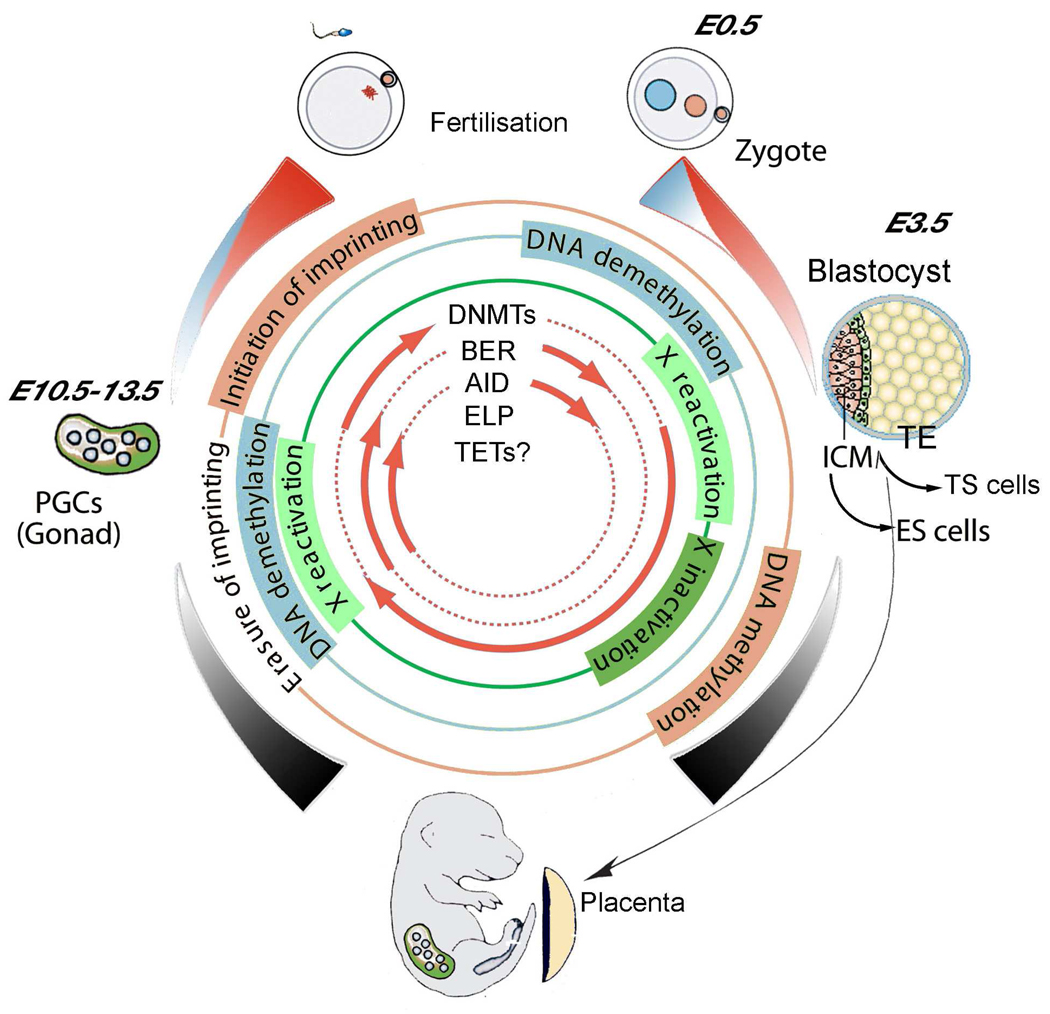
Epigenetic modifications of the genome are generally stable in somatic cells of multicellular organisms. In germ cells and early embryos, however, epigenetic reprogramming occurs on a genome-wide scale, which includes demethylation of DNA and remodeling of histones and their modifications. The mechanisms of genome-wide erasure of DNA methylation, which involve modifications to 5-methylcytosine and DNA repair, are being unraveled. Epigenetic reprogramming has important roles in imprinting, the natural as well as experimental acquisition of totipotency and pluripotency, control of transposons, and epigenetic inheritance across generations. Small RNAs and the inheritance of histone marks may also contribute to epigenetic inheritance and reprogramming. Reprogramming occurs in flowering plants and in mammals, and the similarities and differences illuminate developmental and reproductive strategies.
基因组的表观遗传修饰在多细胞生物的体细胞中通常是稳定的。然而,在生殖细胞和早期胚胎中,会发生全基因组范围的表观遗传重编程,包括 DNA 的去甲基化以及组蛋白及其修饰的重塑。全基因组 DNA 甲基化的消除机制涉及 5-甲基胞嘧啶的修饰和 DNA 修复,目前正在被揭示。表观遗传重编程在印迹、自然和实验获得全能性和多能性、转座子的控制以及跨代的表观遗传遗传中具有重要作用。小 RNA 和组蛋白标记的遗传也可能有助于表观遗传遗传和重编程。重编程发生在开花植物和哺乳动物中,其相似性和差异揭示了发育和生殖策略。