Department of Oral and Maxillofacial Surgery, University Medical Center Groningen, Groningen, The Netherlands.
J Mater Sci Mater Med. 2012 Aug;23(8):1951-9. doi: 10.1007/s10856-012-4663-x. Epub 2012 May 9.
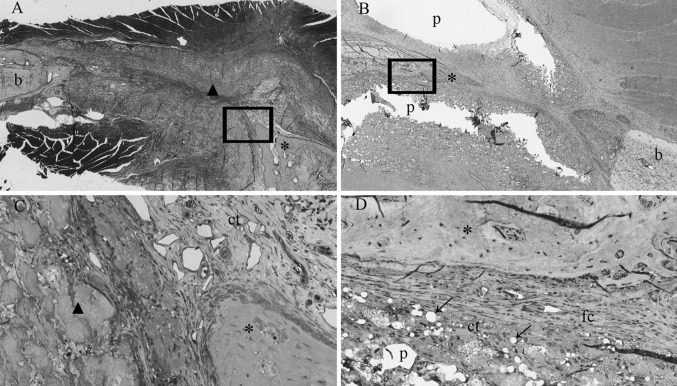
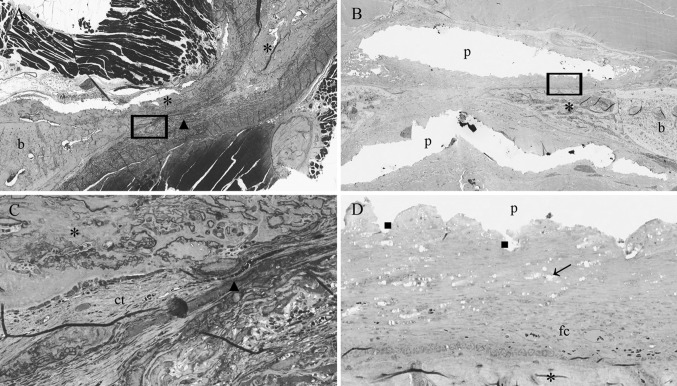
The aim of the present study was to evaluate the response of surrounding tissues to newly developed poly(trimethylene carbonate) (PTMC) membranes. Furthermore, the tissue formation beneath and the space maintaining properties of the PTMC membrane were evaluated. Results were compared with a collagen membrane (Geistlich BioGide), which served as control. Single-sided standardized 5.0 mm circular bicortical defects were created in the mandibular angle of rats. Defects were covered with either the PTMC membrane or a collagen membrane. After 2, 4 and 12 weeks rats were sacrificed and histology was performed. The PTMC membranes induced a mild tissue reaction corresponding to a normal foreign body reaction. The PTMC membranes showed minimal cellular capsule formation and showed signs of a surface erosion process. Bone tissue formed beneath the PTMC membranes comparable to that beneath the collagen membranes. The space maintaining properties of the PTMC membranes were superior to those of the collagen membrane. Newly developed PTMC membranes can be used with success as barrier membranes in critical size rat mandibular defects.
本研究旨在评估新型聚三亚甲基碳酸酯(PTMC)膜对周围组织的反应。此外,还评估了 PTMC 膜下方的组织形成和维持空间的特性。结果与胶原膜(Geistlich BioGide)进行了比较,胶原膜作为对照。在大鼠下颌角处制备单侧标准 5.0mm 圆形双皮质缺损。用 PTMC 膜或胶原膜覆盖缺损。2、4 和 12 周后处死大鼠并进行组织学检查。PTMC 膜引起了与正常异物反应相对应的轻度组织反应。PTMC 膜的细胞囊形成最少,并出现表面侵蚀过程的迹象。PTMC 膜下方形成的骨组织与胶原膜下方相似。PTMC 膜的维持空间特性优于胶原膜。新型开发的聚三亚甲基碳酸酯膜可成功用作临界尺寸大鼠下颌骨缺损的屏障膜。