Xia Tian, Jiang Han, Li Chenrui, Tian Mei, Zhang Hong
Department of Nuclear Medicine, Second Affiliated Hospital of Zhejiang University, School of Medicine, Hangzhou, Zhejiang , China.
J Biomed Biotechnol. 2012;2012:420364. doi: 10.1155/2012/420364. Epub 2012 Apr 10.
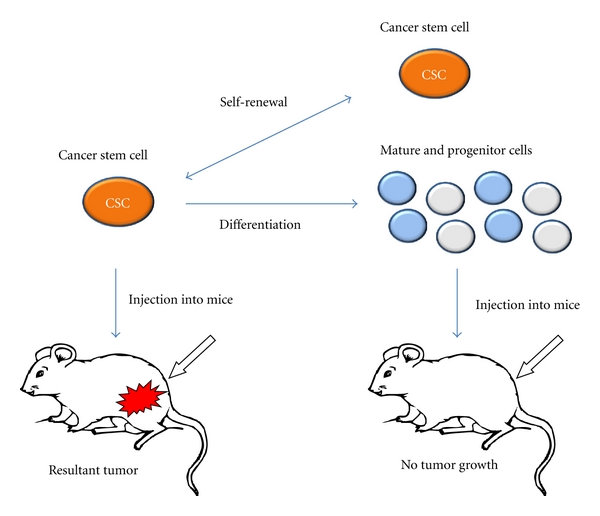
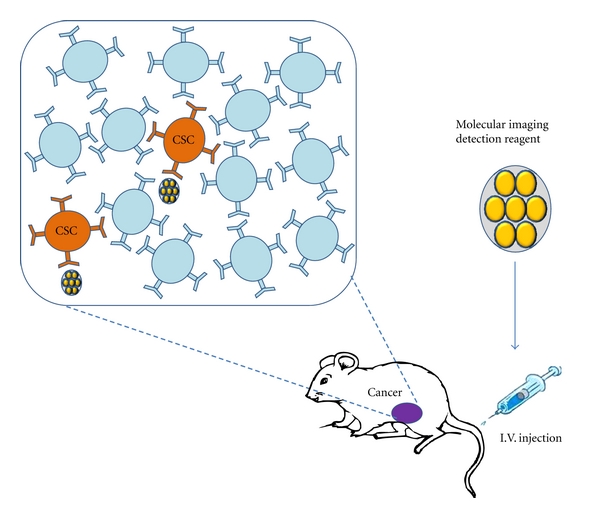
Cancer remains a major public health problem in many countries. It was found to contain a subset of cancer stem cells (CSCs) that are capable of proliferation and self-renewal, and differentiation into various types of cancer cells. CSCs often display characteristics of chemotherapy resistance and radiotherapy resistance. Numerous putative biomarkers of CSCs are currently identified including CD133, CD44, CD24, ALDH (aldehyde dehydrogenase), and ABCG2. Interestingly, no single marker is exclusively expressed by CSCs. Thus, the various combinations of different biomarkers will be possible to identify CSCs, and considerable work is being done to recognize new ones. In order to demonstrate the mechanisms of resistance and response to therapy and predict the outcome as well as prognosis, the ways to track and identify CSCs will be extremely important. The technologies of molecular imaging will reveal mechanisms of cancer progression and provide visual targets for novel therapeutics. Limited studies were investigated on the detection of various types of CSCs by molecular imaging. Although the tracking of circulating CSCs is still hampered by technological challenges, personalized diagnosis and therapies of cancers are expected to be established based on increased understanding of molecular imaging of cancer stem-like cells biomarkers.
癌症在许多国家仍然是一个重大的公共卫生问题。研究发现,癌症包含一部分癌症干细胞(CSCs),这些细胞能够增殖、自我更新,并分化为各种类型的癌细胞。癌症干细胞通常表现出对化疗和放疗的抗性。目前已鉴定出许多假定的癌症干细胞生物标志物,包括CD133、CD44、CD24、醛脱氢酶(ALDH)和ABCG2。有趣的是,没有单一标志物是癌症干细胞所特有的。因此,不同生物标志物的各种组合将有可能识别癌症干细胞,并且目前正在开展大量工作以识别新的生物标志物。为了阐明抗性机制以及对治疗的反应,并预测治疗结果和预后,追踪和识别癌症干细胞的方法将极为重要。分子成像技术将揭示癌症进展的机制,并为新型治疗方法提供可视化靶点。关于通过分子成像检测各种类型癌症干细胞的研究有限。尽管循环癌症干细胞的追踪仍然受到技术挑战的阻碍,但基于对癌症干细胞样细胞生物标志物分子成像的更多了解,有望建立癌症的个性化诊断和治疗方法。