Nakimuli-Mpungu Etheldreda, Mojtabai Ramin, Alexandre Pierre K, Katabira Elly, Musisi Seggane, Nachega Jean B, Bass Judith K
Department of Mental Health, Johns Hopkins Bloomberg School of Public Health, Baltimore, MD, USA.
HIV AIDS (Auckl). 2012;4:51-60. doi: 10.2147/HIV.S29818. Epub 2012 Apr 12.
HIV treatment programs are in need of brief, valid instruments to identify common mental disorders such as depression.
To translate and culturally adapt the Self-Reporting Questionnaire (SRQ-20) for use in Uganda and to investigate its psychometric properties in this setting.
Following an initial translation of the SRQ-20 from English to Luganda, key informant interviews and focus-group discussions were used to produce a culturally adapted version of the instrument. The adapted SRQ-20 was administered to 200 HIV-positive individuals in a rural antiretroviral therapy program in southern Uganda. All study participants were also evaluated by a psychiatric clinical officer with the Mini International Neuropsychiatric Interview (MINI). Receiver-operating-characteristic analysis was used to examine the sensitivity and specificity of the SRQ-20 compared to the clinical diagnosis generated by the MINI.
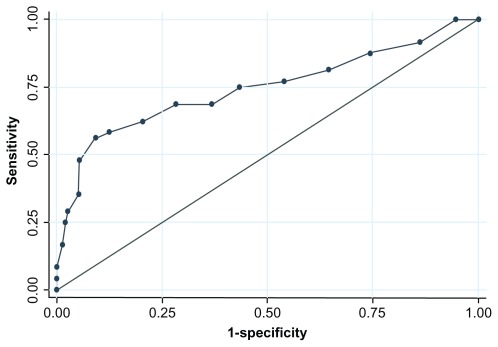
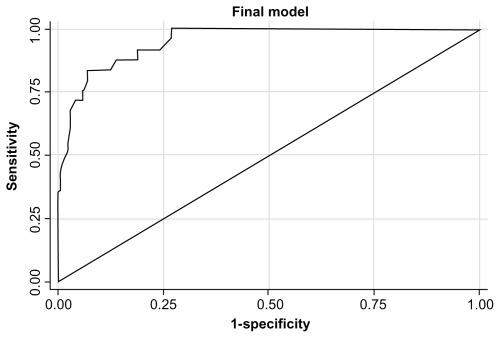
The prevalence estimates of any depressive disorder and current depression were 24% (n = 48) and 12% (n = 24), respectively. The SRQ-20 scores discriminated well between subjects with and without current depression based on the MINI, with an area under the curve of 0.92, as well as between subjects with and without any current or past depressive disorder, with an area under the curve of 0.75. A score of 6 or more had 84% sensitivity and 93% specificity for current depression, and 75% sensitivity and 90% specificity for any depressive disorder.
The SRQ-20 appears to be a reliable and valid screening measure for depression among rural HIV-positive individuals in southern Uganda. The use of this screening instrument can potentially improve detection and management of depression in this setting.
艾滋病治疗项目需要简短、有效的工具来识别常见精神障碍,如抑郁症。
翻译并对自评问卷(SRQ - 20)进行文化调适,以便在乌干达使用,并在此环境中研究其心理测量特性。
首先将SRQ - 20从英语翻译成卢干达语,然后通过关键 informant 访谈和焦点小组讨论得出该工具的文化调适版本。调适后的SRQ - 20应用于乌干达南部一个农村抗逆转录病毒治疗项目中的200名艾滋病病毒阳性个体。所有研究参与者还由一名精神科临床医生使用迷你国际神经精神访谈量表(MINI)进行评估。采用受试者工作特征分析来检验SRQ - 20相对于MINI产生的临床诊断的敏感性和特异性。
任何抑郁症和当前抑郁症的患病率估计分别为24%(n = 48)和12%(n = 24)。根据MINI,SRQ - 20得分在当前有抑郁症和无抑郁症的受试者之间区分良好,曲线下面积为0.92,在当前或过去有任何抑郁症和无抑郁症的受试者之间区分也良好,曲线下面积为0.75。6分及以上对当前抑郁症的敏感性为84%,特异性为93%,对任何抑郁症的敏感性为75%,特异性为90%。
SRQ - 20似乎是乌干达南部农村艾滋病病毒阳性个体中抑郁症的可靠且有效的筛查工具。在这种情况下使用该筛查工具可能会改善抑郁症的检测和管理。