Institute for Behavioral Genetics, University of Colorado, Boulder, CO 80303, USA.
Alcohol. 2012 Aug;46(5):463-71. doi: 10.1016/j.alcohol.2012.03.001. Epub 2012 May 7.
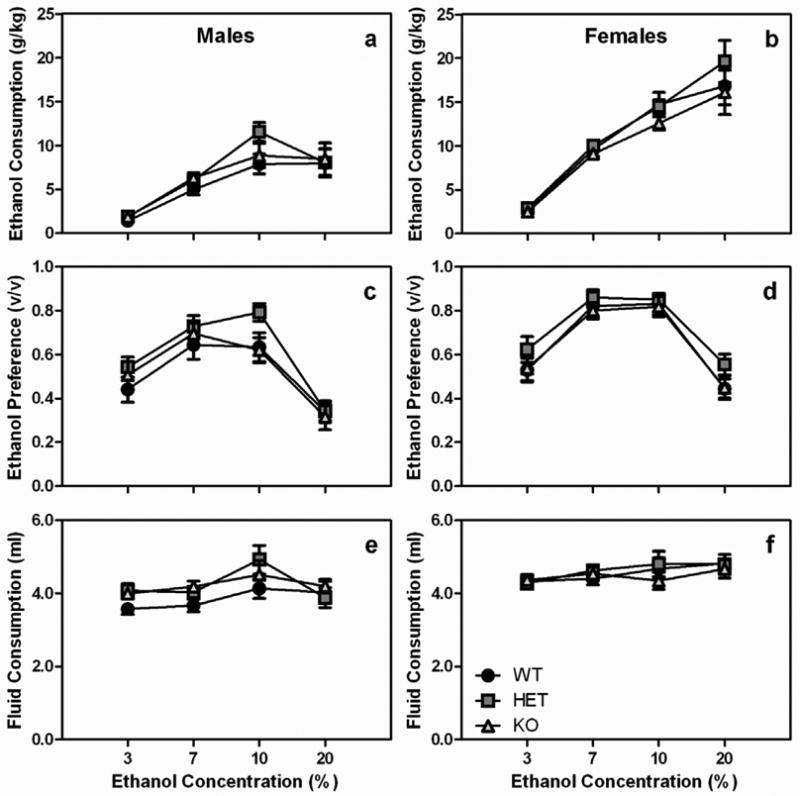
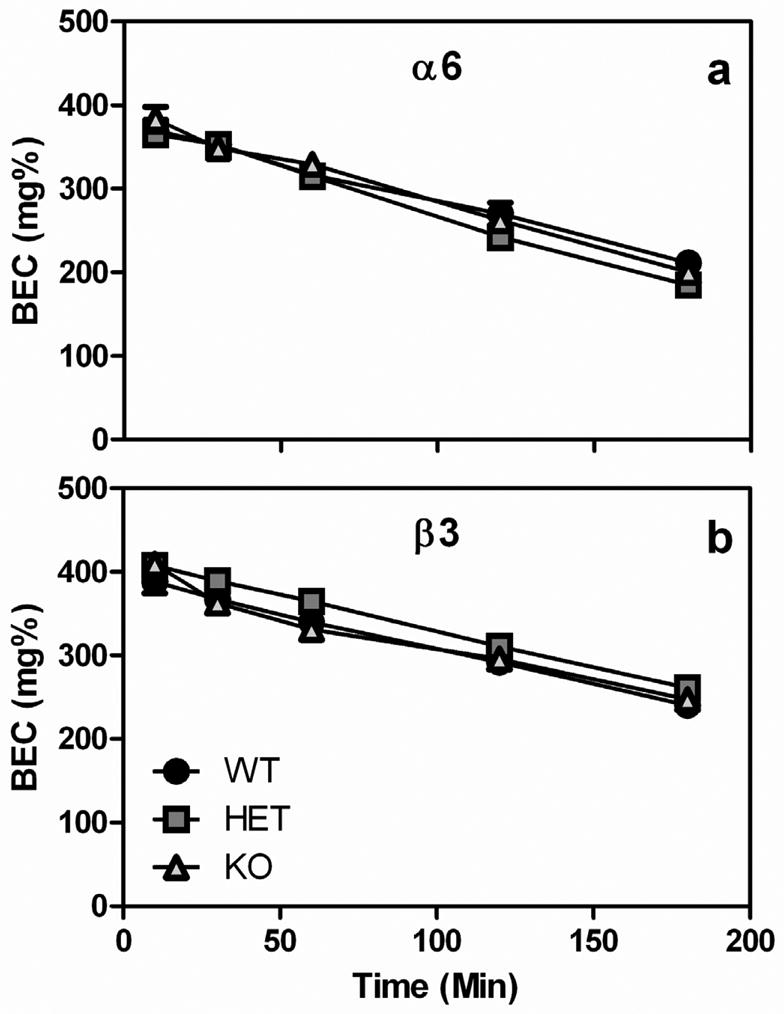
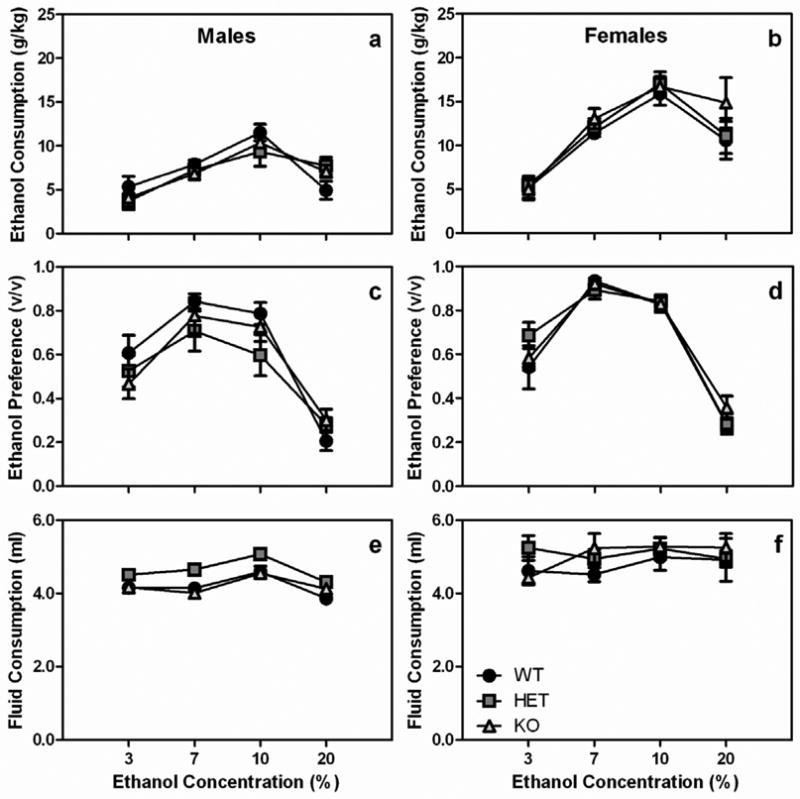
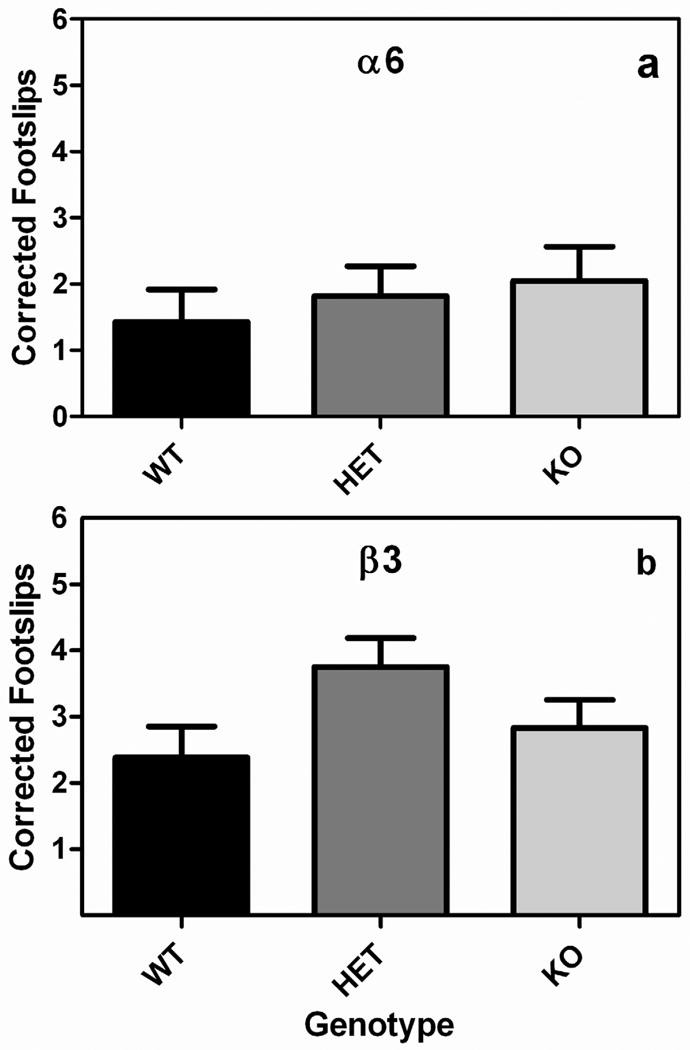
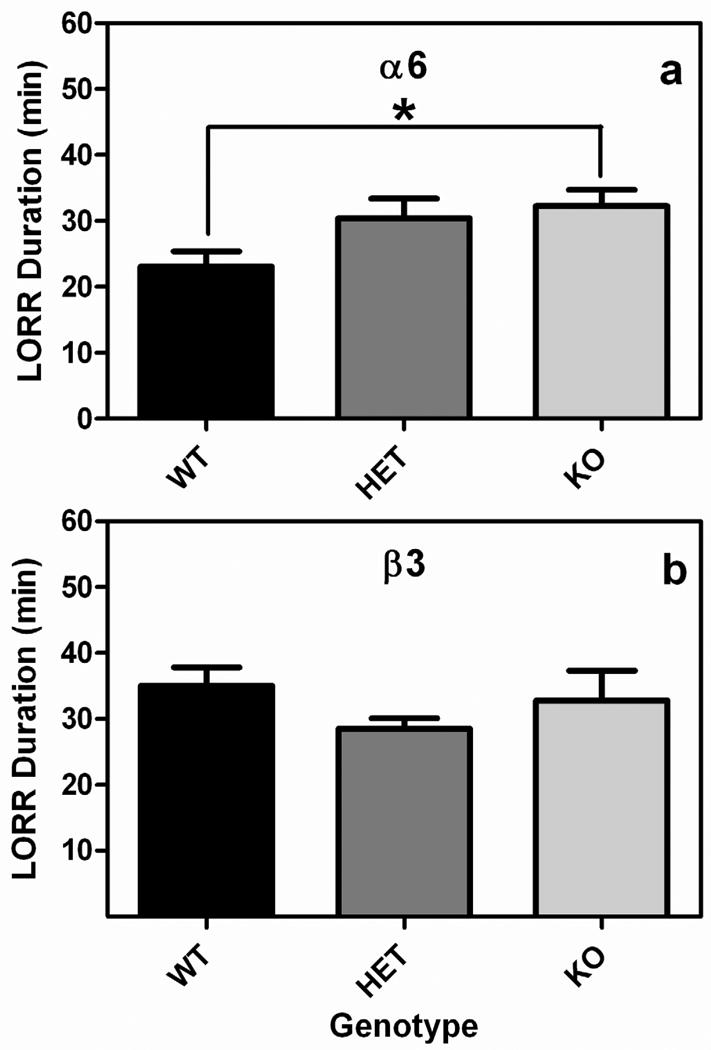
Alcohol and nicotine are often co-used and data from human and animals studies have demonstrated that common genes underlie responses to these two drugs. Recently, the genes that code for the subunits of the nicotinic acetylcholine receptors have been implicated as a common genetic mediator for alcohol and nicotine responses. The mammalian genes that code for the α6 and β3 subunits of the nicotinic acetylcholine receptor (Chrna6 and Chrnb3, respectively) are located adjacent to each other on human and mouse chromosome 8. These subunits have gained attention as potential regulators of drug behaviors because of their expression in the striatum where they have been shown to modulate dopamine release. Human genetic studies have shown that variation in these genes is associated with alcohol phenotypes. In the current experiments, mice lacking the Chrna6 or Chrnb3 gene were tested for three ethanol behaviors: choice ethanol consumption, ataxia, and sedation. Wildtype (WT), heterozygous (HET), and knockout (KO) mice of each strain went through a standard 2-bottle choice drinking paradigm, the balance beam, and the Loss of Righting Reflex (LORR) paradigm. No genotypic effects on any of the 3 behavioral tasks were observed in Chrnb3 animals. While the Chrna6 gene did not significantly influence ethanol consumption (g/kg) or ataxia, mice lacking the α6 subunit took significantly longer to recover their righting reflex than WT animals. These data provide evidence that receptors containing this subunit modulate the sedative effects of ethanol. Further work examining other models of ethanol consumption and behavioral responses to ethanol is needed to fully characterize the role of these receptor subunits in modulating ethanol responses.
酒精和尼古丁经常同时使用,人类和动物研究的数据表明,这两种药物的反应存在共同的基因基础。最近,编码烟碱型乙酰胆碱受体亚基的基因被认为是酒精和尼古丁反应的共同遗传介质。编码烟碱型乙酰胆碱受体α6 和 β3 亚基的哺乳动物基因(分别为 Chrna6 和 Chrnb3)在人类和小鼠 8 号染色体上彼此相邻。这些亚基因其在纹状体中的表达而成为潜在的药物行为调节剂而受到关注,因为它们被证明可以调节多巴胺的释放。人类遗传研究表明,这些基因的变异与酒精表型有关。在当前的实验中,缺乏 Chrna6 或 Chrnb3 基因的小鼠被测试了三种乙醇行为:选择乙醇消耗、共济失调和镇静。每种品系的野生型(WT)、杂合型(HET)和敲除型(KO)小鼠都经历了标准的 2 瓶选择饮酒范式、平衡梁和翻正反射丧失(LORR)范式。在 Chrnb3 动物中,没有观察到任何基因型对这 3 种行为任务的影响。虽然 Chrna6 基因没有显著影响乙醇消耗(g/kg)或共济失调,但缺乏α6 亚基的小鼠恢复翻正反射的时间明显长于 WT 动物。这些数据提供了证据,表明含有该亚基的受体调节乙醇的镇静作用。需要进一步研究其他乙醇消耗模型和对乙醇的行为反应,以充分表征这些受体亚基在调节乙醇反应中的作用。