The George Washington University Medical Faculty Associates, Division of Renal Diseases and Hypertension, Washington, DC 20037, USA.
Am J Cardiovasc Drugs. 2012 Jun 1;12(3):165-78. doi: 10.2165/11631520-000000000-00000.
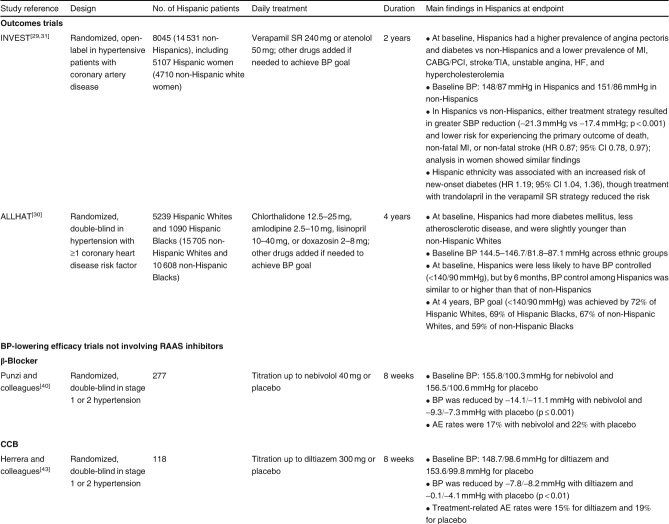
Hispanics are the fastest growing ethnic minority in the USA. Among Hispanics, lack of hypertension awareness and lack of effective blood pressure (BP) control are problematic, as are higher incidence rates of hypertension-related co-morbidities compared with non-Hispanic populations. Moreover, there are currently no hypertension treatment guidelines that address the unique characteristics of this ethnic group. This article discusses ethnic differences in hypertension and cardiovascular risk factors and reviews the literature on the efficacy of antihypertensive agents in Hispanic patients, with a focus on the role of renin-angiotensin-aldosterone system (RAAS) inhibition in the management of hypertension in these patients. Hypertension in Hispanic patients can be challenging to manage, in part because this population has a higher prevalence of obesity, diabetes, and metabolic syndrome compared with non-Hispanic whites. The presence of these co-morbidities suggests that RAAS-inhibitor-based therapies may be particularly beneficial in this population. However, few studies have evaluated the efficacy of antihypertensive treatments in Hispanic patients. Two outcomes studies in hypertensive patients have shown the benefits of treating Hispanic patients with antihypertensive therapy and included RAAS inhibitors as part of the treatment regimen. In addition, BP-lowering trials have shown the antihypertensive efficacy of angiotensin-converting enzyme inhibitors, angiotensin II receptor blockers, and direct renin inhibitors, although data on the latter are more limited. Additional studies are needed to more thoroughly evaluate the effects of RAAS inhibitors (and other drug classes) on outcomes and BP lowering in the Hispanic hypertensive population.
西班牙裔是美国增长最快的少数族裔。在西班牙裔中,高血压意识缺乏和血压(BP)控制效果不佳是一个问题,与非西班牙裔人群相比,高血压相关合并症的发病率更高。此外,目前还没有专门针对这一群体独特特征的高血压治疗指南。本文讨论了高血压和心血管风险因素的种族差异,并回顾了抗高血压药物在西班牙裔患者中的疗效文献,重点关注肾素-血管紧张素-醛固酮系统(RAAS)抑制在这些患者的高血压管理中的作用。西班牙裔患者的高血压管理具有挑战性,部分原因是该人群的肥胖症、糖尿病和代谢综合征的患病率高于非西班牙裔白人。这些合并症的存在表明,基于 RAAS 抑制剂的治疗方法可能对该人群特别有益。然而,很少有研究评估过抗高血压治疗在西班牙裔患者中的疗效。两项高血压患者的结局研究表明,对西班牙裔患者进行抗高血压治疗并将 RAAS 抑制剂纳入治疗方案中可带来获益。此外,降压试验表明血管紧张素转换酶抑制剂、血管紧张素 II 受体阻滞剂和直接肾素抑制剂具有降压疗效,尽管后者的数据更为有限。需要进一步的研究来更全面地评估 RAAS 抑制剂(和其他药物类别)对西班牙裔高血压患者结局和血压降低的影响。