Grubb Søren, Calloe Kirstine, Thomsen Morten B
Danish National Research Foundation Centre for Cardiac Arrhythmia, Department of Biomedical Sciences, University of Copenhagen Copenhagen, Denmark.
Front Physiol. 2012 May 4;3:118. doi: 10.3389/fphys.2012.00118. eCollection 2012.
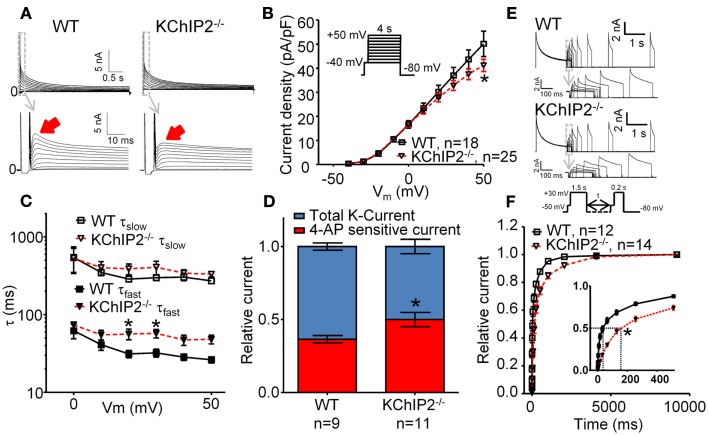
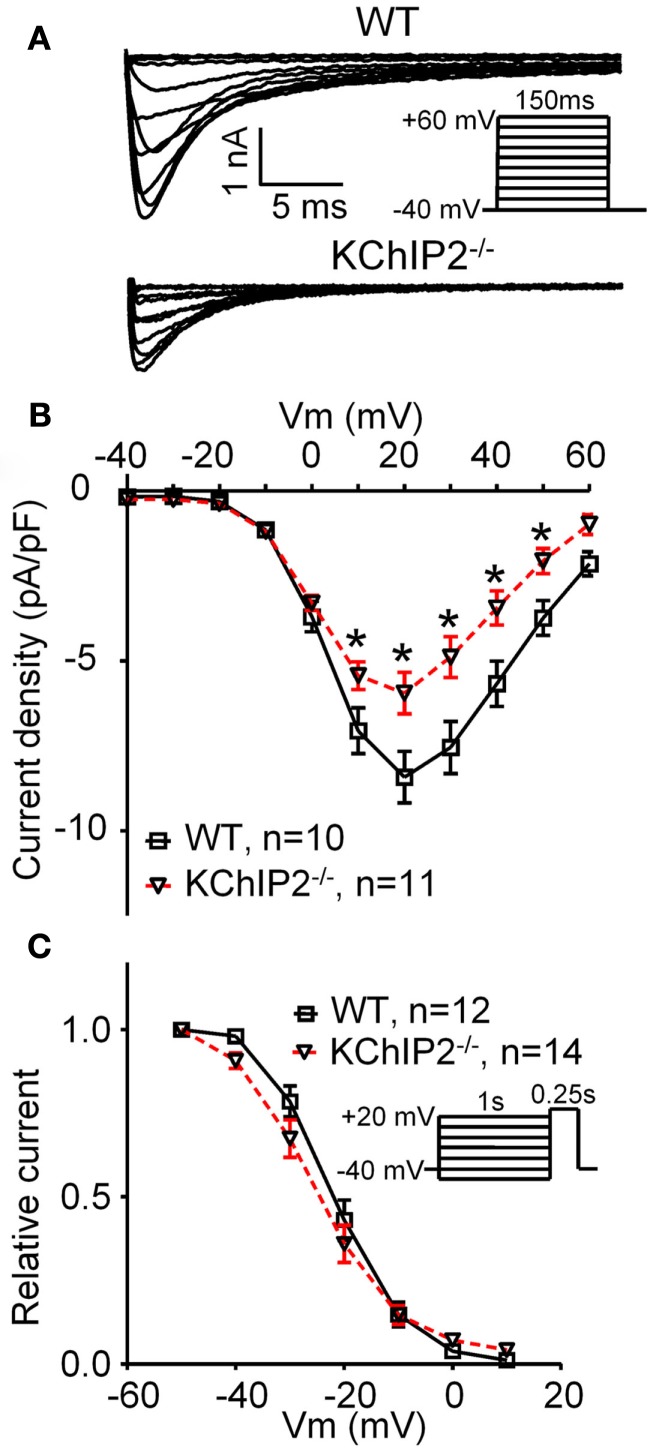
Electrophysiological remodeling of cardiac potassium ion channels is important in the progression of heart failure. A reduction of the transient outward potassium current (I(to)) in mammalian heart failure is consistent with a reduced expression of potassium channel interacting protein 2 (KChIP2, a K(V)4 subunit). Approaches have been made to investigate the role of KChIP2 in shaping cardiac I(to), including the use of transgenic KChIP2 deficient mice and viral overexpression of KChIP2. The interplay between I(to) and myocardial calcium handling is pivotal in the development of heart failure, and is further strengthened by the dual role of KChIP2 as a functional subunit on both K(V)4 and Ca(V)1.2. Moreover, the potential arrhythmogenic consequence of reduced I(to) may contribute to the high relative incidence of sudden death in the early phases of human heart failure. With this review, we offer an overview of the insights into the physiological and pathological roles of KChIP2 and we discuss the limitations of translating the molecular basis of electrophysiological remodeling from animal models of heart failure to the clinical setting.
心脏钾离子通道的电生理重塑在心力衰竭进展中具有重要意义。哺乳动物心力衰竭时瞬时外向钾电流(I(to))降低,这与钾通道相互作用蛋白2(KChIP2,一种K(V)4亚基)表达减少一致。已采取多种方法研究KChIP2在塑造心脏I(to)中的作用,包括使用转基因KChIP2缺陷小鼠和KChIP2的病毒过表达。I(to)与心肌钙处理之间的相互作用在心力衰竭发展中起关键作用,并且由于KChIP2作为K(V)4和Ca(V)1.2的功能亚基的双重作用而进一步增强。此外,I(to)降低的潜在致心律失常后果可能导致人类心力衰竭早期猝死的相对高发生率。通过本综述,我们概述了对KChIP2生理和病理作用的见解,并讨论了将心力衰竭动物模型中电生理重塑的分子基础转化到临床环境中的局限性。