Department of Internal Medicine, The Third Affiliated Hospital of Harbin Medical University, Haping Road 150 of Nangang District, Harbin 150081, China.
Molecules. 2012 May 16;17(5):5780-94. doi: 10.3390/molecules17055780.
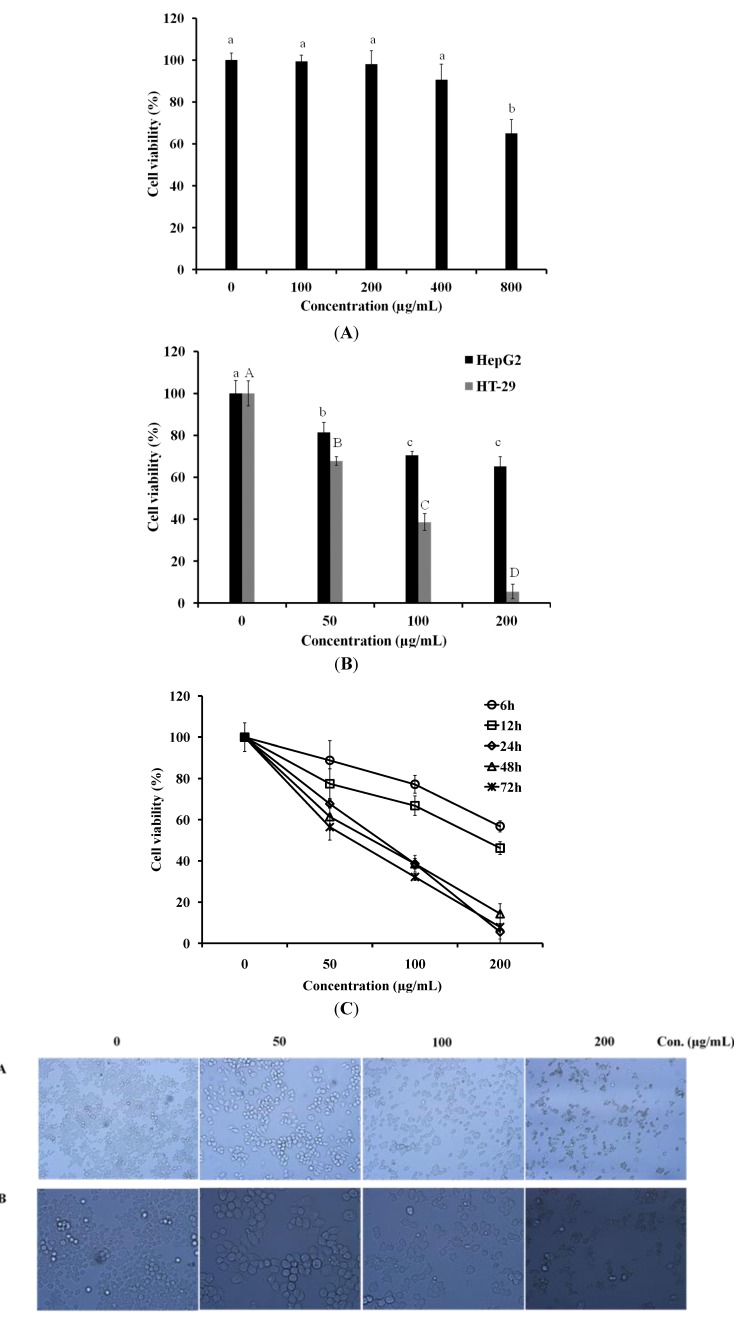
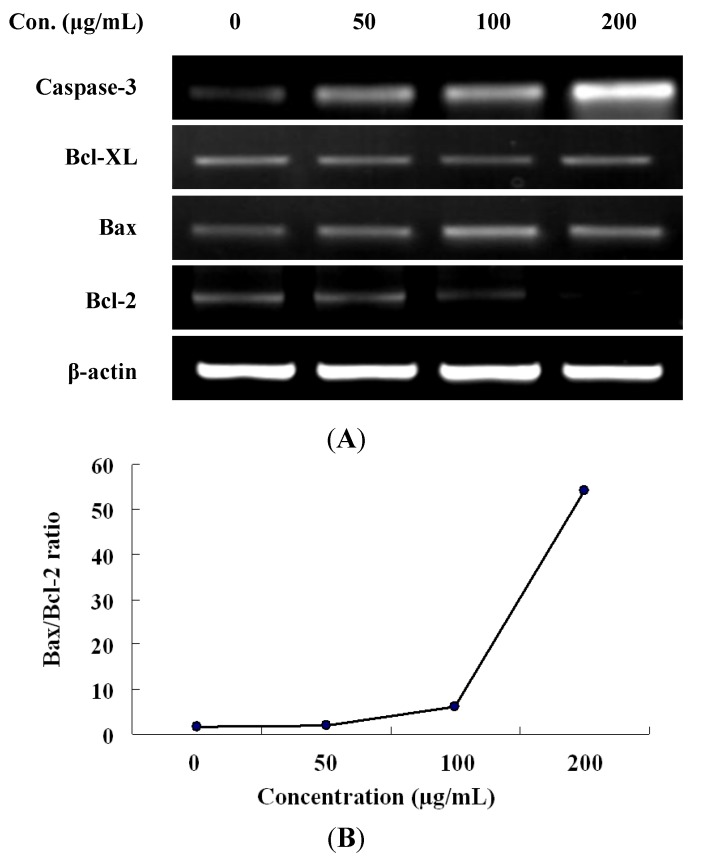
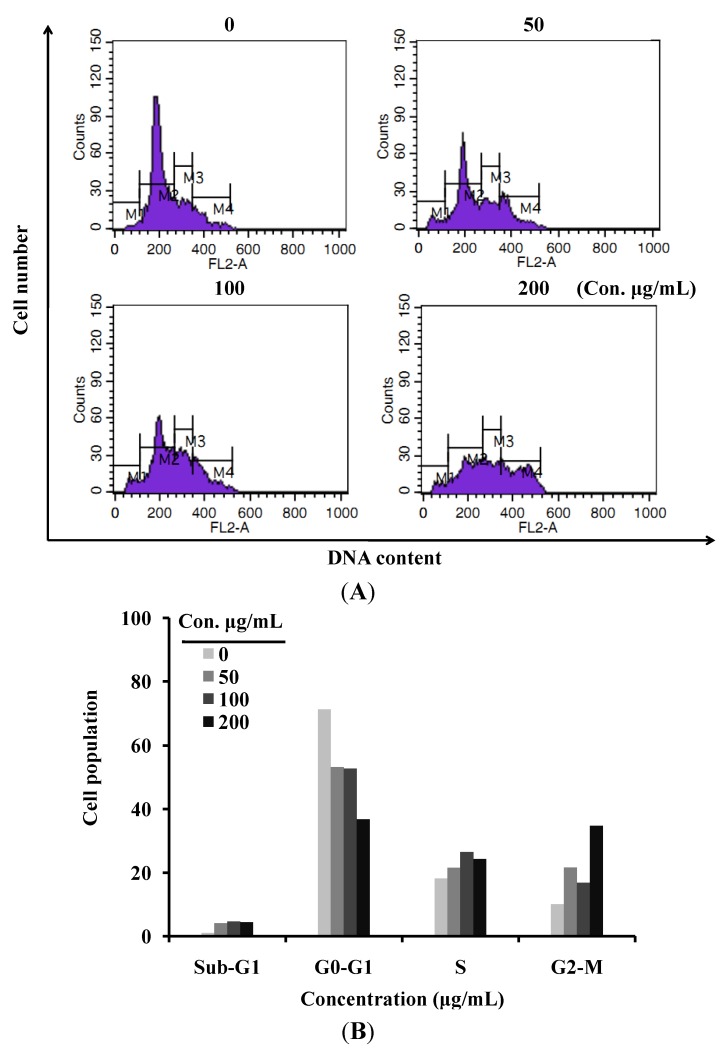
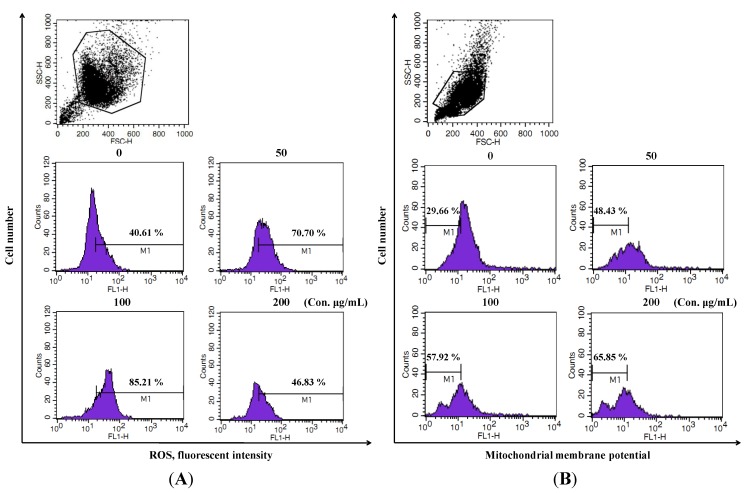
The antiproliferative properties and cell death mechanism induced by the extract of the fruits of Luffa echinata Roxb. (LER) were investigated. The methanolic extract of LER inhibited the proliferation of human colon cancer cells (HT-29) in both dose-dependent and time-dependent manners and caused a significant increase in the population of apoptotic cells. In addition, obvious shrinkage and destruction of the monolayer were observed in LER-treated cells, but not in untreated cells. Analysis of the cell cycle after treatment of HT-29 cells with various concentrations indicated that LER extracts inhibited the cellular proliferation of HT-29 cells via G2/M phase arrest of the cell cycle. The Reactive oxygen species (ROS) level determination revealed that LER extracts induced apoptotic cell death via ROS generation. In addition, LER treatment led to a rapid drop in mitochondrial membrane potential (MMP) as a decrease in fluorescence. The transcripts of several apoptosis-related genes were investigated by RT-PCR analysis. The caspase-3 transcripts of HT-29 cells significantly accumulated and the level of Bcl-XL mRNA was decreased after treatment with LER extract. Furthermore, the ratio of mitochondria-dependent apoptosis genes (Bax and Bcl-2) was sharply increased from 1.6 to 54.1. These experiments suggest that LER has anticancer properties via inducing the apoptosis in colon cancer cells, which provided the impetus for further studies on the therapeutic potential of LER against human colon carcinoma.
研究了丝瓜(LER)果实提取物的抗增殖特性和诱导细胞死亡的机制。LER 的甲醇提取物以剂量和时间依赖的方式抑制人结肠癌细胞(HT-29)的增殖,并导致凋亡细胞的数量显著增加。此外,在 LER 处理的细胞中观察到明显的细胞单层收缩和破坏,但在未处理的细胞中没有观察到。用不同浓度的 LER 处理 HT-29 细胞后分析细胞周期表明,LER 提取物通过细胞周期的 G2/M 期阻滞抑制 HT-29 细胞的细胞增殖。活性氧(ROS)水平测定表明,LER 提取物通过 ROS 生成诱导细胞凋亡性死亡。此外,LER 处理导致线粒体膜电位(MMP)迅速下降,荧光强度降低。通过 RT-PCR 分析研究了几种与凋亡相关的基因的转录。LER 提取物处理后 HT-29 细胞的 caspase-3 转录物明显积累,Bcl-XL mRNA 的水平降低。此外,线粒体依赖性凋亡基因(Bax 和 Bcl-2)的比值从 1.6 急剧增加到 54.1。这些实验表明,LER 通过诱导结肠癌细胞凋亡具有抗癌特性,为进一步研究 LER 对人结肠癌细胞的治疗潜力提供了动力。