Department of Human Genetics, Saarland University, Homburg/Saar, Germany.
PLoS One. 2012;7(5):e37422. doi: 10.1371/journal.pone.0037422. Epub 2012 May 14.
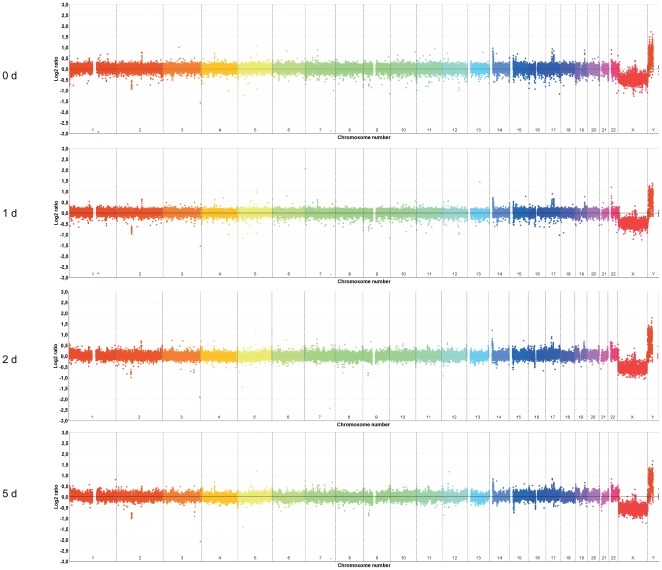
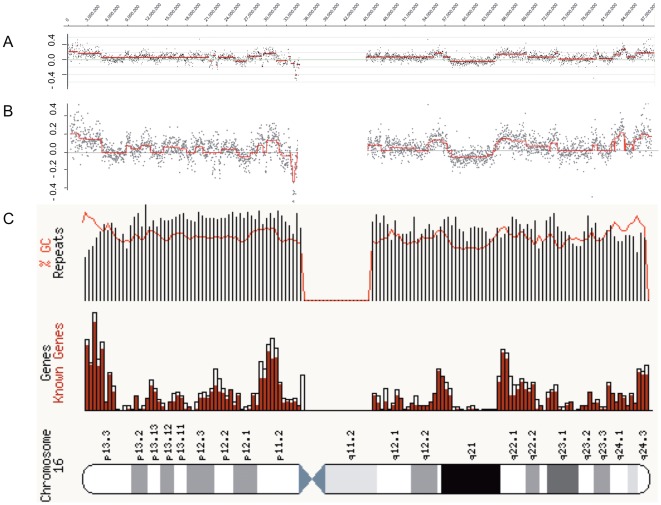
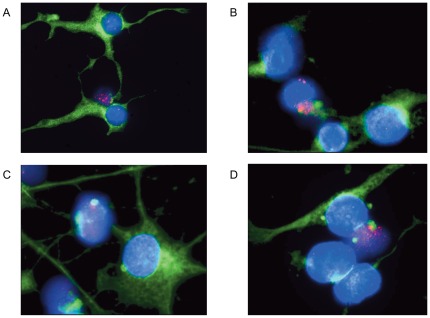
DNA sequence amplification is a phenomenon that occurs predictably at defined stages during normal development in some organisms. Developmental gene amplification was first described in amphibians during gametogenesis and has not yet been described in humans. To date gene amplification in humans is a hallmark of many tumors. We used array-CGH (comparative genomic hybridization) and FISH (fluorescence in situ hybridization) to discover gene amplifications during in vitro differentiation of human neural progenitor cells. Here we report a complex gene amplification pattern two and five days after induction of differentiation of human neural progenitor cells. We identified several amplified genes in neural progenitor cells that are known to be amplified in malignant tumors. There is also a striking overlap of amplified chromosomal regions between differentiating neural progenitor cells and malignant tumor cells derived from astrocytes. Gene amplifications in normal human cells as physiological process has not been reported yet and may bear resemblance to developmental gene amplifications in amphibians and insects.
DNA 序列扩增是一种在某些生物体的正常发育过程中可预测地发生在特定阶段的现象。发育基因扩增首先在两栖动物的配子发生过程中被描述,目前尚未在人类中描述。迄今为止,人类中的基因扩增是许多肿瘤的标志。我们使用 array-CGH(比较基因组杂交)和 FISH(荧光原位杂交)在人类神经祖细胞的体外分化过程中发现基因扩增。在这里,我们报告了人类神经祖细胞分化后两天和五天的复杂基因扩增模式。我们在神经祖细胞中鉴定出了一些已知在恶性肿瘤中扩增的基因。在分化的神经祖细胞和源自星形胶质细胞的恶性肿瘤细胞之间,扩增的染色体区域也存在惊人的重叠。作为生理过程的正常人类细胞中的基因扩增尚未被报道,可能与两栖动物和昆虫中的发育基因扩增相似。