Commissariat à l'Energie Atomique (CEA), CEA, Institut des Maladies Emergentes et Thérapies Innovantes Service d'Immuno-Virologie, CEA, Fontenay-aux Roses, F-92260, France.
Retrovirology. 2012 May 25;9:43. doi: 10.1186/1742-4690-9-43.
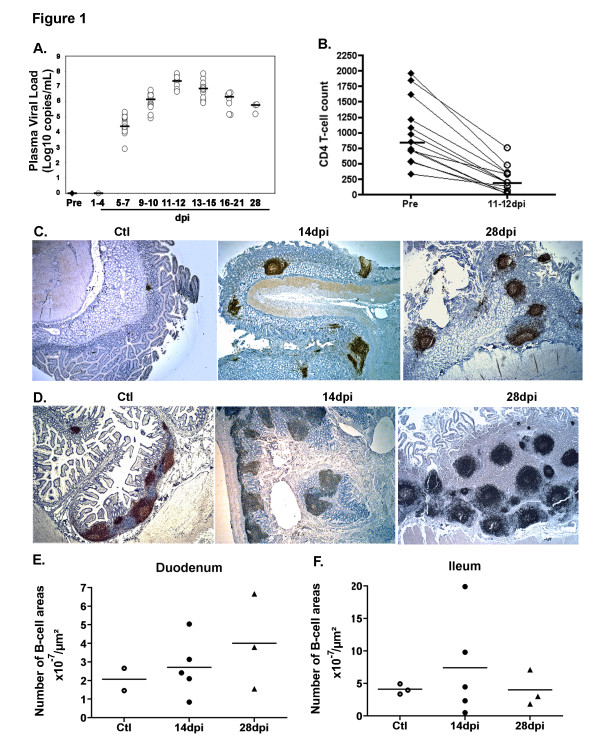
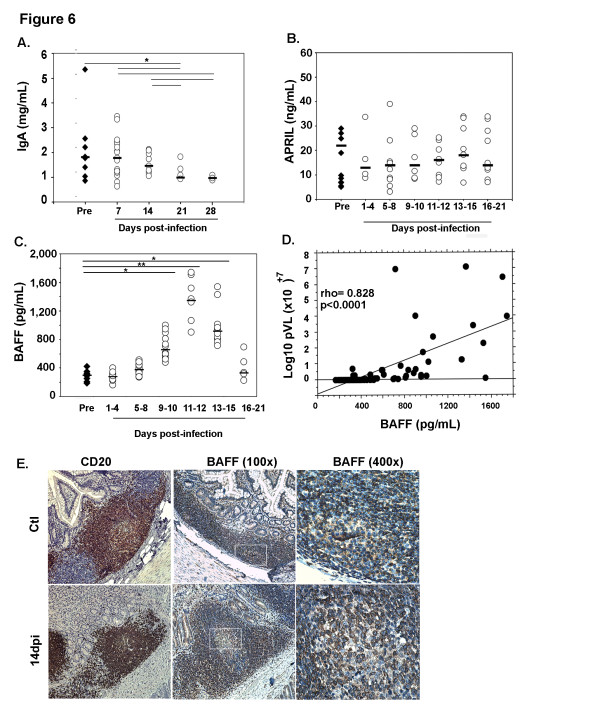
Conflicting results regarding changes in mucosal IgA production or in the proportions of IgA plasma cells in the small and large intestines during HIV-infection have been previously reported. Except in individuals repeatedly exposed to HIV-1 but yet remaining uninfected, HIV-specific IgAs are frequently absent in mucosal secretions from HIV-infected patients. However, little is known about the organization and functionality of mucosal B-cell follicles in acute HIV/SIV infection during which a T-dependent IgA response should have been initiated. In the present study, we evaluated changes in B-cell and T-cell subsets as well as the extent of apoptosis and class-specific plasma cells in Peyer's Patches, isolated lymphoid follicles, and lamina propria. Plasma levels of IgA, BAFF and APRIL were also determined.
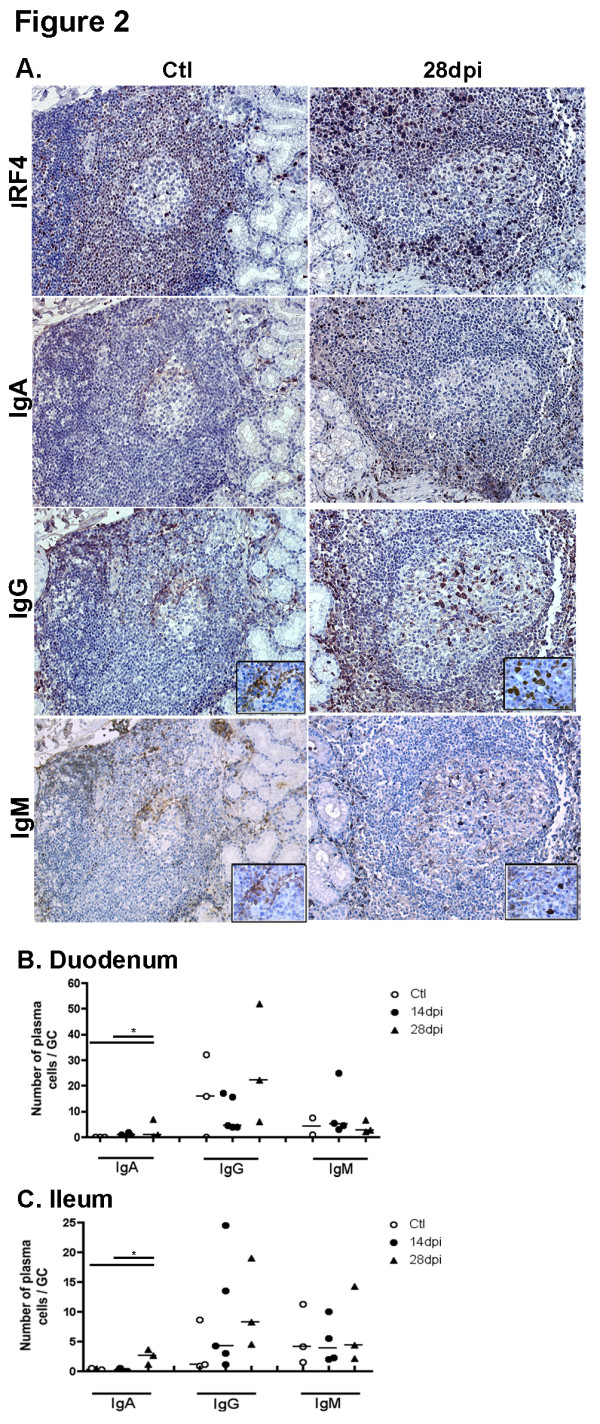
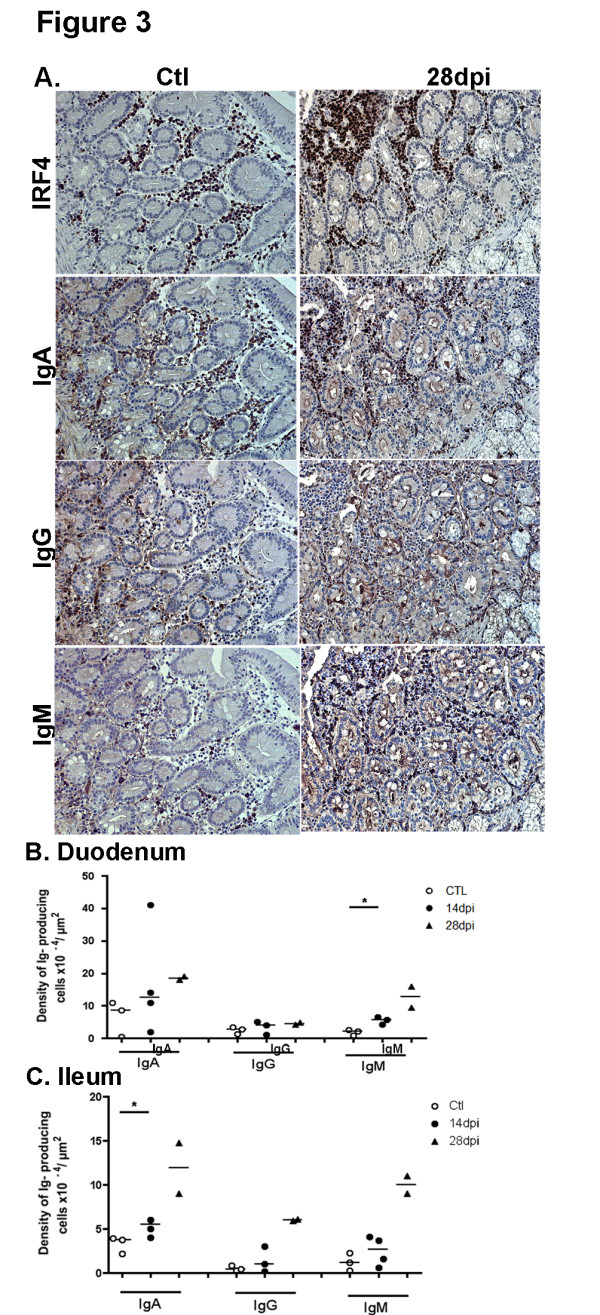
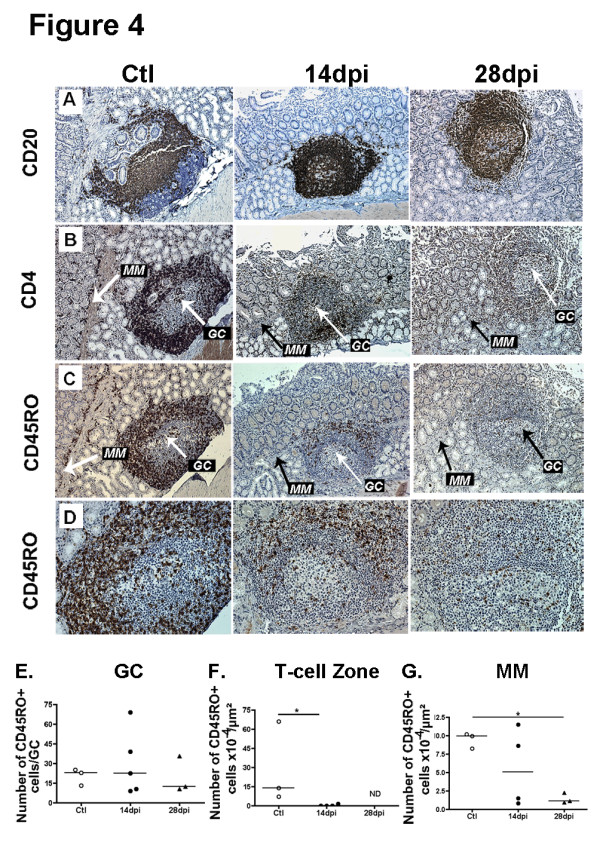
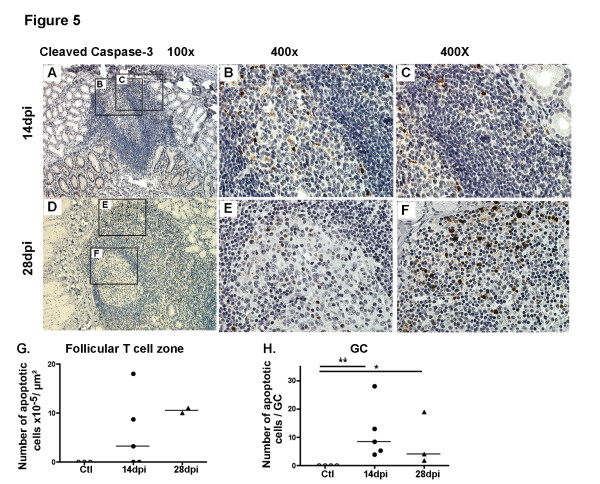
Plasma IgA level was reduced by 46% by 28 days post infection (dpi), and no IgA plasma cells were found within germinal centers of Peyer's Patches and isolated lymphoid follicles. This lack of a T-dependent IgA response occurs although germinal centers remained functional with no sign of follicular damage, while a prolonged survival of follicular CD4+ T-cells and normal generation of IgG plasma cells is observed. Whereas the average plasma BAFF level was increased by 4.5-fold and total plasma cells were 1.7 to 1.9-fold more numerous in the lamina propria, the relative proportion of IgA plasma cells in this effector site was reduced by 19% (duodemun) to 35% (ileum) at 28 dpi.
Our data provide evidence that SIV is unable to initiate a T-dependent IgA response during the acute phase of infection and favors the production of IgG (ileum) or IgM (duodenum) plasma cells at the expense of IgA plasma cells. Therefore, an early and generalized default in IgA production takes place during the acute of phase of HIV/SIV infection, which might impair not only the virus-specific antibody response but also IgA responses to other pathogens and vaccines as well. Understanding the mechanisms that impair IgA production during acute HIV/SIV infection is crucial to improve virus-specific response in mucosa and control microbial translocation.
先前的研究报告显示,在 HIV 感染期间,黏膜 IgA 产生或小、大肠中 IgA 浆细胞的比例发生变化的结果存在冲突。除了反复接触 HIV-1 但仍未感染的个体外,HIV 特异性 IgA 通常不存在于 HIV 感染患者的黏膜分泌物中。然而,对于急性 HIV/SIV 感染期间黏膜 B 细胞滤泡的组织和功能知之甚少,在此期间应该已经启动了 T 依赖性 IgA 反应。在本研究中,我们评估了 B 细胞和 T 细胞亚群的变化,以及 Peyer 斑、孤立淋巴滤泡和固有层中凋亡和同种型特异性浆细胞的程度。还测定了 IgA、BAFF 和 APRIL 的血浆水平。
感染后 28 天(dpi),血浆 IgA 水平降低了 46%,在 Peyer 斑和孤立淋巴滤泡的生发中心未发现 IgA 浆细胞。尽管生发中心仍然具有功能,没有滤泡损伤的迹象,但缺乏 T 依赖性 IgA 反应,而滤泡 CD4+T 细胞的存活时间延长,并且 IgG 浆细胞的正常生成。虽然平均血浆 BAFF 水平增加了 4.5 倍,固有层中的总浆细胞数量增加了 1.7 至 1.9 倍,但在效应部位,IgA 浆细胞的相对比例降低了 19%(十二指肠)至 35%(回肠)在 28 dpi。
我们的数据提供了证据,表明 SIV 在感染的急性期无法启动 T 依赖性 IgA 反应,并有利于 IgG(回肠)或 IgM(十二指肠)浆细胞的产生,而牺牲 IgA 浆细胞。因此,在 HIV/SIV 感染的急性期会发生 IgA 产生的早期和普遍缺失,这不仅会损害病毒特异性抗体反应,还会损害对其他病原体和疫苗的 IgA 反应。了解在急性 HIV/SIV 感染期间损害 IgA 产生的机制对于改善黏膜中的病毒特异性反应和控制微生物易位至关重要。