Biochemical Science and Engineering, Central Research and Development, E. I. DuPont de Nemours, Experimental Station, Wilmington, DE 19880, USA.
Appl Microbiol Biotechnol. 2013 Mar;97(5):1973-85. doi: 10.1007/s00253-012-4068-2. Epub 2012 May 27.
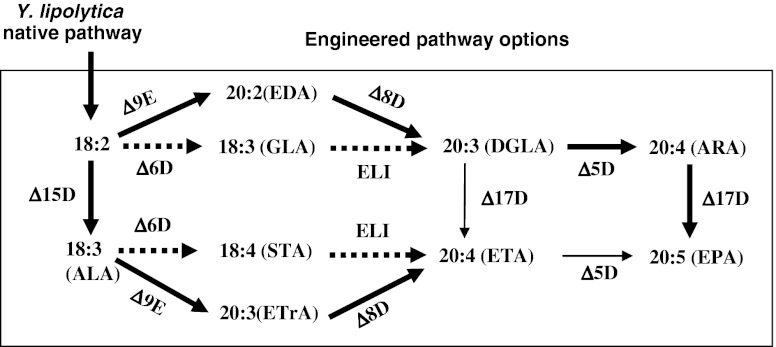
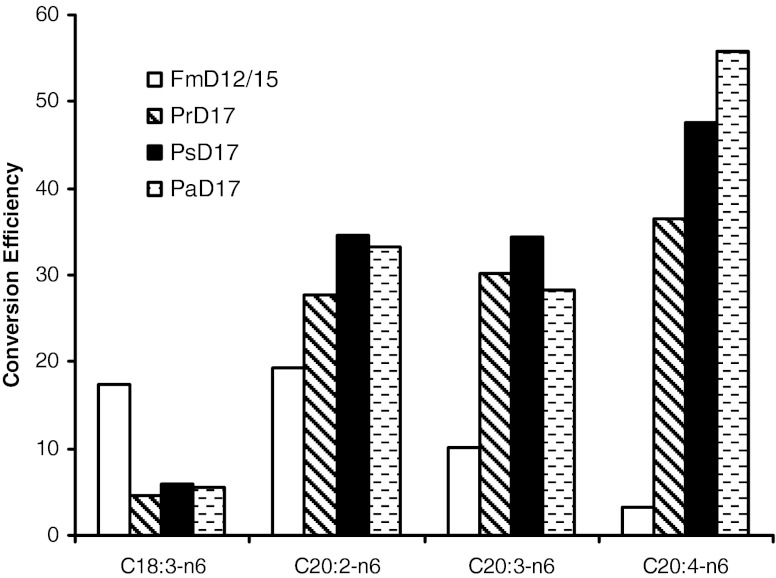
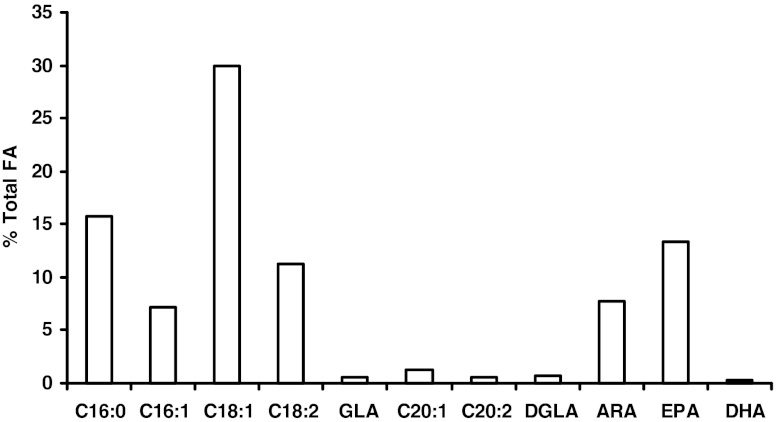
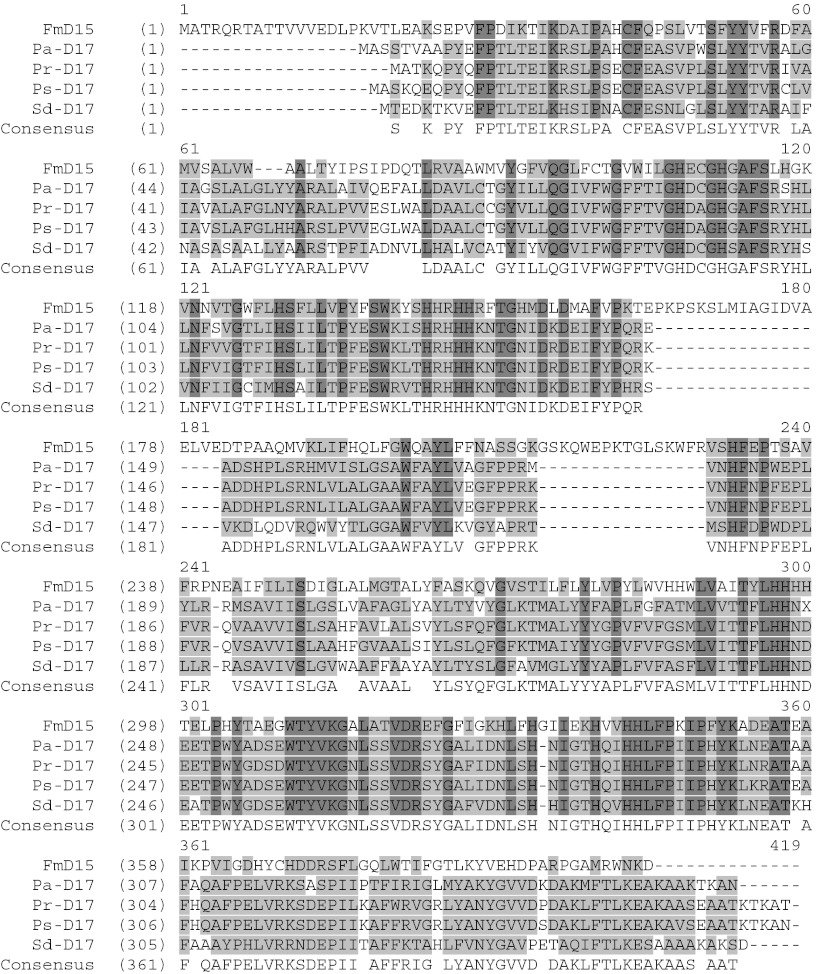
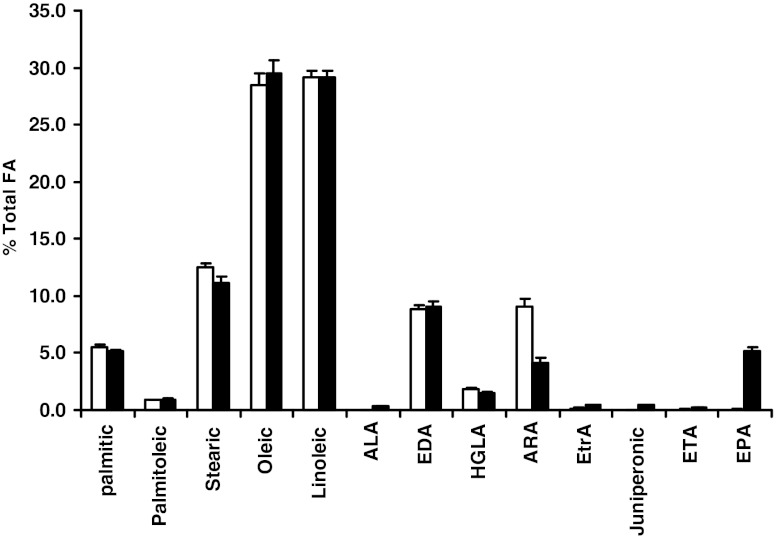
ω-3 fatty acid desaturase is a key enzyme for the biosynthesis of ω-3 polyunsaturated fatty acids via the oxidative desaturase/elongase pathways. Here we report the identification of three ω-3 desaturases from oomycetes, Pythium aphanidermatum, Phytophthora sojae, and Phytophthora ramorum. These new ω-3 desaturases share 55 % identity at the amino acid level with the known Δ-17 desaturase of Saprolegnia diclina, and about 31 % identity with the bifunctional Δ-12/Δ-15 desaturase of Fusarium monoliforme. The three enzymes were expressed in either wild-type or codon optimized form in an engineered arachidonic acid producing strain of Yarrowia lipolytica to study their activity and substrate specificity. All three were able to convert the ω-6 arachidonic acid to the ω-3 eicosapentanoic acid, with a substrate conversion efficiency of 54-65 %. These enzymes have a broad ω-6 fatty acid substrate spectrum, including both C18 and C20 ω-6 fatty acids although they prefer the C20 substrates, and have strong Δ-17 desaturase activity but weaker Δ-15 desaturase activity. Thus, they belong to the Δ-17 desaturase class. Unlike the previously identified bifunctional Δ-12/Δ-15 desaturase from F. monoliforme, they lack Δ-12 desaturase activity. The newly identified Δ-17 desaturases could use fatty acids in both acyl-CoA and phospholipid fraction as substrates. The identification of these Δ-17 desaturases provides a set of powerful new tools for genetic engineering of microbes and plants to produce ω-3 fatty acids, such as eicosapentanoic acid and docosahexanoic acid, at high levels.
ω-3 脂肪酸去饱和酶是通过氧化去饱和酶/延长酶途径生物合成 ω-3 多不饱和脂肪酸的关键酶。在这里,我们报告了从卵菌纲植物中鉴定出的三种 ω-3 去饱和酶,即无性繁殖真菌、大豆疫霉和松材线虫。这些新的 ω-3 去饱和酶在氨基酸水平上与已知的 Saprolegnia diclina 的 Δ-17 去饱和酶具有 55%的同源性,与 Fusarium monoliforme 的双功能 Δ-12/Δ-15 去饱和酶具有约 31%的同源性。这三种酶均以野生型或密码子优化形式在工程化的花生酸产生菌株解脂耶氏酵母中表达,以研究其活性和底物特异性。所有三种酶都能够将 ω-6 花生四烯酸转化为 ω-3 二十碳五烯酸,转化率为 54-65%。这些酶具有广泛的 ω-6 脂肪酸底物谱,包括 C18 和 C20 ω-6 脂肪酸,尽管它们更喜欢 C20 底物,并且具有很强的 Δ-17 去饱和酶活性,但 Δ-15 去饱和酶活性较弱。因此,它们属于 Δ-17 去饱和酶类。与先前从 F. monoliforme 鉴定出的双功能 Δ-12/Δ-15 去饱和酶不同,它们缺乏 Δ-12 去饱和酶活性。新鉴定的 Δ-17 去饱和酶可以使用酰基辅酶 A 和磷脂部分中的脂肪酸作为底物。这些 Δ-17 去饱和酶的鉴定为微生物和植物的基因工程提供了一组强大的新工具,可用于高水平生产 ω-3 脂肪酸,如二十碳五烯酸和二十二碳六烯酸。