Laboratory of Neurosciences, Intramural Research Program, National Institute on Aging, National Institutes of Health, Baltimore, MD 21224, USA.
J Neuroinflammation. 2012 May 29;9:106. doi: 10.1186/1742-2094-9-106.
Neuroinflammation is associated with virtually all major neurodegenerative disorders, including Alzheimer's disease (AD). Although it remains unclear whether neuroinflammation is the driving force behind these disorders, compelling evidence implicates its role in exacerbating disease progression, with a key player being the potent proinflammatory cytokine TNF-α. Elevated TNF-α levels are commonly detected in the clinic and animal models of AD.
The potential benefits of a novel TNF-α-lowering agent, 3,6'-dithiothalidomide, were investigated in cellular and rodent models of neuroinflammation with a specific focus on AD. These included central and systemic inflammation induced by lipopolysaccharide (LPS) and Aβ(1-42) challenge, and biochemical and behavioral assessment of 3xTg-AD mice following chronic 3,6'-dithiothaliodmide.
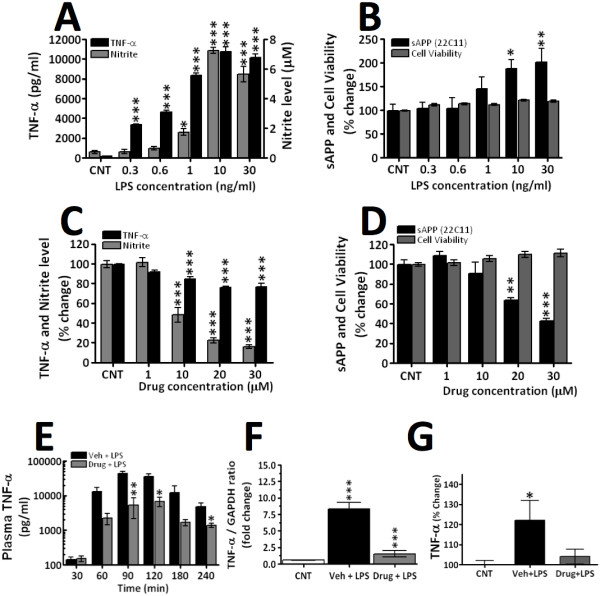
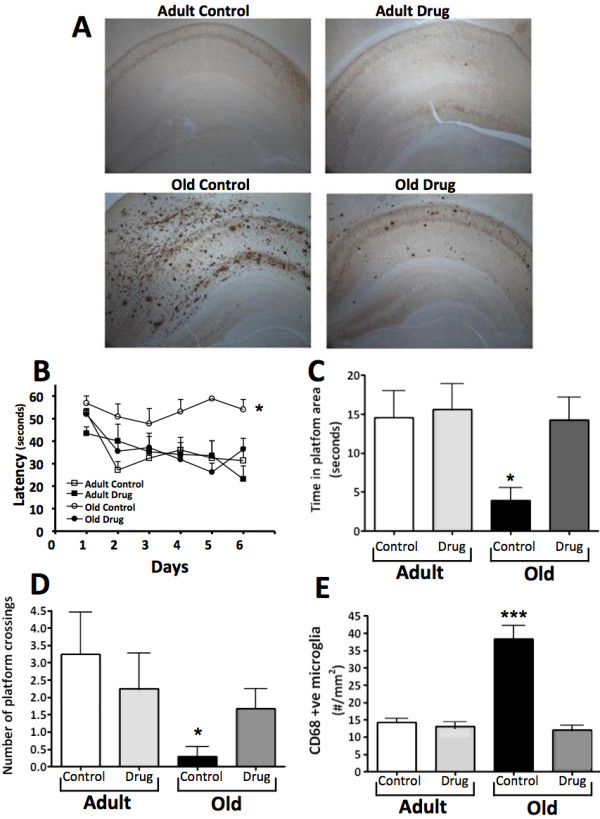
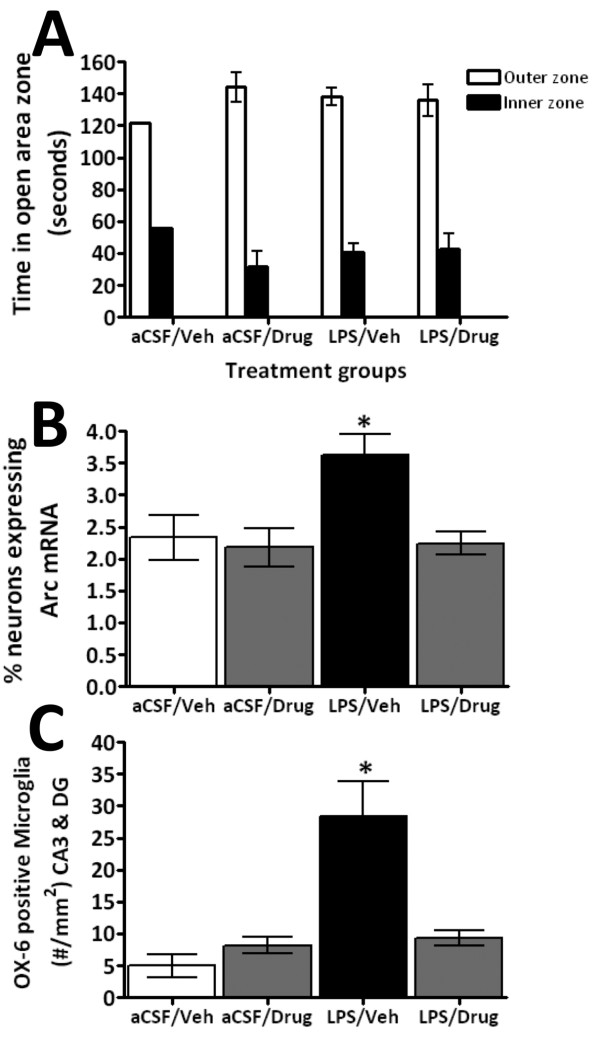
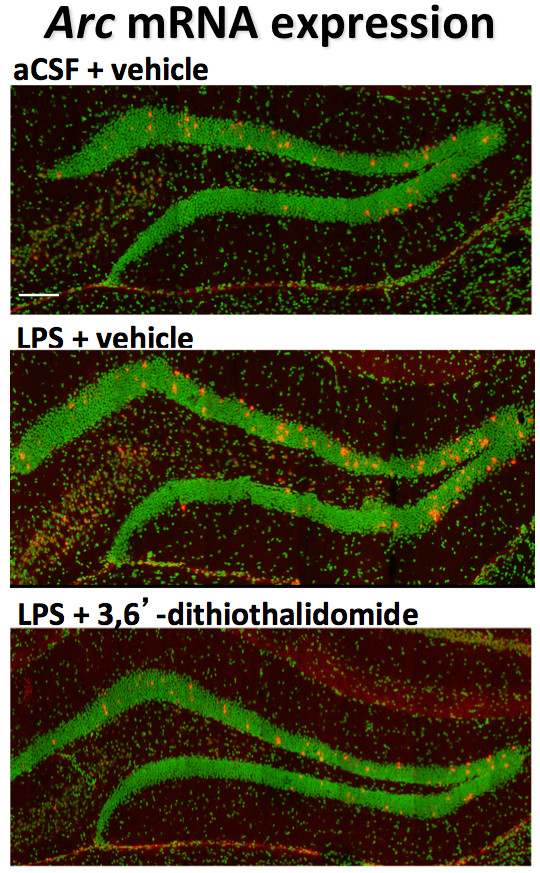
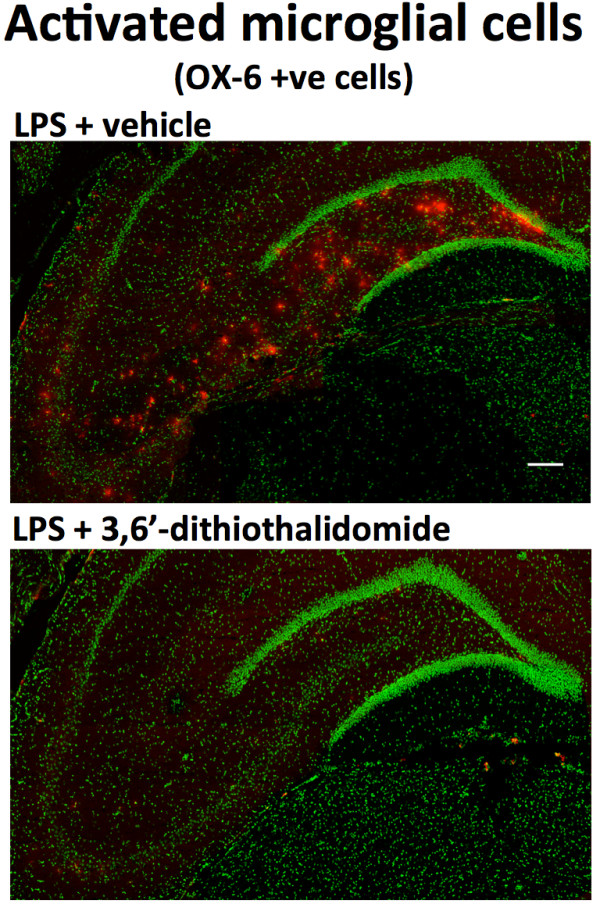
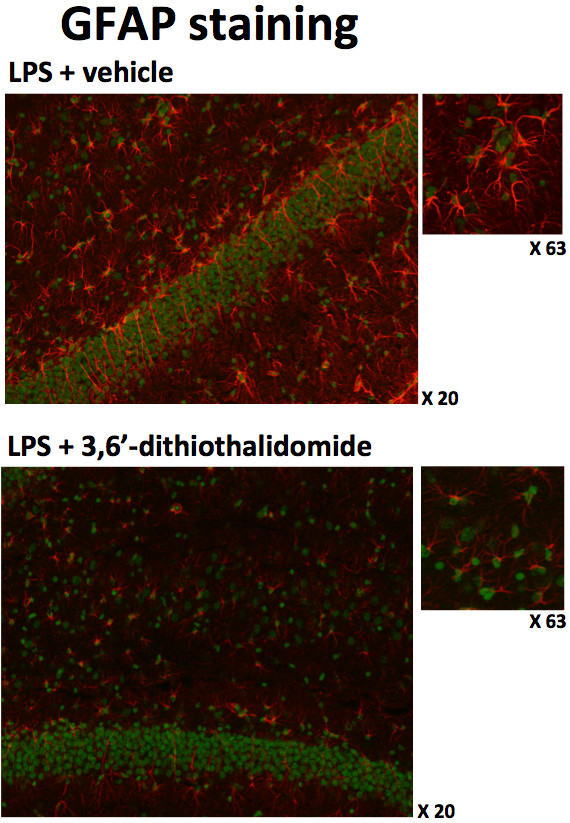
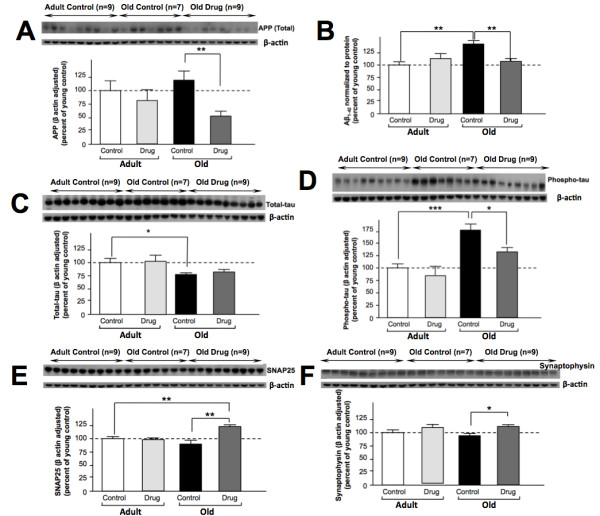
3,6'-Dithiothaliodmide lowered TNF-α, nitrite (an indicator of oxidative damage) and secreted amyloid precursor protein (sAPP) levels in LPS-activated macrophage-like cells (RAW 264.7 cells). This translated into reduced central and systemic TNF-α production in acute LPS-challenged rats, and to a reduction of neuroinflammatory markers and restoration of neuronal plasticity following chronic central challenge of LPS. In mice centrally challenged with A(β1-42) peptide, prior systemic 3,6'-dithiothalidomide suppressed Aβ-induced memory dysfunction, microglial activation and neuronal degeneration. Chronic 3,6'-dithiothalidomide administration to an elderly symptomatic cohort of 3xTg-AD mice reduced multiple hallmark features of AD, including phosphorylated tau protein, APP, Aβ peptide and Aβ-plaque number along with deficits in memory function to levels present in younger adult cognitively unimpaired 3xTg-AD mice. Levels of the synaptic proteins, SNAP25 and synaptophysin, were found to be elevated in older symptomatic drug-treated 3xTg-AD mice compared to vehicle-treated ones, indicative of a preservation of synaptic function during drug treatment.
Our data suggest a strong beneficial effect of 3,6'-dithiothalidomide in the setting of neuroinflammation and AD, supporting a role for neuroinflammation and TNF-α in disease progression and their targeting as a means of clinical management.
神经炎症与几乎所有主要的神经退行性疾病有关,包括阿尔茨海默病(AD)。尽管神经炎症是否是这些疾病的驱动因素仍不清楚,但有确凿的证据表明其在加剧疾病进展方面发挥了作用,其中一个关键因素是强效促炎细胞因子 TNF-α。在 AD 的临床和动物模型中,通常可检测到升高的 TNF-α 水平。
研究了新型 TNF-α 降低剂 3,6'-二硫代噻唑烷的潜在益处,该药物在神经炎症的细胞和啮齿动物模型中进行了研究,特别是在 AD 方面。这些模型包括脂多糖(LPS)和 Aβ(1-42)挑战引起的中枢和全身炎症,以及慢性 3,6'-二硫代噻唑烷治疗后 3xTg-AD 小鼠的生化和行为评估。
3,6'-二硫代噻唑烷降低了 LPS 激活的巨噬样细胞(RAW 264.7 细胞)中 TNF-α、亚硝酸盐(氧化损伤的指标)和分泌的淀粉样前体蛋白(sAPP)的水平。这转化为急性 LPS 挑战大鼠中中枢和全身 TNF-α 产生的减少,以及 LPS 中枢挑战后神经炎症标志物的减少和神经元可塑性的恢复。在 Aβ1-42 肽中枢挑战的小鼠中,预先的全身 3,6'-二硫代噻唑烷抑制了 Aβ 诱导的记忆功能障碍、小胶质细胞激活和神经元变性。慢性给予老年有症状的 3xTg-AD 小鼠 3,6'-二硫代噻唑烷可降低 AD 的多种标志性特征,包括磷酸化 tau 蛋白、APP、Aβ 肽和 Aβ 斑块数量,以及记忆功能缺陷,使其达到年轻认知正常的 3xTg-AD 小鼠的水平。与对照组相比,老年有症状药物治疗的 3xTg-AD 小鼠中的突触蛋白 SNAP25 和突触小体蛋白的水平升高,表明在药物治疗期间突触功能得到了保留。
我们的数据表明 3,6'-二硫代噻唑烷在神经炎症和 AD 中具有很强的有益作用,支持神经炎症和 TNF-α 在疾病进展中的作用及其作为临床管理手段的靶向作用。