Department of Immunology, Genetics and Pathology, Uppsala University, Uppsala, Sweden.
J Neuroinflammation. 2012 May 30;9:112. doi: 10.1186/1742-2094-9-112.
Multiple sclerosis (MS) is an autoimmune disease of the central nervous system (CNS). In the murine experimental autoimmune encephalomyelitis (EAE) model of MS, T regulatory (Treg) cell therapy has proved to be beneficial, but generation of stable CNS-targeting Tregs needs further development. Here, we propose gene engineering to achieve CNS-targeting Tregs from naïve CD4 cells and demonstrate their efficacy in the EAE model.
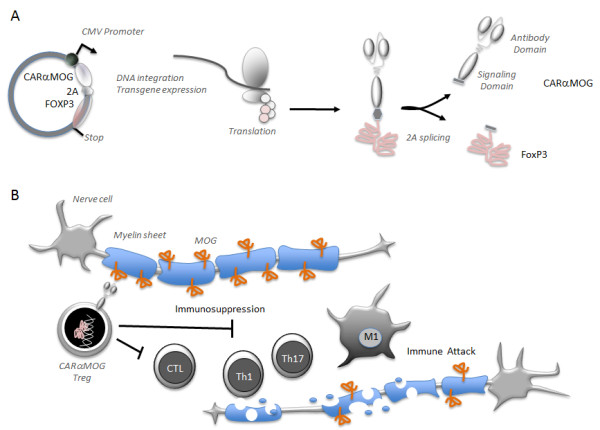
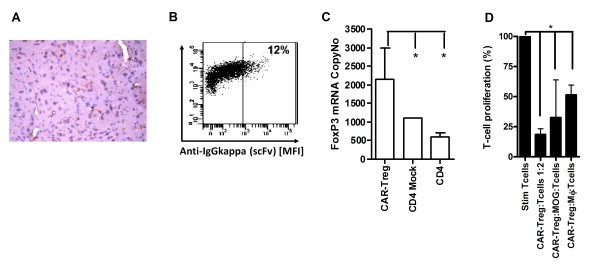
CD4+ T cells were modified utilizing a lentiviral vector system to express a chimeric antigen receptor (CAR) targeting myelin oligodendrocyte glycoprotein (MOG) in trans with the murine FoxP3 gene that drives Treg differentiation. The cells were evaluated in vitro for suppressive capacity and in C57BL/6 mice to treat EAE. Cells were administered by intranasal (i.n.) cell delivery.
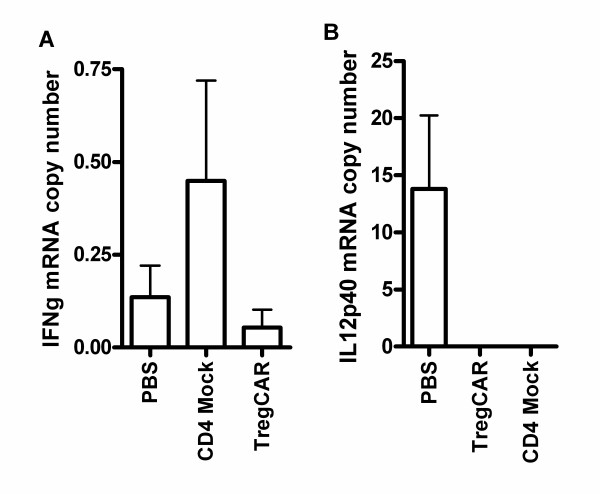
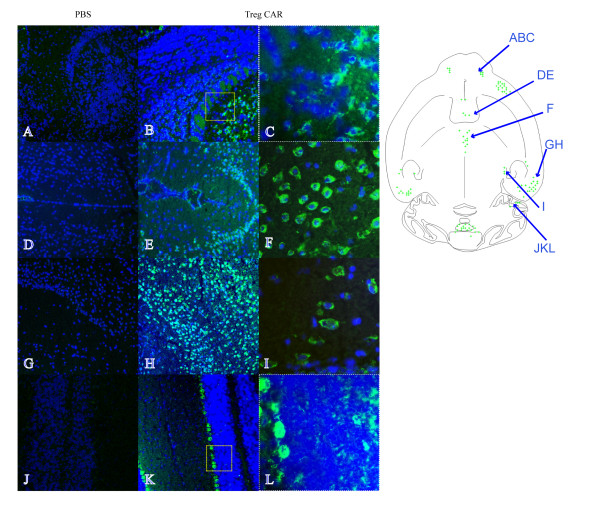
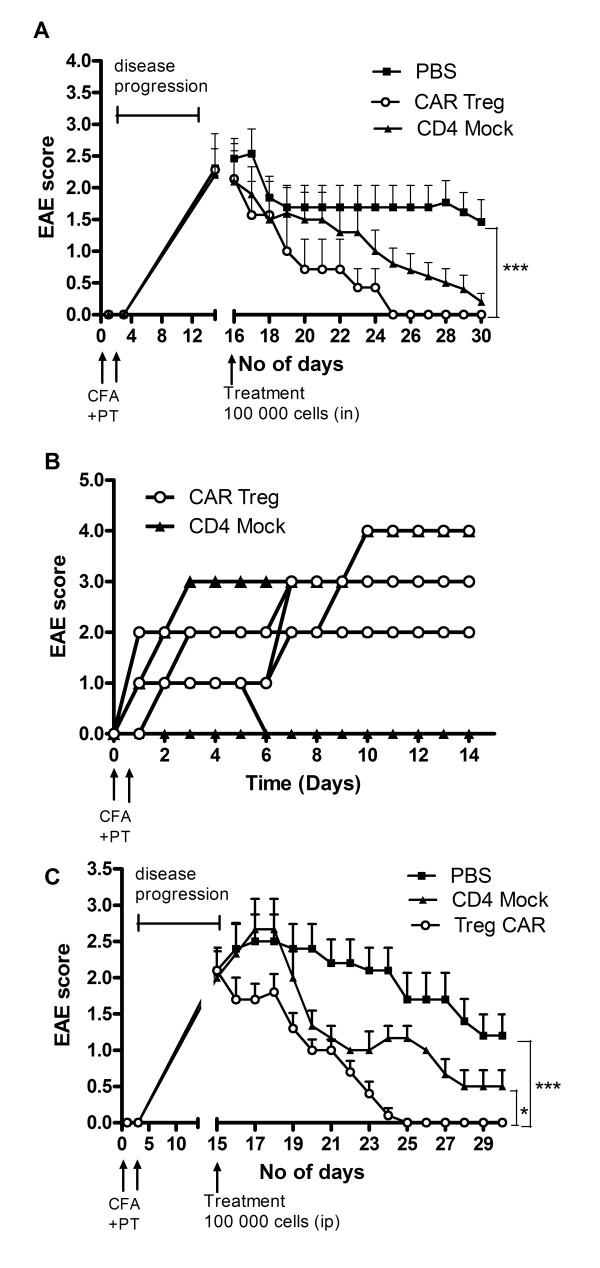
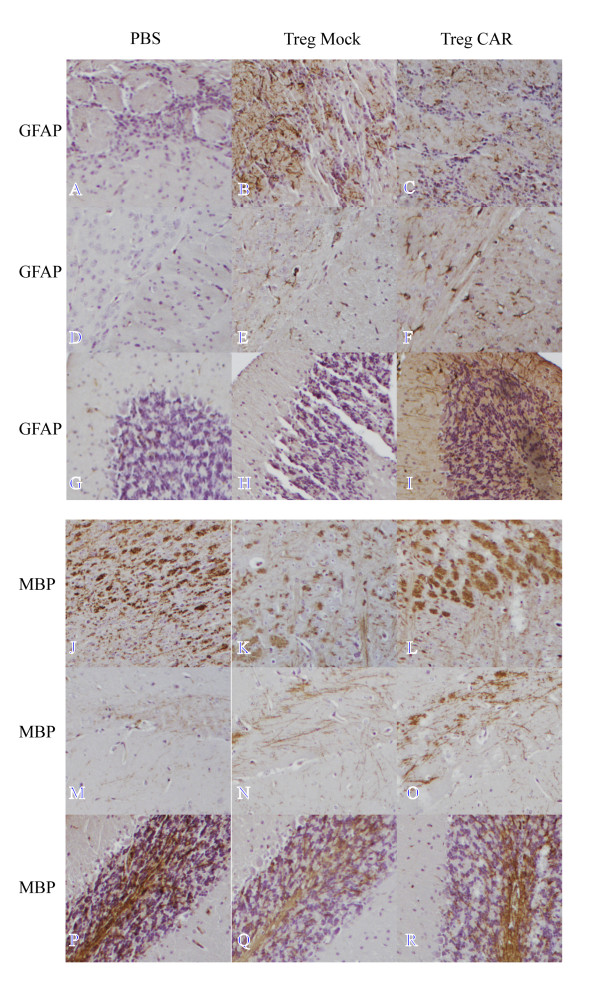
The engineered Tregs demonstrated suppressive capacity in vitro and could efficiently access various regions in the brain via i.n cell delivery. Clinical score 3 EAE mice were treated and the engineered Tregs suppressed ongoing encephalomyelitis as demonstrated by reduced disease symptoms as well as decreased IL-12 and IFNgamma mRNAs in brain tissue. Immunohistochemical markers for myelination (MBP) and reactive astrogliosis (GFAP) confirmed recovery in mice treated with engineered Tregs compared to controls. Symptom-free mice were rechallenged with a second EAE-inducing inoculum but remained healthy, demonstrating the sustained effect of engineered Tregs.
CNS-targeting Tregs delivered i.n. localized to the CNS and efficiently suppressed ongoing inflammation leading to diminished disease symptoms.
多发性硬化症(MS)是一种中枢神经系统(CNS)的自身免疫性疾病。在 MS 的实验性自身免疫性脑脊髓炎(EAE)模型中,调节性 T 细胞(Treg)治疗已被证明是有益的,但生成稳定的中枢神经系统靶向 Treg 仍需要进一步开发。在这里,我们提出基因工程方法,从幼稚 CD4 细胞中产生中枢神经系统靶向 Treg,并在 EAE 模型中证明其疗效。
利用慢病毒载体系统修饰 CD4+T 细胞,以表达靶向髓鞘少突胶质细胞糖蛋白(MOG)的嵌合抗原受体(CAR),并与驱动 Treg 分化的小鼠 FoxP3 基因反式表达。体外评估细胞的抑制能力,并在 C57BL/6 小鼠中用于治疗 EAE。通过鼻内(i.n.)细胞递送进行细胞给药。
工程化的 Treg 在体外具有抑制能力,并且可以通过 i.n.细胞递送有效地进入大脑的各种区域。临床评分 3 的 EAE 小鼠接受治疗,工程化的 Treg 抑制了正在进行的脑脊髓炎,表现为疾病症状减轻以及脑组织中 IL-12 和 IFNgamma mRNA 减少。髓鞘化(MBP)和反应性星形胶质增生(GFAP)的免疫组织化学标志物证实,与对照组相比,接受工程化 Treg 治疗的小鼠有恢复。无症状的小鼠再次接受第二次 EAE 诱导接种,但仍保持健康,表明工程化 Treg 的持续效果。
经鼻内递送的中枢神经系统靶向 Treg 定位于中枢神经系统,并有效地抑制了正在进行的炎症,从而减轻了疾病症状。