Department of Biochemistry, Microbiology and Immunology, Faculty of Medicine, University of Ottawa, Ottawa, ON Canada.
Cell Adh Migr. 2012 Jan-Feb;6(1):59-70. doi: 10.4161/cam.19583.
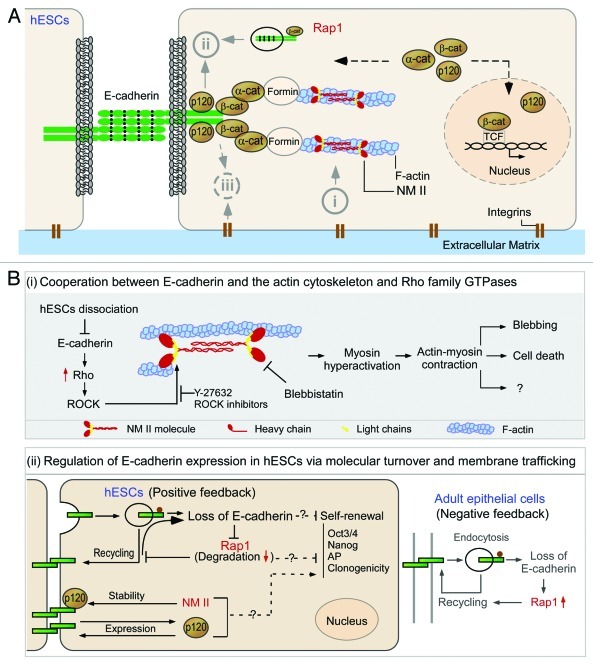
The survival, proliferation, self-renewal and differentiation of human pluripotent stem cells (hPSCs, including human embryonic stem cells and human induced pluripotent stem cells) involve a number of processes that require cell-cell and cell-matrix interactions. The cell adhesion molecules (CAMs), a group of cell surface proteins play a pivotal role in mediating such interactions. Recent studies have provided insights into the essential roles and mechanisms of CAMs in the regulation of hPSC fate decisions. Here, we review the latest research progress in this field and focus on how E-cadherin and several other important CAMs including classic cadherins, Ig-superfamily CAMs, integrins and heparin sulfate proteoglycans control survival and differentiation of hPSCs.
人多能干细胞(hPSCs,包括人类胚胎干细胞和人类诱导多能干细胞)的生存、增殖、自我更新和分化涉及许多需要细胞-细胞和细胞-基质相互作用的过程。细胞黏附分子(CAMs)是一组细胞表面蛋白,在介导这些相互作用中起着关键作用。最近的研究提供了对 CAMs 在调节 hPSC 命运决定中的重要作用和机制的深入了解。在这里,我们回顾了该领域的最新研究进展,并重点介绍了 E-钙黏蛋白和其他一些重要的 CAMs(包括经典钙黏蛋白、Ig 超家族 CAMs、整合素和硫酸乙酰肝素蛋白聚糖)如何控制 hPSC 的存活和分化。