The Branch of the Shemyakin and Ovchinnikov Institute of Bioorganic Chemistry, Pushchino, Russian Academy of Sciences.
Acta Naturae. 2011 Jan;3(1):107-15.
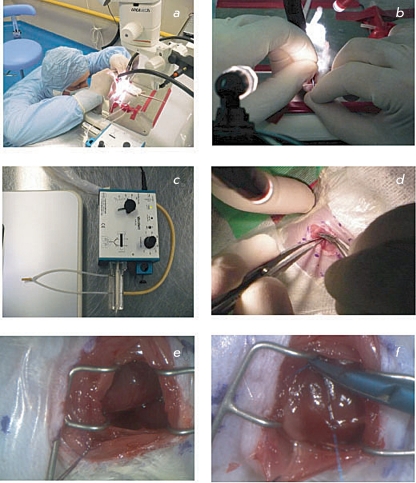
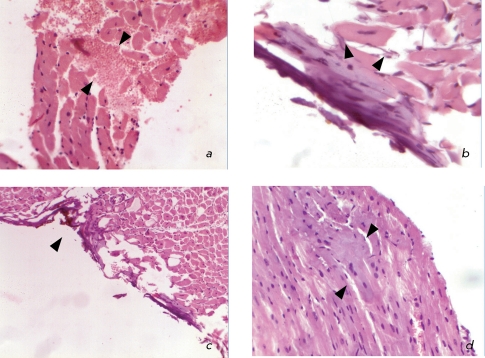
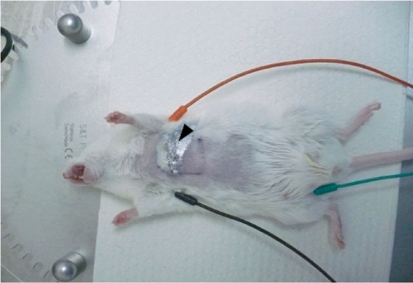
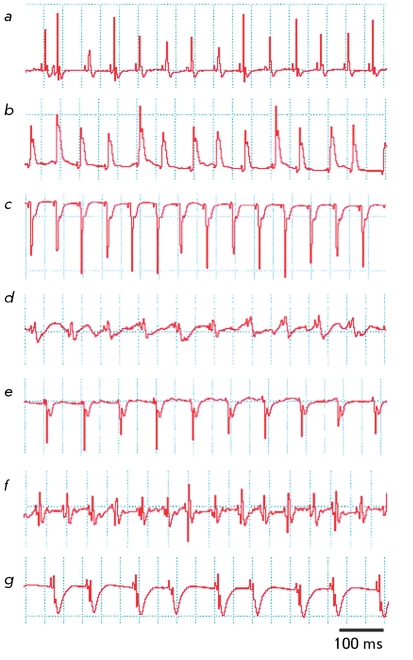
Myocardial infarction is one of the most serious and widespread diseases in the world. In this work, a minimally invasive method for simulating myocardial infarction in mice is described in the Russian Federation for the very first time; the procedure is carried out by ligation of the coronary heart artery or by controlled electrocoagulation. As a part of the methodology, a series of anesthetic, microsurgical and revival protocols are designed, owing to which a decrease in the postoperational mortality from the initial 94.6 to 13.6% is achieved. ECG confirms the development of large-focal or surface myocardial infarction. Postmortal histological examination confirms the presence of necrosis foci in the heart muscles of 87.5% of animals. Altogether, the medical data allow us to conclude that an adequate mouse model for myocardial infarction was generated. A further study is focused on the standardization of the experimental procedure and the use of genetically modified mouse strains, with the purpose of finding the most efficient therapeutic approaches for this disease.
心肌梗死是世界上最严重和最广泛的疾病之一。在这项工作中,俄罗斯首次描述了一种微创方法来模拟小鼠的心肌梗死;该方法通过结扎冠状动脉或受控电凝来进行。作为该方法的一部分,设计了一系列麻醉、显微外科和复苏方案,由于这些方案的实施,使术后死亡率从最初的 94.6%降低到 13.6%。心电图证实了大面积或表面心肌梗死的发展。死后组织学检查证实,87.5%的动物的心肌中存在坏死灶。总之,这些医学数据表明成功建立了合适的心肌梗死小鼠模型。进一步的研究集中在实验程序的标准化和使用基因修饰的小鼠品系上,目的是为这种疾病找到最有效的治疗方法。