Department of Forensic Pathology, Zhongshan School of Medicine Sun Yat-sen University, Guangzhou, Guangdong, China.
Graduate Institute of Medical Sciences, National Defense Medical Center, Taipei, Taiwan.
J Am Heart Assoc. 2018 Jan 6;7(1):e006320. doi: 10.1161/JAHA.117.006320.
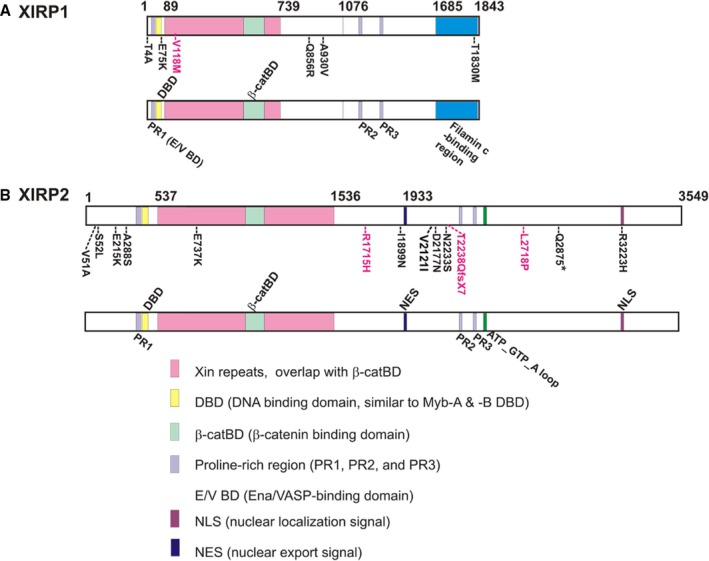
Sudden unexplained nocturnal death syndrome (SUNDS) remains an autopsy negative entity with unclear etiology. Arrhythmia has been implicated in SUNDS. Mutations/deficiencies in intercalated disc components have been shown to cause arrhythmias. Human cardiomyopathy-associated 1 (XIRP1) and 3 (XIRP2) are intercalated disc-associated, Xin repeats-containing proteins. Mouse Xirp1 is necessary for the integrity of intercalated disc and for the surface expression of transient outward and delayed rectifier K channels, whereas mouse Xirp2 is required for Xirp1 intercalated disc localization. Thus, and may be potentially causal genes for SUNDS.
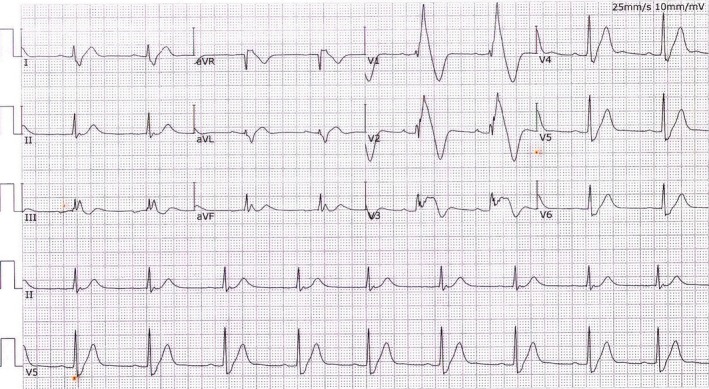
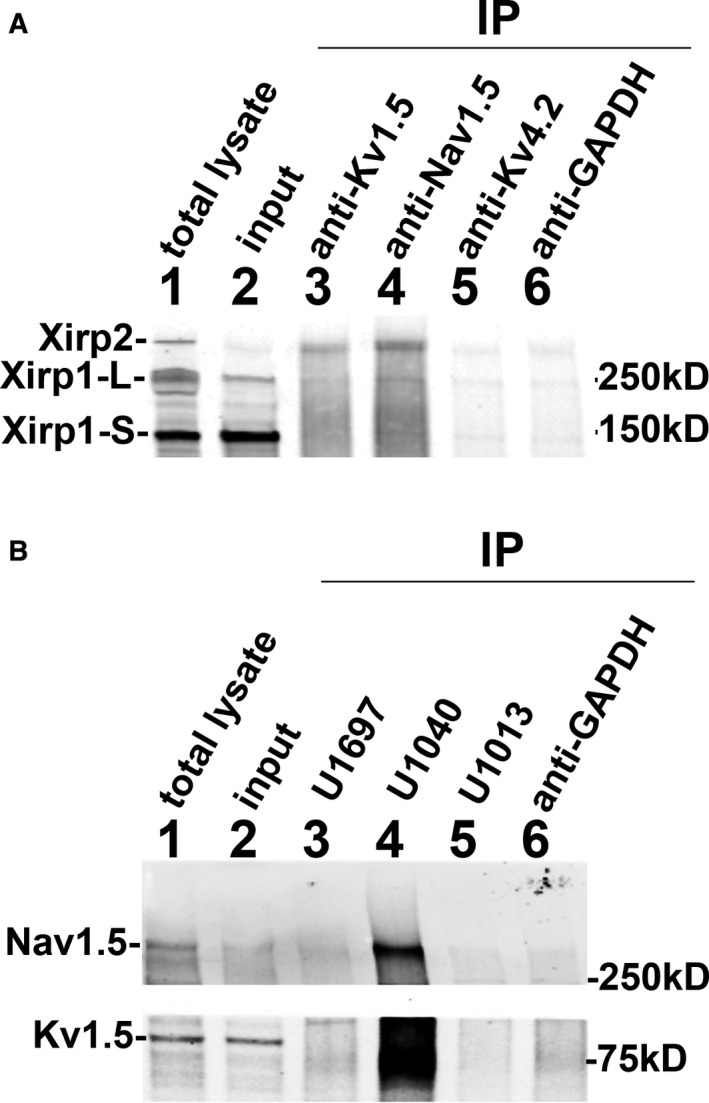
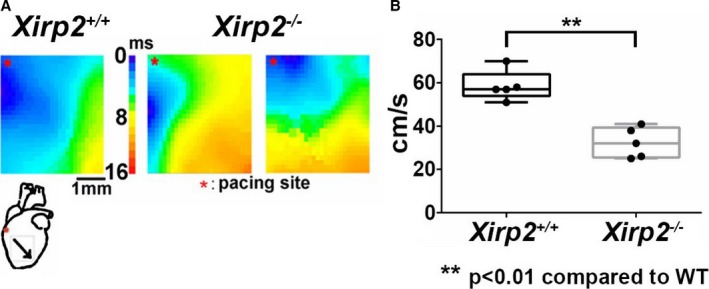
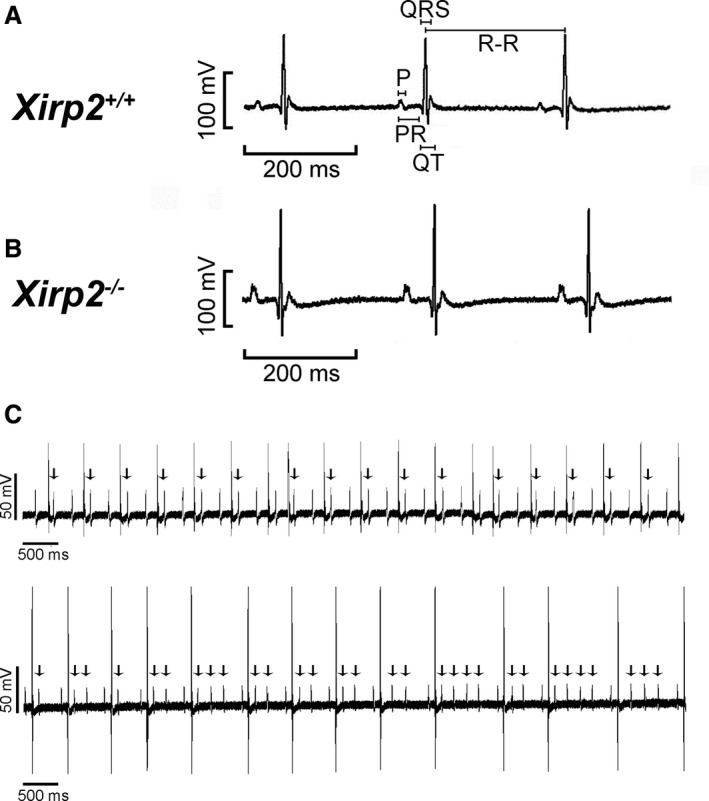
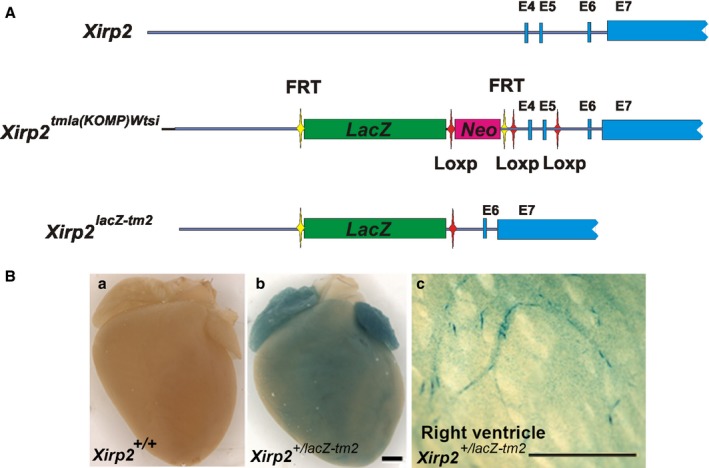
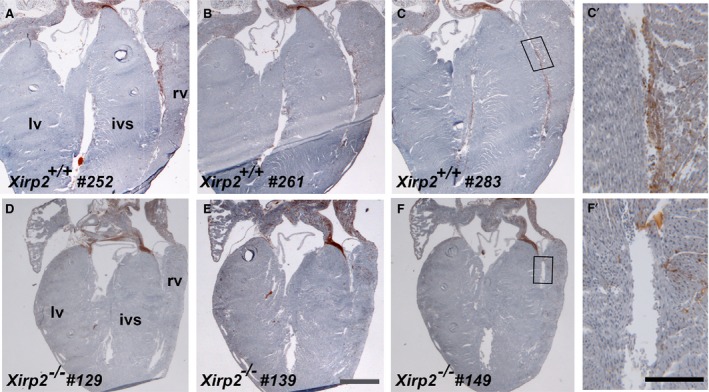
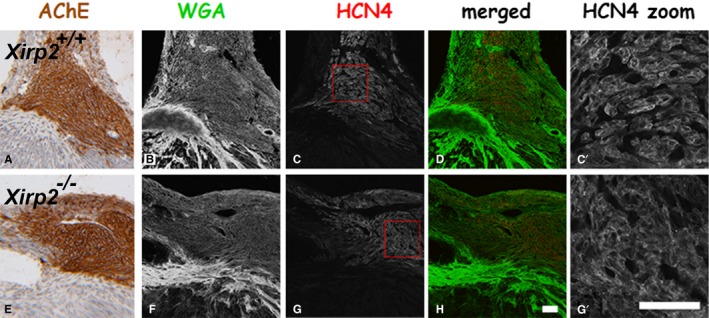
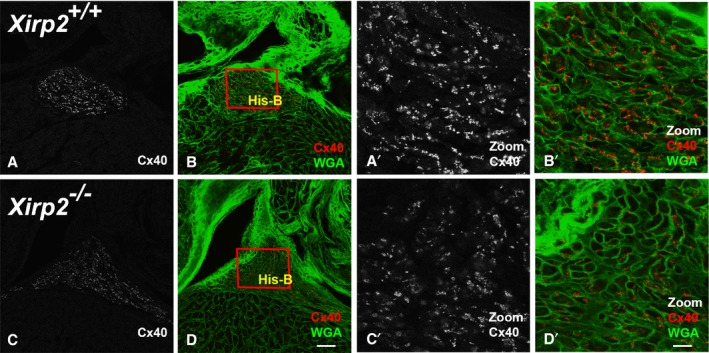
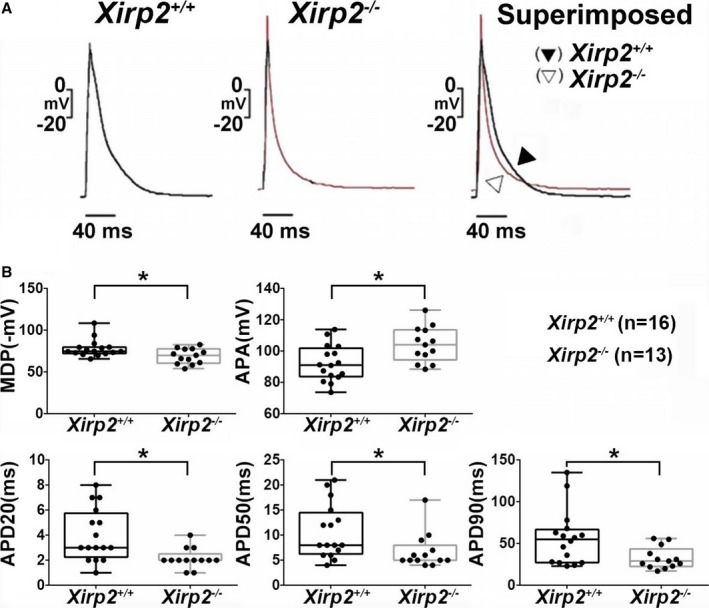
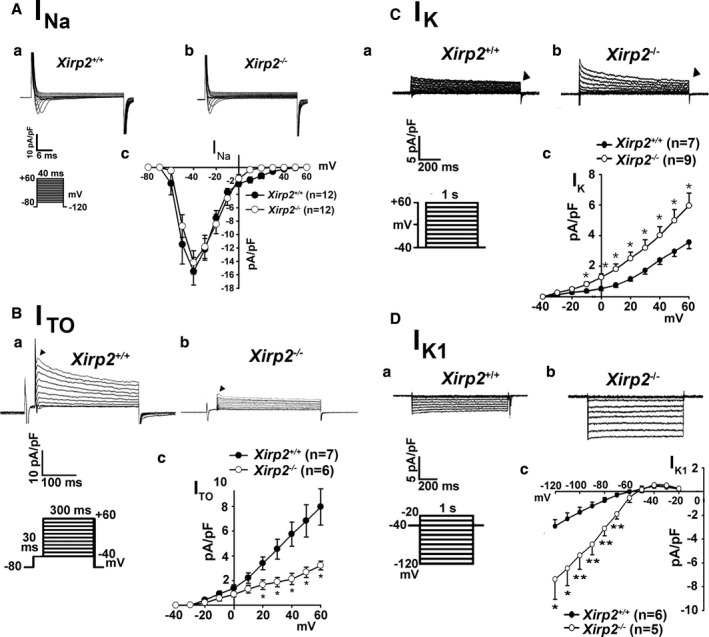
We genetically screened genes in 134 sporadic SUNDS victims and 22 Brugada syndrome (BrS) cases in a Chinese Han population. We identified 16 rare variants (6 were in silico predicted as deleterious) in SUNDS victims, including a novel variant, XIRP2-E215K. There were also four rare variants (2 were in silico predicted as deleterious) detected in BrS cases, including a novel variant, XIRP2-L2718P. Interestingly, among these 20 variants, we detected 2 likely pathogenic variants: a nonsense variant (XIRP2-Q2875*) and a frameshift variant (XIRP2-T2238QfsX7). Analyzing available knockout mice, we further found that mouse hearts without Xirp2 exhibited prolonged PR and QT intervals, slow conduction velocity, atrioventricular conduction block, and an abnormal infranodal ventricular conduction system. Whole-cell patch-clamp detected altered ionic currents in cardiomyocytes, consistent with the observed association between Xirp2 and Nav1.5/Kv1.5 in co-immunoprecipitation.
This is the first report identifying likely pathogenic XIRP rare variants in arrhythmogenic disorders such as SUNDS and Brugada syndrome, and showing critical roles of Xirp2 in cardiac conduction.
突发性不明原因夜间死亡综合征(SUNDS)仍然是一种尸检阴性的实体,其病因尚不清楚。心律失常与 SUNDS 有关。已有研究表明,闰盘成分的突变/缺失会导致心律失常。人类心肌病相关蛋白 1(XIRP1)和 3(XIRP2)是闰盘相关的含有 Xin 重复序列的蛋白。小鼠 Xirp1 对于闰盘的完整性和瞬时外向和延迟整流钾通道的表面表达是必需的,而小鼠 Xirp2 则是 Xirp1 闰盘定位所必需的。因此,和 可能是 SUNDS 的潜在致病基因。
我们在中国汉族人群中对 134 例散发性 SUNDS 患者和 22 例 Brugada 综合征(BrS)患者进行了基因筛查。在 SUNDS 患者中发现了 16 种罕见变异(其中 6 种是计算机预测的有害变异),包括一种新的变异 XIRP2-E215K。在 BrS 病例中也检测到了 4 种罕见变异(其中 2 种是计算机预测的有害变异),包括一种新的变异 XIRP2-L2718P。有趣的是,在这 20 个变异中,我们检测到了 2 个可能的致病变异:一个无义变异(XIRP2-Q2875*)和一个移码变异(XIRP2-T2238QfsX7)。通过分析现有的 基因敲除小鼠,我们还发现缺乏 Xirp2 的小鼠心脏表现出 PR 和 QT 间期延长、传导速度减慢、房室传导阻滞和异常的房室结下室性传导系统。全细胞膜片钳检测到 心肌细胞中离子电流的改变,与 Xirp2 在共免疫沉淀中与 Nav1.5/Kv1.5 的关联一致。
这是首次在心律失常性疾病(如 SUNDS 和 Brugada 综合征)中发现 XIRP 罕见变异的可能致病基因,并表明 Xirp2 在心脏传导中的关键作用。