Department of Physiology and Biophysics, University of Washington, Seattle, WA 98195, USA.
J Pathol. 2012 Sep;228(1):77-87. doi: 10.1002/path.4054. Epub 2012 Jul 18.
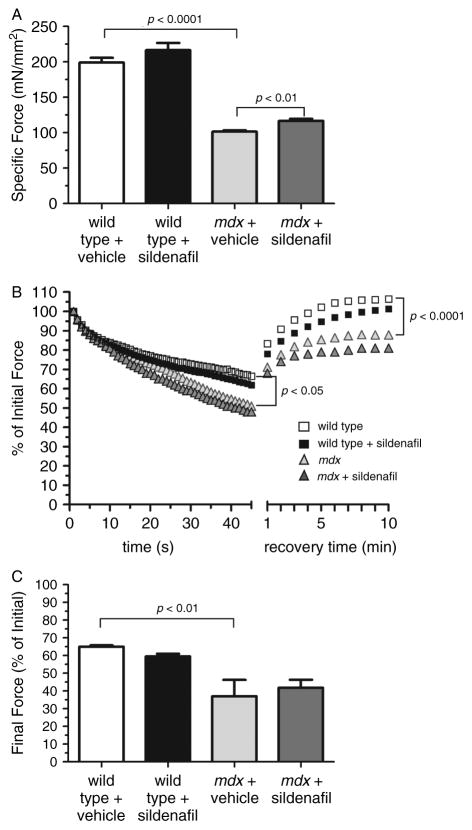
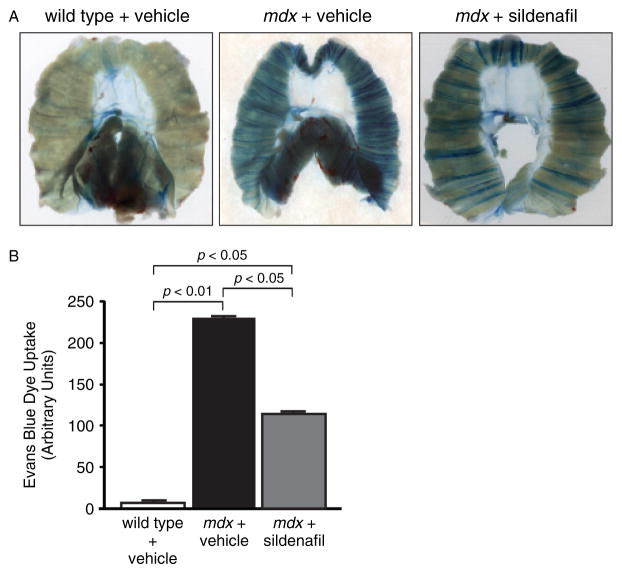
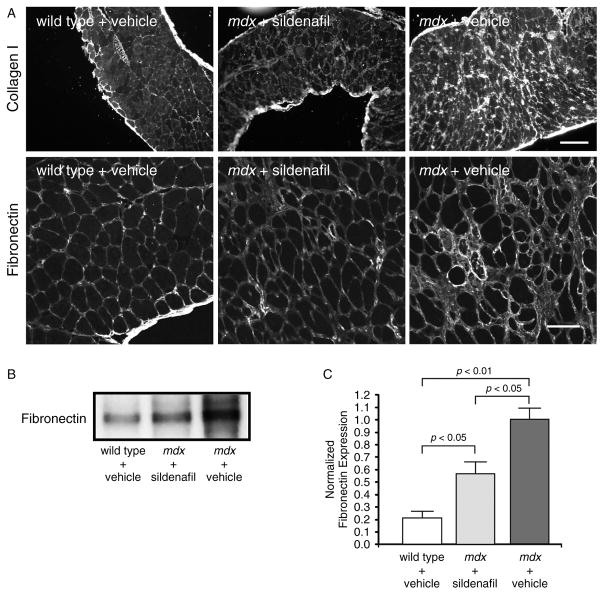
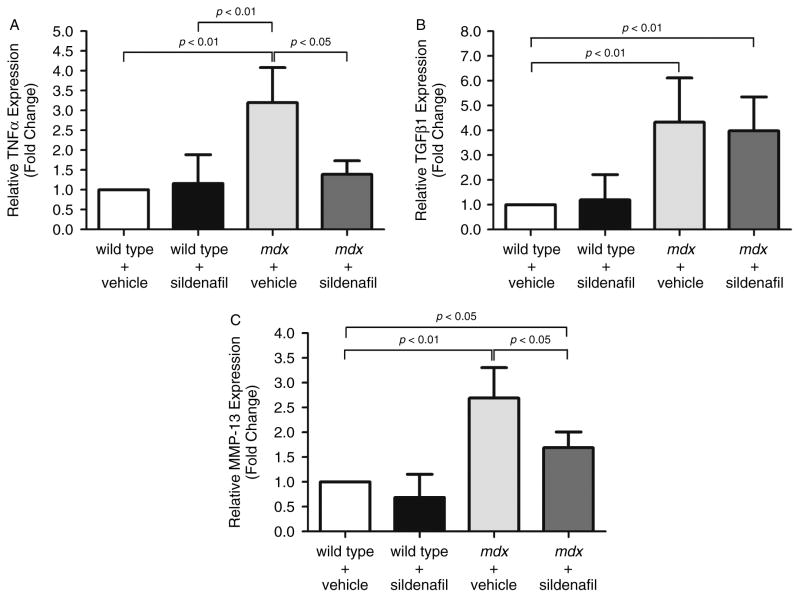
Duchenne muscular dystrophy (DMD) is the most common form of muscular dystrophy caused by mutations in the dystrophin gene. Loss of dystrophin initiates a progressive decline in skeletal muscle integrity and contractile capacity which weakens respiratory muscles including the diaphragm, culminating in respiratory failure, the leading cause of morbidity and mortality in DMD patients. At present, corticosteroid treatment is the primary pharmacological intervention in DMD, but has limited efficacy and adverse side effects. Thus, there is an urgent need for new safe, cost-effective, and rapidly implementable treatments that slow disease progression. One promising new approach is the amplification of nitric oxide-cyclic guanosine monophosphate (NO-cGMP) signalling pathways with phosphodiesterase 5 (PDE5) inhibitors. PDE5 inhibitors serve to amplify NO signalling that is attenuated in many neuromuscular diseases including DMD. We report here that a 14-week treatment of the mdx mouse model of DMD with the PDE5 inhibitor sildenafil (Viagra(®), Revatio(®)) significantly reduced mdx diaphragm muscle weakness without impacting fatigue resistance. In addition to enhancing respiratory muscle contractility, sildenafil also promoted normal extracellular matrix organization. PDE5 inhibition slowed the establishment of mdx diaphragm fibrosis and reduced matrix metalloproteinase-13 (MMP-13) expression. Sildenafil also normalized the expression of the pro-fibrotic (and pro-inflammatory) cytokine tumour necrosis factor α (TNFα). Sildenafil-treated mdx diaphragms accumulated significantly less Evans Blue tracer dye than untreated controls, which is also indicative of improved diaphragm muscle health. We conclude that sildenafil-mediated PDE5 inhibition significantly reduces diaphragm respiratory muscle dysfunction and pathology in the mdx mouse model of Duchenne muscular dystrophy. This study provides new insights into the therapeutic utility of targeting defects in NO-cGMP signalling with PDE5 inhibitors in dystrophin-deficient muscle.
杜氏肌营养不良症(DMD)是由肌营养不良蛋白基因突变引起的最常见的肌肉营养不良症。肌营养不良蛋白的缺失会导致骨骼肌完整性和收缩能力逐渐下降,从而削弱包括膈肌在内的呼吸肌,最终导致呼吸衰竭,这是 DMD 患者发病率和死亡率的主要原因。目前,皮质类固醇治疗是 DMD 的主要药物干预手段,但疗效有限,且存在不良反应。因此,迫切需要新的安全、有效且易于实施的治疗方法来减缓疾病进展。一种很有前途的新方法是通过磷酸二酯酶 5(PDE5)抑制剂来增强一氧化氮-环鸟苷酸(NO-cGMP)信号通路。PDE5 抑制剂可放大在包括 DMD 在内的许多神经肌肉疾病中减弱的 NO 信号。我们在这里报告,用 PDE5 抑制剂西地那非(伟哥(®),雷瓦蒂(®))对 DMD 的 mdx 小鼠模型进行 14 周的治疗,显著降低了 mdx 膈肌肌肉无力,而不影响疲劳抗性。除了增强呼吸肌收缩力外,西地那非还促进了正常细胞外基质的组织。PDE5 抑制减缓了 mdx 膈肌纤维化的建立,并减少了基质金属蛋白酶-13(MMP-13)的表达。西地那非还使促纤维化(和促炎)细胞因子肿瘤坏死因子 α(TNFα)的表达正常化。西地那非处理的 mdx 膈肌积累的 Evans Blue 示踪染料明显少于未经处理的对照,这也表明膈肌肌肉健康状况得到了改善。我们得出结论,西地那非介导的 PDE5 抑制显著减少了 DMD 模型中膈肌呼吸肌功能障碍和病理学改变。这项研究为通过 PDE5 抑制剂靶向 NO-cGMP 信号通路缺陷在缺乏肌营养不良蛋白的肌肉中的治疗应用提供了新的见解。