Deng Jiexin, Zhang Junshi, Shi Keli, Liu Zhigang
School of Nursing and Health, Henan University, Kaifeng, China.
Department of Neurology, Huaihe Hospital of Henan University, Kaifeng, China.
Front Pharmacol. 2022 Jul 22;13:950651. doi: 10.3389/fphar.2022.950651. eCollection 2022.
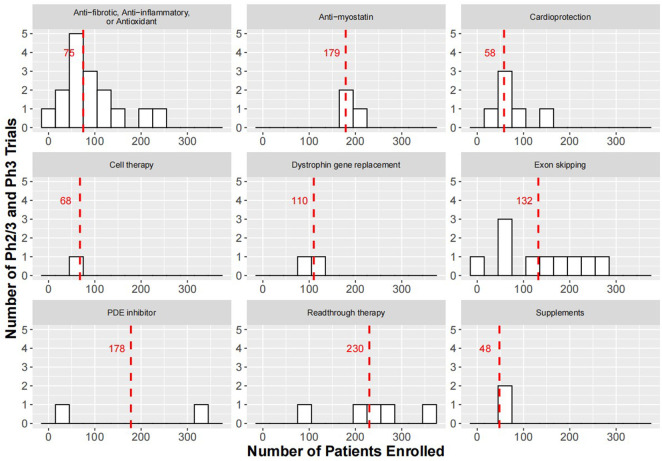
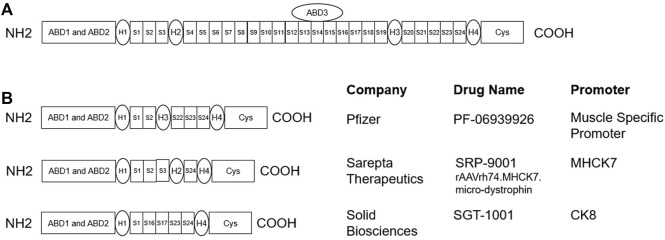
Duchenne muscular dystrophy (DMD) is a severe, progressive, and incurable X-linked disorder caused by mutations in the dystrophin gene. Patients with DMD have an absence of functional dystrophin protein, which results in chronic damage of muscle fibers during contraction, thus leading to deterioration of muscle quality and loss of muscle mass over time. Although there is currently no cure for DMD, improvements in treatment care and management could delay disease progression and improve quality of life, thereby prolonging life expectancy for these patients. Furthermore, active research efforts are ongoing to develop therapeutic strategies that target dystrophin deficiency, such as gene replacement therapies, exon skipping, and readthrough therapy, as well as strategies that target secondary pathology of DMD, such as novel anti-inflammatory compounds, myostatin inhibitors, and cardioprotective compounds. Furthermore, longitudinal modeling approaches have been used to characterize the progression of MRI and functional endpoints for predictive purposes to inform Go/No Go decisions in drug development. This review showcases approved drugs or drug candidates along their development paths and also provides information on primary endpoints and enrollment size of Ph2/3 and Ph3 trials in the DMD space.
杜氏肌营养不良症(DMD)是一种严重的、进行性的且无法治愈的X连锁疾病,由肌营养不良蛋白基因的突变引起。DMD患者缺乏功能性肌营养不良蛋白,这导致肌肉纤维在收缩过程中受到慢性损伤,从而随着时间的推移导致肌肉质量恶化和肌肉量减少。尽管目前尚无治愈DMD的方法,但治疗护理和管理方面的改善可以延缓疾病进展并提高生活质量,从而延长这些患者的预期寿命。此外,正在积极开展研究工作,以开发针对肌营养不良蛋白缺乏的治疗策略,如基因替代疗法、外显子跳跃和通读疗法,以及针对DMD继发性病理的策略,如新型抗炎化合物、肌肉生长抑制素抑制剂和心脏保护化合物。此外,纵向建模方法已被用于表征MRI和功能终点的进展情况,以用于预测目的,为药物开发中的“继续/终止”决策提供依据。本综述展示了已批准药物或候选药物在其研发过程中的情况,并提供了DMD领域2/3期和3期试验的主要终点和入组规模的信息。