Weier Ashleigh T, Kidgell Dawson J
Centre for Physical Activity and Nutrition Research, School of Exercise and Nutrition Sciences, Deakin University, Melbourne, VIC 3125, Australia.
ScientificWorldJournal. 2012;2012:876328. doi: 10.1100/2012/876328. Epub 2012 May 2.
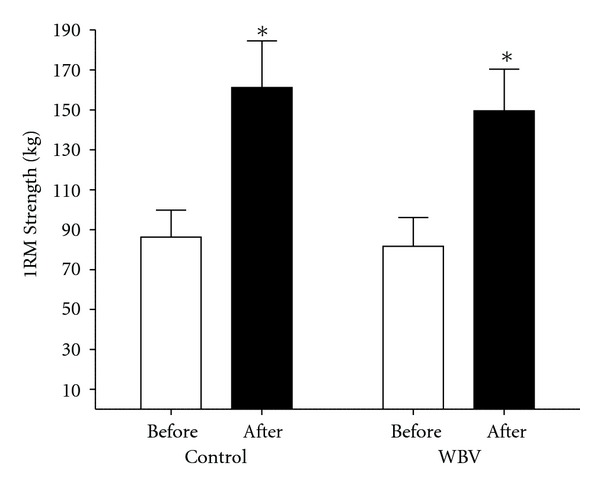
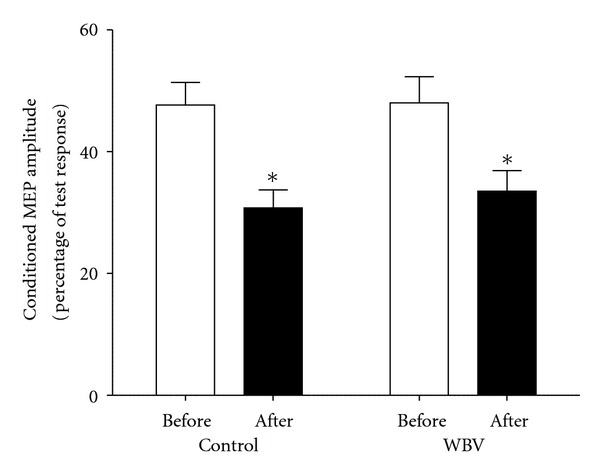
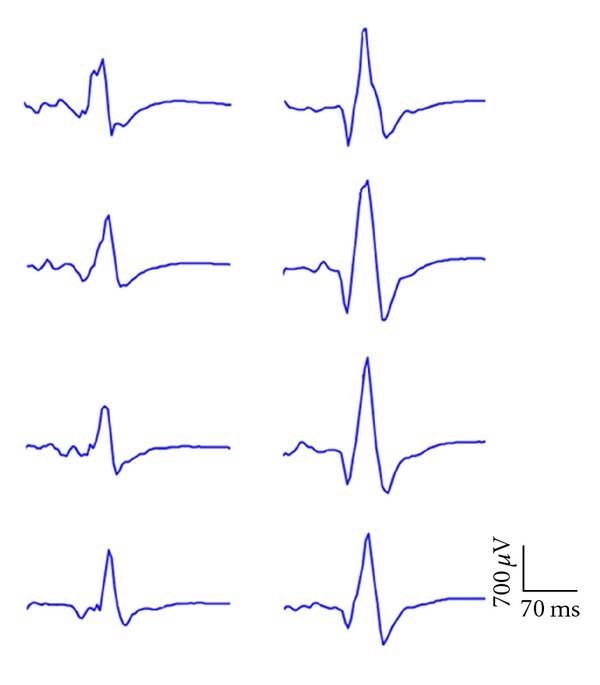
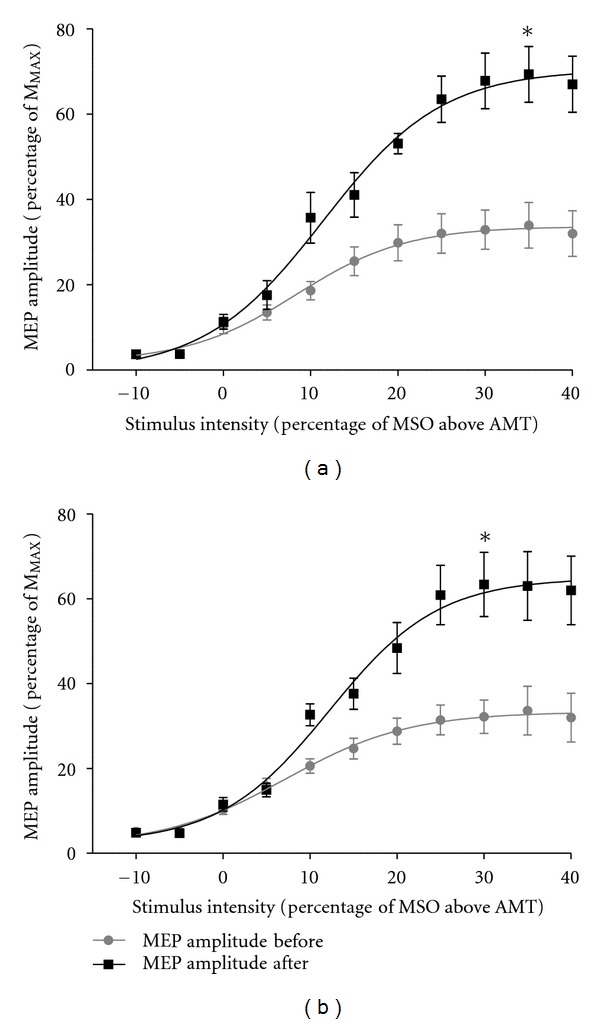
Paired-pulse transcranial magnetic stimulation (TMS) was used to investigate 4 wks of leg strength training with and without whole body vibration (WBV) on corticospinal excitability and short-latency intracortical inhibition (SICI). Participants (n = 12) were randomly allocated to either a control or experimental (WBV) group. All participants completed 12 squat training sessions either with (WBV group) or without (control group) exposure to WBV (f = 35 Hz, A = 2.5 mm). There were significant (P < 0.05) increases in squat strength and corticospinal excitability and significant (P < 0.05) reductions in SICI for both groups following the 4 wk intervention. There were no differences detected between groups for any dependant variable (P > 0.05). It appears that WBV training does not augment the increase in strength or corticospinal excitability induced by strength training alone.
采用配对脉冲经颅磁刺激(TMS)研究了为期4周的腿部力量训练(有或无全身振动(WBV))对皮质脊髓兴奋性和短潜伏期皮质内抑制(SICI)的影响。参与者(n = 12)被随机分配到对照组或实验组(WBV组)。所有参与者均完成了12次深蹲训练,其中WBV组暴露于WBV(频率f = 35 Hz,振幅A = 2.5 mm),对照组未暴露。4周干预后,两组的深蹲力量和皮质脊髓兴奋性均显著增加(P < 0.05),SICI均显著降低(P < 0.05)。两组之间的任何因变量均未检测到差异(P > 0.05)。似乎WBV训练并不能增强单独力量训练所引起的力量增加或皮质脊髓兴奋性增加。