Beth Israel Deaconess Medical Center, Harvard University, Boston, Massachusetts, United States of America.
PLoS One. 2012;7(5):e36633. doi: 10.1371/journal.pone.0036633. Epub 2012 May 24.
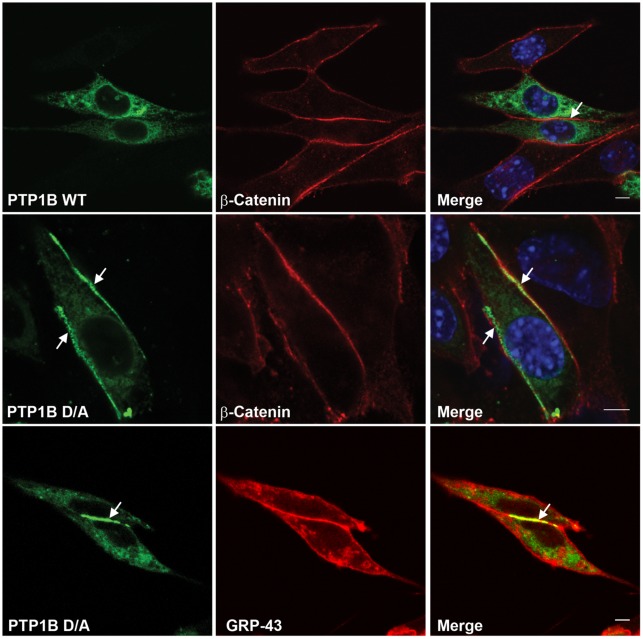
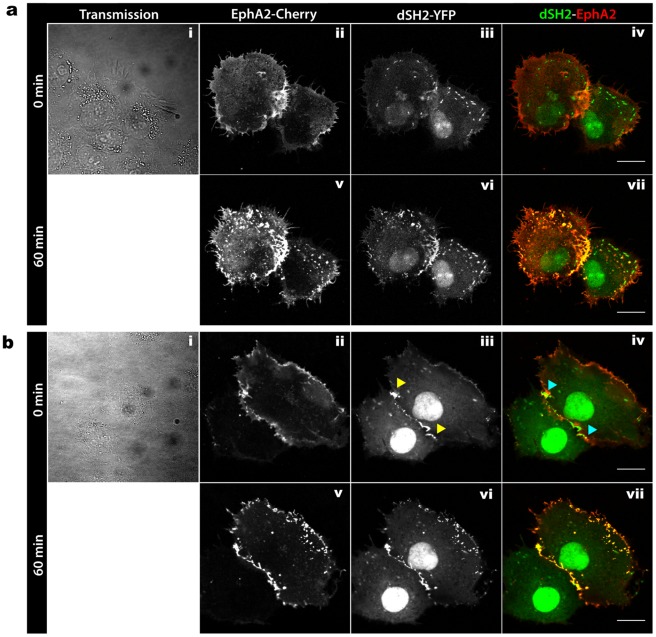
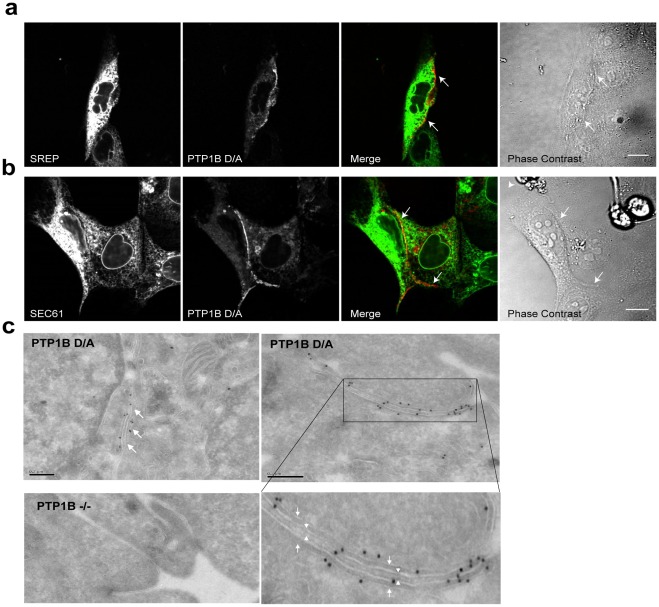
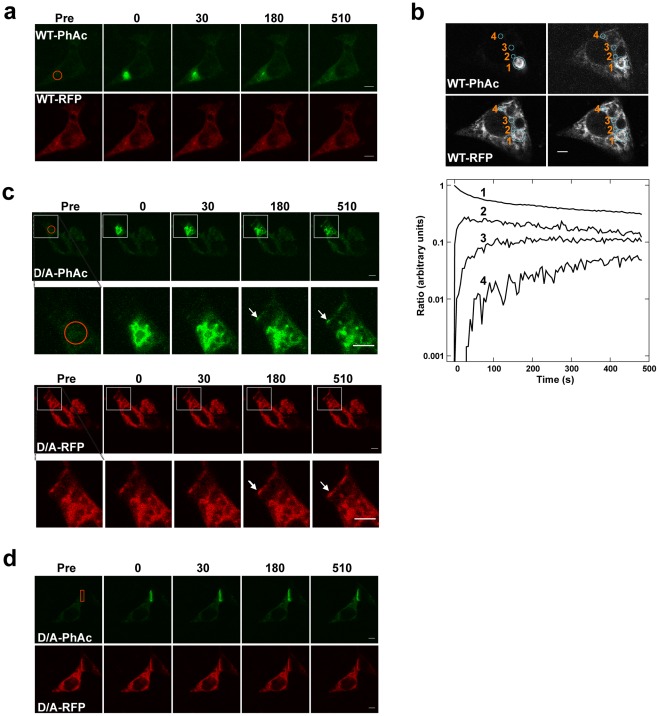
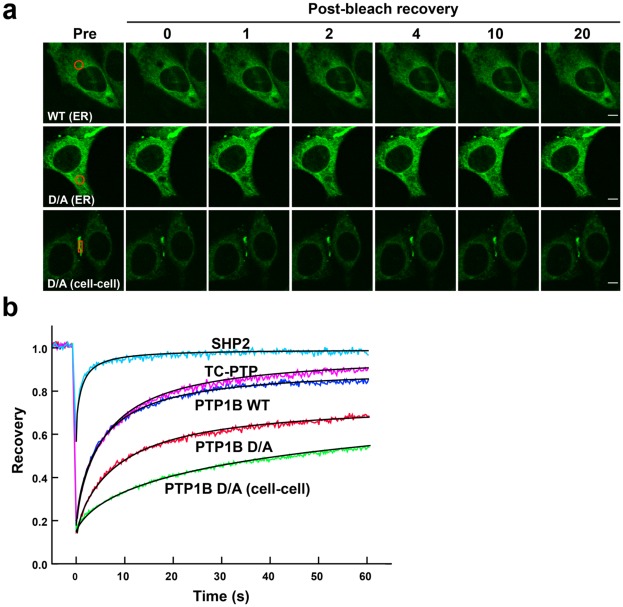
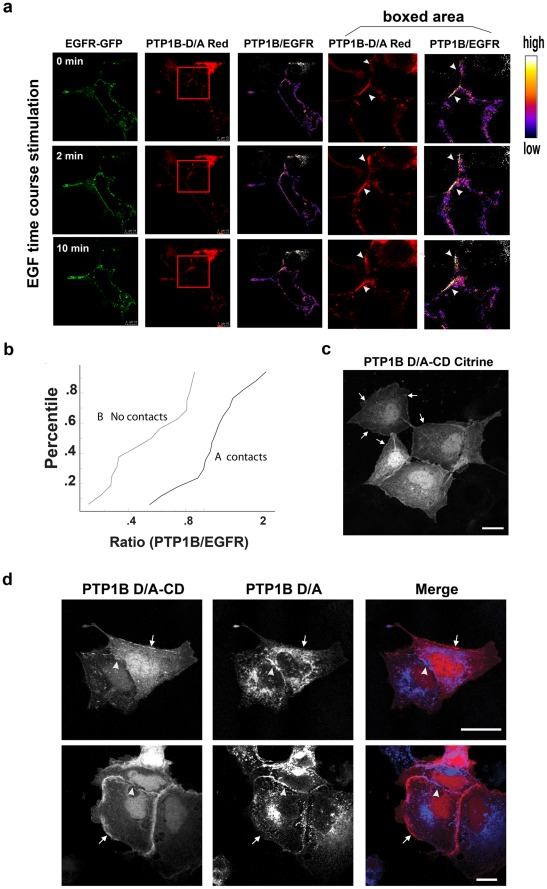
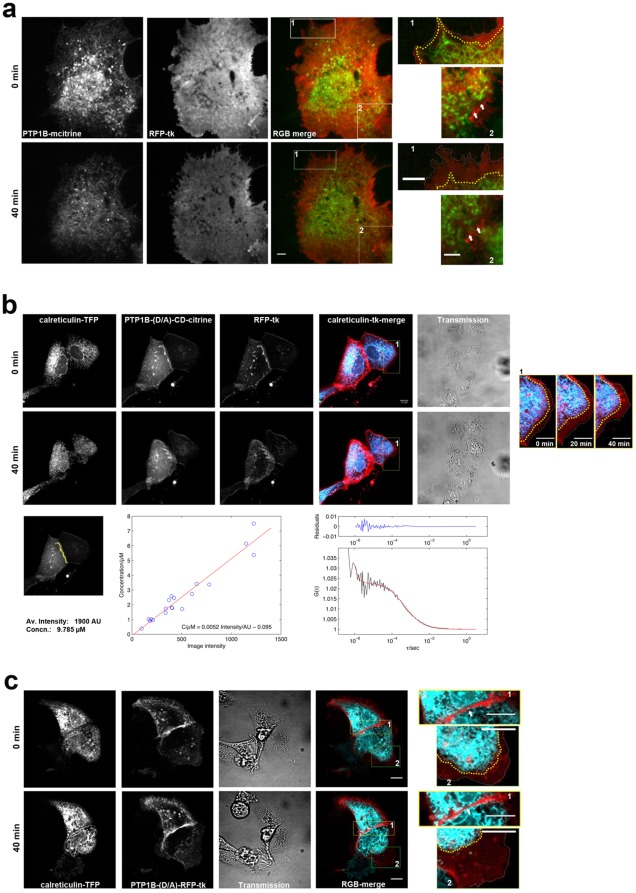
Protein-tyrosine phosphatase 1B (PTP1B) is a ubiquitously expressed PTP that is anchored to the endoplasmic reticulum (ER). PTP1B dephosphorylates activated receptor tyrosine kinases after endocytosis, as they transit past the ER. However, PTP1B also can access some plasma membrane (PM)-bound substrates at points of cell-cell contact. To explore how PTP1B interacts with such substrates, we utilized quantitative cellular imaging approaches and mathematical modeling of protein mobility. We find that the ER network comes in close proximity to the PM at apparently specialized regions of cell-cell contact, enabling PTP1B to engage substrate(s) at these sites. Studies using PTP1B mutants show that the ER anchor plays an important role in restricting its interactions with PM substrates mainly to regions of cell-cell contact. In addition, treatment with PTP1B inhibitor leads to increased tyrosine phosphorylation of EphA2, a PTP1B substrate, specifically at regions of cell-cell contact. Collectively, our results identify PM-proximal sub-regions of the ER as important sites of cellular signaling regulation by PTP1B.
蛋白酪氨酸磷酸酶 1B(PTP1B)是一种广泛表达的 PTP,它锚定在内质网(ER)上。PTP1B 在受体酪氨酸激酶内化后将其去磷酸化,因为它们穿过 ER。然而,PTP1B 也可以在细胞-细胞接触点访问一些质膜(PM)结合的底物。为了探索 PTP1B 如何与这些底物相互作用,我们利用定量细胞成像方法和蛋白质迁移的数学建模。我们发现 ER 网络在细胞-细胞接触的明显特化区域与 PM 非常接近,使 PTP1B 能够在这些部位与底物(s)结合。使用 PTP1B 突变体的研究表明,ER 锚在限制其与 PM 底物的相互作用方面起着重要作用,主要限制在细胞-细胞接触区域。此外,用 PTP1B 抑制剂处理会导致 EphA2 的酪氨酸磷酸化增加,EphA2 是 PTP1B 的底物,特别是在细胞-细胞接触区域。总之,我们的结果确定了 ER 的 PM 近端亚区是 PTP1B 调节细胞信号的重要部位。