Marshfield Clinic Research Foundation, Marshfield, Wisconsin, USA.
Environ Health Perspect. 2012 Sep;120(9):1272-9. doi: 10.1289/ehp.1104499. Epub 2012 Jun 1.
Groundwater supplies for drinking water are frequently contaminated with low levels of human enteric virus genomes, yet evidence for waterborne disease transmission is lacking.
We related quantitative polymerase chain reaction (qPCR)-measured enteric viruses in the tap water of 14 Wisconsin communities supplied by nondisinfected groundwater to acute gastrointestinal illness (AGI) incidence.
AGI incidence was estimated from health diaries completed weekly by households within each study community during four 12-week periods. Water samples were collected monthly from five to eight households per community. Viruses were measured by qPCR, and infectivity assessed by cell culture. AGI incidence was related to virus measures using Poisson regression with random effects.
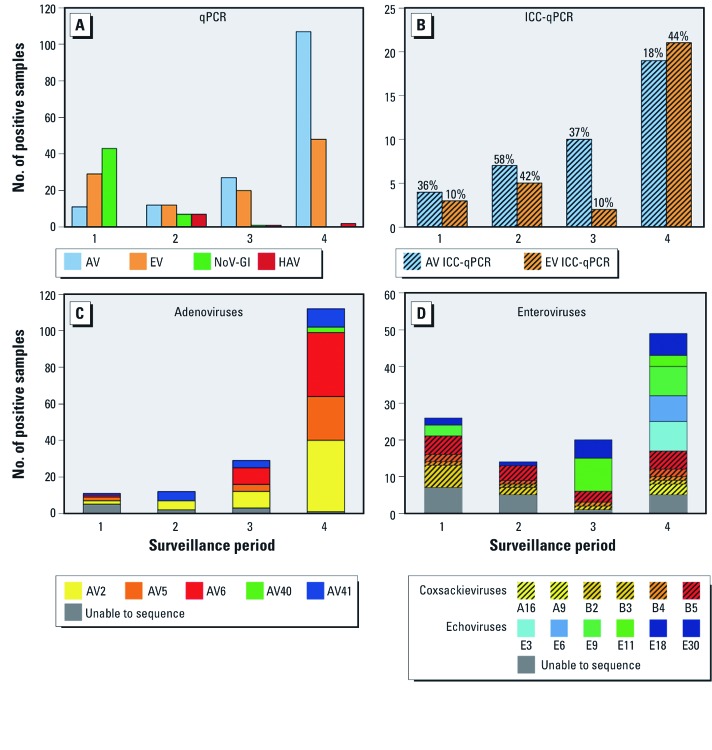
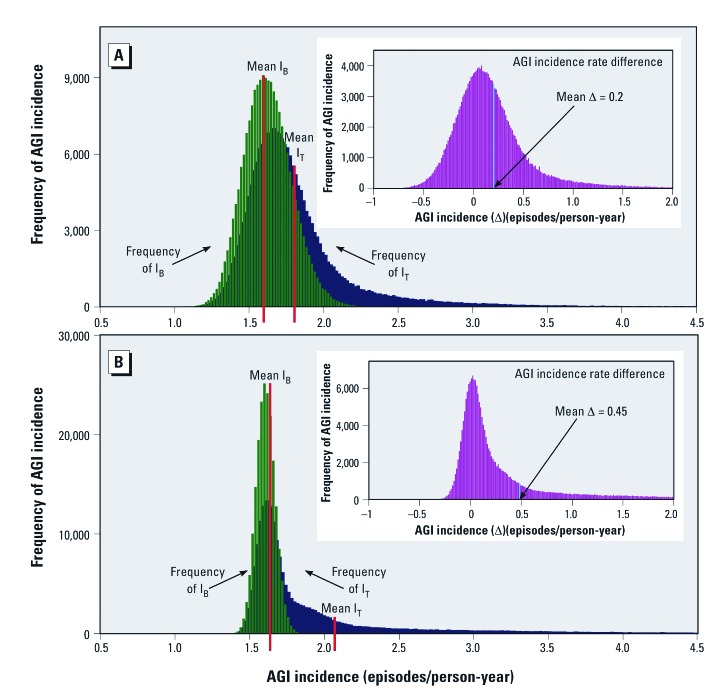
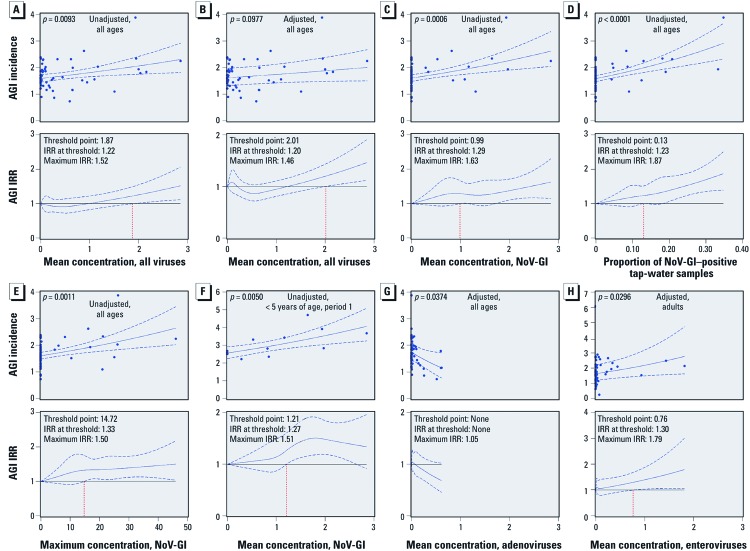
Communities and time periods with the highest virus measures had correspondingly high AGI incidence. This association was particularly strong for norovirus genogroup I (NoV-GI) and between adult AGI and enteroviruses when echovirus serotypes predominated. At mean concentrations of 1 and 0.8 genomic copies/L of NoV-GI and enteroviruses, respectively, the AGI incidence rate ratios (i.e., relative risk) increased by 30%. Adenoviruses were common, but tap-water concentrations were low and not positively associated with AGI. The estimated fraction of AGI attributable to tap-water-borne viruses was between 6% and 22%, depending on the virus exposure-AGI incidence model selected, and could have been as high as 63% among children < 5 years of age during the period when NoV-GI was abundant in drinking water.
The majority of groundwater-source public water systems in the United States produce water without disinfection, and our findings suggest that populations served by such systems may be exposed to waterborne viruses and consequent health risks.
饮用水的地下水供应经常受到低水平人类肠道病毒基因组的污染,但缺乏关于水传播疾病传播的证据。
我们将威斯康星州 14 个社区非消毒地下水供应的自来水中定量聚合酶链反应(qPCR)测量的肠道病毒与急性胃肠道疾病(AGI)发病率相关联。
在四个为期 12 周的期间内,每个研究社区内的家庭每周完成健康日记,以估计 AGI 的发病率。每月从每个社区的五到八户家庭中采集水样。通过 qPCR 测量病毒,并通过细胞培养评估感染力。使用具有随机效应的泊松回归将 AGI 发病率与病毒措施相关联。
病毒措施最高的社区和时期相应地具有最高的 AGI 发病率。当肠道病毒以柯萨奇病毒血清型为主时,诺如病毒基因群 I(NoV-GI)和成人 AGI 之间的关联特别强。在 NoV-GI 和肠道病毒的平均浓度分别为 1 和 0.8 个基因组拷贝/L 的情况下,AGI 发病率比(即相对风险)增加了 30%。腺病毒很常见,但自来水中的浓度较低,与 AGI 无正相关。根据选择的病毒暴露-AGI 发病率模型,归因于自来水传播病毒的 AGI 比例在 6%至 22%之间,在饮用水中 NoV-GI 丰富的时期,儿童(<5 岁)的比例可能高达 63%。
美国大多数地下水水源公共供水系统在不进行消毒的情况下生产水,我们的发现表明,此类系统服务的人群可能会接触到水传播病毒和由此产生的健康风险。